
Confirmation Bias
Once you own a position, evidence stops being neutral: what supports the thesis is sought and remembered, what contradicts it is discounted or never looked up. The counter is structural rather than moral - write the bear case before buying and name what would make the position a zero. When news breaks, reread the original thesis rather than the price chart.
Start here
- Mistakes Were Made (But Not by Me)Carol Tavris, Elliot Aronson, 2007
- Black Box ThinkingMatthew Syed, 2015
- Thinking, Fast and SlowDaniel Kahneman, 2011

How the wish for agreement in close groups led to fiascos like the Bay of Pigs.
“One of my favourite books, Groupthink by Irving Janis, breaks down how small, cohesive groups of very smart people can make very bad decisions.” — Adam Weiss
Source: Weiss naming Groupthink one of his favourite books
Recommended by: Adam Weiss, Barton Biggs
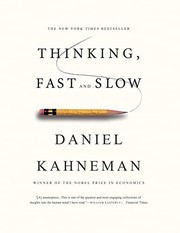
Kahneman's synthesis of behavioral economics is the cognitive science underpinning every negotiation tactic. Anchoring, loss aversion, framing effects, and the planning fallacy — understanding why these biases operate, not just that they exist, makes you harder to exploit and more honest about your own irrationality.
“…books I've recommended, highlighted to death, or forced on friends.” — Andrew Wilkinson
Source: Andrew Wilkinson's Bookshelf, neverenough.com
Recommended by: Andrew Wilkinson, Charles de Vaulx and 32 others

Builds out Munger's latticework idea from primary sources.
“…books I've recommended, highlighted to death, or forced on friends.” — Andrew Wilkinson
Source: Andrew Wilkinson's Bookshelf, neverenough.com
Recommended by: Andrew Wilkinson, Nat Eliason and 8 others

Tavris and Aronson focus on what happens after a bias fires: the self-justification, narrative revision, and escalating commitment that follow. Cognitive dissonance, they argue, is not a personality flaw but a universal mechanism, and understanding it explains police misconduct, political tribalism, and therapy failures in a single framework.
Recommended by: Mohnish Pabrai, Nat Eliason and 2 others
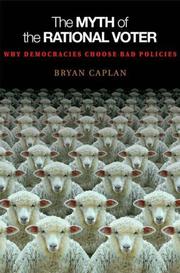
Voters hold systematic biases about economics, so democracies choose bad policies.
“The median American is a moderate national socialist – statist to the core on both economic and social policy.” — Marc Andreessen
Source: @pmarca, 'Thread: Books I've recently read and recommend'
Recommended by: Marc Andreessen, Patrick Collison
Why aviation learns from every failure while fields like medicine hide theirs.
Recommended by: Richard Branson, Daniel Ek

Reason evolved to justify ourselves and persuade others, not to think alone.

Short illustrated catalogue of the common logical fallacies
Recommended by: Shane Parrish

 Charlie Mungerrecommends 2 books here
 Marc Andreessenrecommends 2 books here
 Nassim Nicholas Talebrecommends 2 books here
 Mohnish Pabrairecommends 2 books here
 Ray Daliorecommends 1 book here
 Warren Buffettrecommends 1 book here
Show all 45
 Seth Klarmanrecommends 1 book here
 Albert Wengerrecommends 1 book here
 Alfred Linrecommends 1 book here
 Amy Hoodrecommends 1 book here
 Bill Gatesrecommends 1 book here
 Bryan Johnsonrecommends 1 book here
 Daniel Burkarecommends 1 book here
 Daniel Ekrecommends 1 book here
 Ev Williamsrecommends 1 book here
 Julie Zhuorecommends 1 book here
 Naval Ravikantrecommends 1 book here
 Patrick Collisonrecommends 1 book here
 Peter Attiarecommends 1 book here
 Richard Bransonrecommends 1 book here
 Ron Conwayrecommends 1 book here
 Sam Altmanrecommends 1 book here
 Satya Nadellarecommends 1 book here
 Stewart Brandrecommends 1 book here
 Tristan Harrisrecommends 1 book here
- The Work Required to Have an OpinionShane Parrish · essay · State the other side better than they can.
- Decision JournalsShane Parrish · essay · Recording the reasoning so hindsight cannot rewrite it.
- How to Spot Bad ScienceShane Parrish · essay · A checklist for claims that will not replicate.
- Why You Believe the Things You DoMorgan Housel · essay · Incentives and experience shape sincere conviction.