
Hanlon's Razor
Do not attribute to malice what is adequately explained by incompetence, distraction or ordinary incentives. In markets it keeps you from building conspiracies out of behaviour that a dull explanation covers, which is usually the cheaper hypothesis. Held too loosely it becomes naivety, so it is a prior rather than a verdict.
Start here
- Mistakes Were Made (But Not by Me)Carol Tavris, Elliot Aronson, 2007
- Influence: The Psychology of PersuasionRobert B. Cialdini, 1984
- Thinking, Fast and SlowDaniel Kahneman, 2011
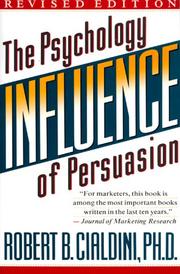
Six principles of compliance, from reciprocity to scarcity, and how sellers use them.
“…books I've recommended, highlighted to death, or forced on friends.” — Andrew Wilkinson
Source: Andrew Wilkinson's Bookshelf, neverenough.com
Recommended by: Andrew Wilkinson, Charlie Munger and 29 others
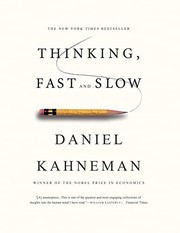
Kahneman's synthesis of behavioral economics is the cognitive science underpinning every negotiation tactic. Anchoring, loss aversion, framing effects, and the planning fallacy — understanding why these biases operate, not just that they exist, makes you harder to exploit and more honest about your own irrationality.
“…books I've recommended, highlighted to death, or forced on friends.” — Andrew Wilkinson
Source: Andrew Wilkinson's Bookshelf, neverenough.com
Recommended by: Andrew Wilkinson, Charles de Vaulx and 32 others

Builds out Munger's latticework idea from primary sources.
“…books I've recommended, highlighted to death, or forced on friends.” — Andrew Wilkinson
Source: Andrew Wilkinson's Bookshelf, neverenough.com
Recommended by: Andrew Wilkinson, Nat Eliason and 8 others

Tavris and Aronson focus on what happens after a bias fires: the self-justification, narrative revision, and escalating commitment that follow. Cognitive dissonance, they argue, is not a personality flaw but a universal mechanism, and understanding it explains police misconduct, political tribalism, and therapy failures in a single framework.
Recommended by: Mohnish Pabrai, Nat Eliason and 2 others

A working catalogue of 99 cognitive errors, organized so you can actually use it. Less academic than Kahneman, more encyclopedic than Duke. The format — one bias per short chapter — makes it useful as a pre-mortem checklist before consequential decisions.
Recommended by: Mohnish Pabrai


 Mohnish Pabrairecommends 4 books here
 Charlie Mungerrecommends 3 books here
 Nassim Nicholas Talebrecommends 2 books here
 Warren Buffettrecommends 2 books here
 Naval Ravikantrecommends 2 books here
 Tristan Harrisrecommends 2 books here
 Jim Collinsrecommends 1 book here
 Marc Andreessenrecommends 1 book here
Show all 64
 Peter Thielrecommends 1 book here
 Ray Daliorecommends 1 book here
 Seth Klarmanrecommends 1 book here
 Guy Kawasakirecommends 1 book here
 Albert Wengerrecommends 1 book here
 Alexis Ohanianrecommends 1 book here
 Alfred Linrecommends 1 book here
 Amy Hoodrecommends 1 book here
 Bill Gatesrecommends 1 book here
 Bryan Johnsonrecommends 1 book here
 Daniel Burkarecommends 1 book here
 Ev Williamsrecommends 1 book here
 Julie Zhuorecommends 1 book here
 Max Levchinrecommends 1 book here
 Nir Eyalrecommends 1 book here
 Patrick Collisonrecommends 1 book here
 Peter Attiarecommends 1 book here
 Ramit Sethirecommends 1 book here
 Ron Conwayrecommends 1 book here
 Sam Altmanrecommends 1 book here
 Samy Kamkarrecommends 1 book here
 Satya Nadellarecommends 1 book here
 Stewart Brandrecommends 1 book here
 Tobi Lütkerecommends 1 book here
- Hanlon's Razor: Relax, Not Everything Is Out to Get YouShane Parrish · essay · Incompetence explains far more market behaviour than malice.
- The Fundamental Attribution ErrorShane Parrish · essay · We blame character where situation did the work.
- The Basic Laws of Human StupidityShane Parrish · essay · Cipolla's taxonomy of value-destroying behaviour.