
Tobi Lütke
German-Canadian programmer who co-founded the Ottawa e-commerce company Shopify; worked on the core team of Ruby on Rails and races in IMSA's LMP2 class.
 Shopify
9 articles · 18 books they recommend · 43 appearances
More 6

Modern Stoicism; desire management and negative visualisation
Also recommended by: Andrew Wilkinson, Austen Allred and 6 others

Incerto volume 4
Also recommended by: Mohnish Pabrai, Nat Eliason and 24 others

A Roman emperor's private notes reminding himself to live by Stoic principles.
Also recommended by: Mohnish Pabrai, Nat Eliason, Naval Ravikant and 16 others
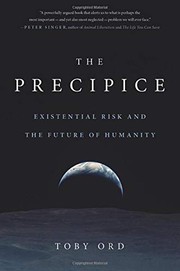
Ord, a philosopher at Oxford's Future of Humanity Institute, places AI risk within a broader taxonomy of existential threats and attempts probability estimates for each. His calibrated approach — acknowledging uncertainty while still arguing for prioritization — offers a useful epistemological model for evaluating AI timeline and risk claims.
Also recommended by: Vitalik Buterin
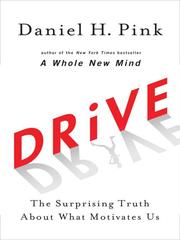
Rewards work for routine tasks; creative work runs on autonomy, mastery and purpose.
Also recommended by: Michael Mauboussin, Mohnish Pabrai and 2 others
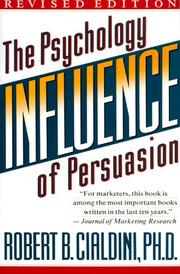
Six principles of compliance, from reciprocity to scarcity, and how sellers use them.
Also recommended by: Andrew Wilkinson, Charlie Munger and 28 others
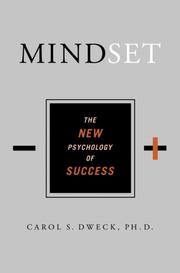
People who think ability grows with effort learn more than those who think it fixed.
Also recommended by: Bill Gates, Mohnish Pabrai, Alex and Books and 12 others

Alfred Adler's psychology taught through five nights of dialogue.
Also recommended by: Ali Abdaal, Andrew Wilkinson, Tim Ferriss and 10 others
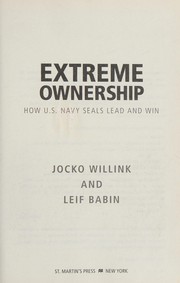
Navy SEAL leadership doctrine adapted to running teams and firms
Also recommended by: Nat Eliason, Alfred Lin, Austin Rief and 8 others

Scott's two-axis framework — care personally, challenge directly — gives a practical vocabulary for the feedback conversations managers routinely avoid. The quadrant model (Radical Candor, Ruinous Empathy, Obnoxious Aggression, Manipulative Insincerity) is one of the most operationally useful tools in management writing.
Also recommended by: Aileen Lee, Brett Adcock, David Cancel and 6 others
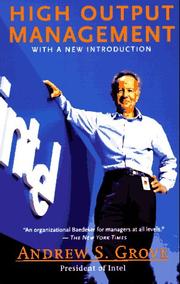
Management as production: a manager's output is the output of the team they lead.
Also recommended by: Nat Eliason, Tim Ferriss, Andrew Chen and 23 others
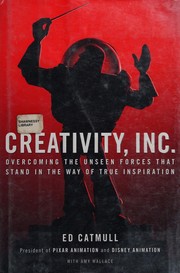
How Pixar kept a creative company working after success, and the habits it used.
Also recommended by: Jim Collins, Alexis Ohanian, Allen Gannett and 10 others
Subtitled 'Building a Business When There Are No Easy Answers'
Also recommended by: Andrew Wilkinson, Balaji S. Srinivasan and 33 others
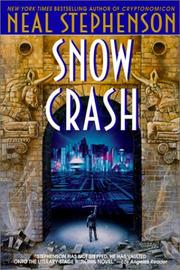
A novel of a hacker in a corporate-run America and its virtual world, the Metaverse.
Also recommended by: Nat Eliason, Naval Ravikant, Alexis Ohanian and 11 others

How the shipping container cut freight costs and remade global trade.
Also recommended by: Bill Gates, Mohnish Pabrai, Paul Graham

Numbered rules of English usage and composition, with examples, under 100 pages.
Also recommended by: Nat Eliason, Patrick Collison, Ann Handley and 2 others
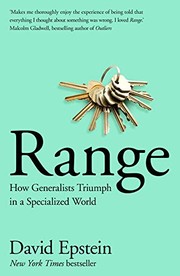
Early specialisation works only where rules are stable; elsewhere breadth wins.
Also recommended by: Bill Gates, Abi Tyas Tunggal, Alex Lieberman and 10 others
| We need to talk about carbon | Too-biased | 2019-12-22 |
| In Support of Free Speech (Update) | Too-biased | 2018-08-13 |
| The Future Role of Human Excellence | Too-biased | 2018-07-17 |
| The case for swagger: Canadians have a lot to be proud of | Too-biased | 2018-05-22 |
| Canadian CEO [...] you've probably never heard of | Too-biased | 2014-12-27 |
| Good at making decisions | Too-biased | 2013-10-30 |
| Jason Calacanis interviews me on the future of retail | Too-biased | 2013-08-08 |
| The Apprentice Programmer | Too-biased | 2013-03-03 |
| Pick your compass metric | Too-biased | 2013-02-21 |
| Tobi Lütke of Shopify: Powering a Team With a 'Trust Battery' Paywall | The New York Times | 2016 |
| Our Canadian CEO of the year you’ve probably never heard of Paywall | The Globe and Mail (Report on Business) | 2014 |