
Creativity, Inc.
Pixar's president on running a creative company without killing it
Summary
Catmull co-founded Pixar and later ran Disney Animation, and writes about the management problem of keeping a creative organisation working after it succeeds. The book combines the history of Pixar, from the Lucasfilm computer division through the Disney partnership and the 2006 acquisition, with the specific mechanisms Catmull built to protect candour.
The main argument is that every Pixar film started out bad, and that the process of making it good depends on being able to identify problems early without the people involved defending their work. The Braintrust is the central mechanism: a group of directors and story people who watch works in progress and give direct assessments, with no authority to require changes, so the director retains ownership of the decisions. Catmull contrasts this with studio notes given by executives with power, which produce compliance rather than improvement.
He also covers postmortems, the practice of building the organisation's ability to detect what he calls the hidden problems, giving people authority to stop production, and the argument that ideas matter less than the teams that develop them, so a good team fixes a weak idea while a weak team ruins a good one. The Toy Story 2 rebuild in nine months is his case for the cost and value of candour.
The book has a self-congratulatory quality and the failures described are mostly ones that were fixed. Pixar's later record, including sequels and the departure of John Lasseter after misconduct allegations, sits awkwardly with the culture described. Catmull writes about protecting creative people without addressing the working conditions of the crews. The Braintrust separation of feedback from authority is the transferable idea.
Key takeaways 8
- Every film starts out bad, so the organisation's real capability is the speed with which it identifies and fixes the problems.
- Feedback works when it comes from peers with expertise and no authority to compel changes, because the maker retains ownership of the solution.
- A good team can fix a weak idea, while a weak team will ruin a good one, so investment should go to people rather than to concepts.
- Managers must actively work to surface the problems that people are hiding, because the absence of reported problems is evidence of concealment rather than health.
- Anyone at any level should be able to stop the process when they see a defect, which requires that doing so carries no penalty.
- Protecting new ideas while they are still fragile is a specific managerial job, because early-stage work cannot survive normal evaluation.
- Success makes an organisation more fearful of failure, which makes it less able to do the risky work that produced the success.
- Postmortems must be structured against the tendency to report only what went well, or they produce nothing.
Who should read it
Leaders of creative or product organisations who need a working mechanism for candid feedback that does not collapse into hierarchy.
About Ed Catmull
Co-founder and former president of Pixar and of Walt Disney Animation Studios; earlier a computer graphics researcher.
Creativity, Inc. sets out the specific mechanisms Pixar used to hold quality across twenty consecutive films - the Braintrust review with no authority over the director, daily work-in-progress screenings, and structured postmortems - which makes it a manual for managing work whose output cannot be specified in advance. The account of the Disney Animation turnaround shows the same practices applied to an organisation that was already failing.
Who recommended it 14 · 1 direct
Similar books 6
Chosen by shared topics, the entries that hold them, and the people who recommended both.
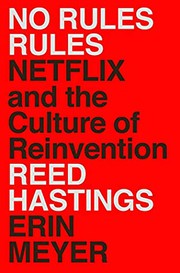
How Netflix built talent density and candour so it could remove controls.
Recommended by: Matt Mullenweg, Alex Lieberman, Ben Horowitz and 2 others
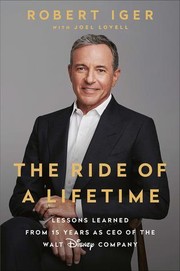
Running Disney and buying Pixar, Marvel, Lucasfilm and Fox to add creative talent.
Recommended by: Bill Gates, Alexis Ohanian, Ali Abdaal and 8 others
Insider account of Google's people operations by its SVP of HR.
Recommended by: Mohnish Pabrai, Changpeng Zhao, David Cancel and 2 others
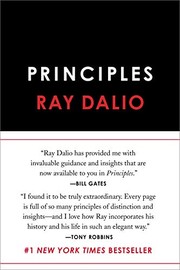
Decision rules from building Bridgewater: radical truth and radical transparency.
Recommended by: Alfred Lin, Nat Eliason, Andrew Lokenauth and 28 others
Recommended by: Mohnish Pabrai

A method for hiring the right people, built on interviews with wealthy executives.
Recommended by: Nat Eliason, Alexis Ohanian, Noah Kagan
Where it sits in the reference 5
Topics