Updates

  1. Person pages list letters, writing, profiles and links as sortable tables with filters, and show each person's companies as links; Fund letters show each letter's description in its own column.
  2. Experts show a checked job title and a short description of each person; 30 more people have photographs.
  3. Every company, fund, university and publication the experts work for has a page listing the people there.
  4. Fund letters show each letter's thesis and filter by it; 225 person pages list the essays, columns and newsletter issues the person wrote.
  5. Person pages list every essay and newsletter issue a person wrote, and their own books as a table in List view.
  6. Recommends shows the five largest kinds of book and the rest under More; browse pictures load sooner.
  7. Podcasts and talks link the original episode, filter by Audio and video or Press, and list each publisher once.
  8. Pages are wider, Recommends has List and Grid, and a filter clicked again turns off.
  9. Book cards sit in a ruled grid with Open Library and Goodreads links and each book's one-line note.
  10. Funds is now Investors; each investor's styles are buttons that filter the table.
  11. Podcasts and talks on a person's page filter by year and publisher and show as a list or a grid of pictures.
  12. Quotes show only people's own words: 472 summaries written by list sites are gone.
  13. Country pages open from Browse again, and every link on the shelf lands on a page.
  14. Subject and person pages show their sections as tabs, and each book appears once on a person's page.
  15. Book cards show the quote, who said it and the source; grids show five cards to a row.
  16. On a phone, a menu holds the sections, search, Updates, Feedback and dark mode.
  17. Feedback takes a screenshot of the page with no browser prompt, opens a screenshot full size when you click it, and clears itself once sent.
  18. Book cards are centred, search names the topic each book sits in, and any text cut short shows whole on hover.
  19. Search groups its results by kind: people, companies, geographies, subjects, topics, books, funds, fund letters and papers.
  20. The Books table lists who recommended each book by name, and the browser tab names the section you are in.
  21. Feedback can take a screenshot of the page, or one you paste or choose, and opens in the corner beside Updates.
  22. Each rail button reopens its section where you left it, and Browse, Table and People show on every book and subject page.
  23. Filters grey out choices that hold nothing instead of hiding them, and Books › People filters by authors or recommenders.
  24. Feedback takes a subject line and up to three screenshots.
  25. Biographies are grouped by the person they are about: 41 new pages, from Abraham Lincoln to Lee Kuan Yew.
  26. Sport splits into 23 sports, and Religion into one topic per faith.
  27. Book lists show as cards: the cover, one recommendation quote and every recommender by name.
  28. Seventeen subjects that had two or three pages under different names now have one page each.
  29. Every page lists its Experts as authors and recommenders, with a link to them on the Experts tab.
  30. Economics, Financial history, Financial panics and Accounting are subjects of their own, with one page per financial crisis.
  31. Book, person and subject pages open inside the app, so the tabs stay in view.
  32. 996 more book covers, and photographs or logos for 227 more people and companies.
  33. Books › Browse shows every subject as cards, and the rail holds Fund letters, Papers, Experts, Books and Funds.
  34. Every topic over 150 books splits into narrower topics, each with a page of its own.

Send feedback

What is it?
Screenshots, up to 3 (optional)
or paste one with Ctrl+V

We use your email only to reply to you.

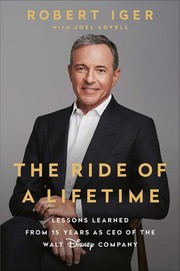
The Ride of a Lifetime

The Ride of a Lifetime

Robert Iger
2019
T1 288 pages · about 4h 48m to read Open Librarygoodreads

Insider account: Iger on the Pixar, Marvel and Lucasfilm deals.

Summary

Iger covers his career from ABC Sports through his fifteen years as Disney's chief executive, with the acquisitions of Pixar, Marvel, Lucasfilm and Twenty-First Century Fox as the structure. He writes about the succession contest with Michael Eisner, the state of Disney Animation when he arrived, and the deliberate decision to make acquisition of creative capacity the central strategy rather than attempt internal renewal.

The Pixar chapter is the most detailed and the most useful. Iger describes repairing the relationship with Steve Jobs, whom Eisner had alienated, the decision to let Pixar's leadership run Disney Animation rather than the reverse, and the specific contractual protections he offered to preserve Pixar's culture. The Marvel and Lucasfilm chapters follow similar patterns, including the personal negotiations with Ike Perlmutter and with George Lucas and the handling of Lucas's reaction to the story direction after the sale.

The management content is thinner and more conventional. Iger lists principles including optimism, courage, decisiveness, fairness and curiosity, and he writes about the value of telling people the truth quickly. His account of launching Disney Plus frames it as a decision to accept short-term earnings damage in exchange for direct customer relationships.

The book is a CEO memoir written while he still had reputational interests, so it is favourable to its author. The failures receive little space, including ESPN's decline, the Fox integration costs and the succession problem that led to his return in 2022. It says almost nothing about the operating detail of the parks or the studio. Read it for the acquisition strategy and the handling of acquired creative organisations.

Key takeaways 8

  1. Disney bought creative capacity rather than rebuilding it, because Iger judged that internal renewal of animation would take longer than the company had.
  2. An acquirer of a creative business should protect the acquired culture explicitly and contractually rather than integrate it into the parent's processes.
  3. Iger put Pixar's leadership in charge of Disney Animation, reversing the normal direction of acquirer control.
  4. Repairing a personal relationship with Steve Jobs was the precondition for the Pixar deal, which makes relationship management a strategic activity rather than a soft one.
  5. A chief executive should tell people bad news immediately and directly, because delay compounds the damage to trust.
  6. Launching a direct-to-consumer service required accepting years of reduced earnings, and Iger argued the alternative was losing the customer relationship permanently.
  7. Innovation cannot be demanded from an organisation that punishes failure, so the leader must accept public failures as the cost.
  8. A successor should be developed and given real authority well before the transition, which is the lesson Iger draws from his own contested succession.

Who should read it

Executives buying or integrating creative businesses, and anyone studying how a large incumbent bought its way into new capability.

Who recommended it 11 · 1 direct

Ali Abdaalreported
Brian Cheskyreported
Tim Ferrissreported

Similar books 6

Chosen by shared topics, the entries that hold them, and the people who recommended both.

James B. Stewart · 2005

Michael Eisner's twenty years running Disney, from turnaround to shareholder revolt.

Recommended by: Kara Swisher
Thomas F. O'Boyle · 1998

The contemporaneous dissent, twenty years ahead of the consensus.
Jeff Immelt, Amy Wallace · 2021

Insider account: Immelt's defence of his sixteen years as CEO.
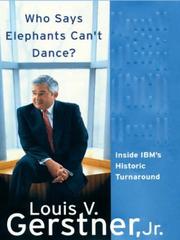
Louis V. Gerstner · 2002

How IBM was kept whole in 1993 and turned from hardware toward services.

Recommended by: Mohnish Pabrai, Aaron Levie
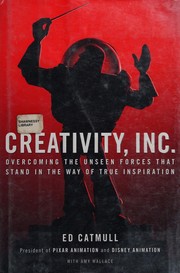
Ed Catmull, Amy Wallace · 2014

How Pixar kept a creative company working after success, and the habits it used.

Jack Welch, John A. Byrne · 2001

Running General Electric from 1981 to 2001, as told on retiring.

Where it sits in the reference 4

Companies
Business themes
Industries
Business themes

Topics

Biography and MemoirLeadershipCompany HistoriesExecutives and Corporate Insiders