
Media and Entertainment
Hit-driven economics, library value and repeated technological resets; the ownership question is always who controls distribution.
Start here
- The Ride of a LifetimeRobert Iger, 2019
- DisneyWarJames B. Stewart, 2005
- The Big PictureEdward Jay Epstein, 2005
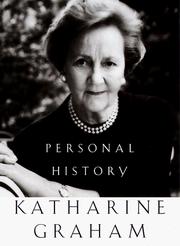
Running the Washington Post through the Pentagon Papers, Watergate and a strike.
“Highly Recommended.” — Mohnish Pabrai
Source: Mohnish's Bookshelf — Books on Entrepreneurship, Management and Leadership, entry 178
Recommended by: Bill Gates, Mohnish Pabrai, Diana Kimball and 3 others
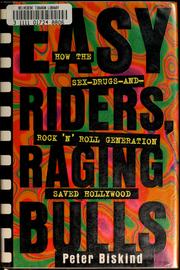
How young directors and drugs remade Hollywood in the 1970s, from Easy Rider on.
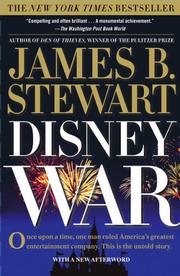
Michael Eisner's twenty years running Disney, from turnaround to shareholder revolt.
Recommended by: Kara Swisher

How Pixar kept a creative company working after success, and the habits it used.
Recommended by: Jim Collins, Alexis Ohanian, Allen Gannett and 11 others
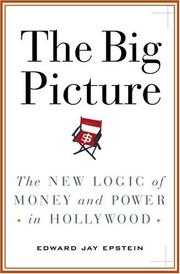
How Hollywood really makes money, mostly away from the box office.
Recommended by: Elon Musk, Scott Farquhar

Building Creative Artists Agency into Hollywood's top agency, then failing at Disney.
Recommended by: Ben Horowitz, Benedict Evans and 4 others
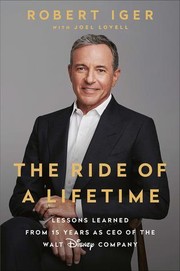
Running Disney and buying Pixar, Marvel, Lucasfilm and Fox to add creative talent.
Recommended by: Bill Gates, Alexis Ohanian, Ali Abdaal and 8 others

Netflix from its 1997 founding to Qwikster in 2011, and its war with Blockbuster.
Recommended by: Balaji S. Srinivasan

Oral history of CAA and the agency model.
Recommended by: Joel Connolly
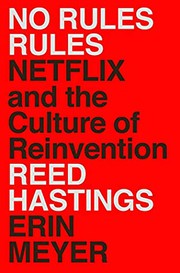
How Netflix built talent density and candour so it could remove controls.
Recommended by: Matt Mullenweg, Alex Lieberman, Ben Horowitz and 2 others
Media executive's memoir spanning Paramount, Fox and IAC
Recommended by: Bill Gates

Goldman wrote Butch Cassidy, All the President's Men, and The Princess Bride, and this book is his frank account of what it is actually like to write for Hollywood. His central claim — that nobody knows anything — is an important corrective to every book on this list that treats filmmaking as a solved problem.
Recommended by: Tim Ferriss
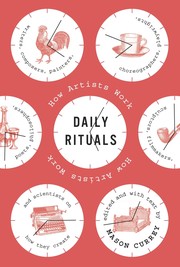
Mason Currey's portraits of how artists actually structure their days — Beethoven counting exactly sixty coffee beans, Glenn Gould's nocturnal sessions, Stravinsky's requirement for a daily constitutional before composing. More useful than it sounds: the book normalizes idiosyncratic work patterns and illustrates that there is no single formula for sustained creative output.
Recommended by: Nat Eliason, Patrick Collison, David Kadavy

A method for playing music free of the fear and self-judgment that freeze performers.
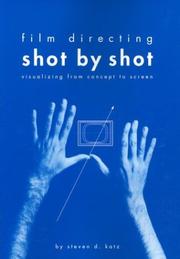
How storyboards become shots, and how shots are built into film sequences.

Byrne argues that music is not created in a vacuum but is shaped by the spaces it's designed to fill — a cathedral's reverb, a club's noise floor, an iPod earbud. Part memoir, part cultural history, part production theory. The chapter on how CBGB's acoustics shaped Talking Heads's sound alone is worth the cover price.
Recommended by: Eric Weinstein
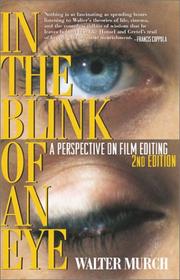
Film editing explained: why cuts work when they follow the rhythm of thought.

How a film comes together, from the first script reading to the final mix.

Strategies for electronic music producers stuck starting, finishing or arranging.
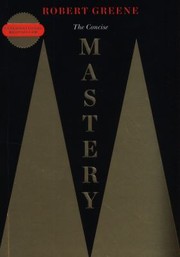
How masters from Leonardo to Faraday found a life's task and served apprenticeships.
Recommended by: Nat Eliason, Ryan Holiday, Anthony Pompliano and 5 others
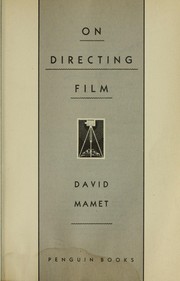
Directing as finding the simplest images that carry the story.
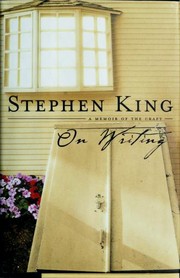
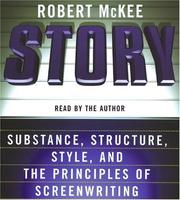
King's memoir of craft applies as directly to screenwriting as to fiction. His argument that story comes before plot — that you discover what a story is about by following characters rather than outlining — sits in productive tension with the structural approaches of McKee and Snyder.
Recommended by: Nat Eliason, Jason Calacanis, Paul Graham and 1 other
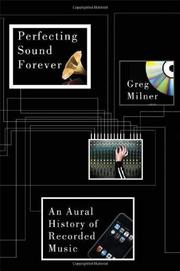
Recording from cylinder to Pro Tools: should it capture reality or improve on it?
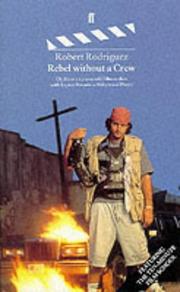
The production diary of El Mariachi, a feature film made for $7,000.
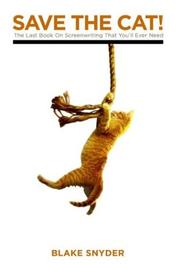
The most commercial book on this list, and the most widely used. Snyder's beat sheet is a blunt instrument, but understanding it is necessary — both to apply it and to understand what mainstream studio films are doing structurally, whether you intend to follow the template or subvert it.
Recommended by: Eric Weinstein
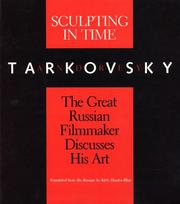
A filmmaker's theory of the image as a vessel of time rather than information.

Not a how-to book. Rubin's meditations on creativity are deliberately non-prescriptive — he is describing a posture toward work rather than a process. For musicians, the sections on surrender, on listening to the work rather than imposing on it, and on the difference between taste and judgment are particularly sharp. Best read slowly, one or two fragments at a time.
Recommended by: Eric Jorgenson
Camera angles, continuity, cutting, close-ups and composition: the basics of a shot.

A novel in which a teacher upends a musician's ideas about practice and mistakes.

Pressfield's book on resistance applies with particular force to musicians, where the gap between technical facility and creative output is often enormous. The concept of 'turning pro' — treating creative work as a practice with professional discipline regardless of whether it pays — is the mental shift that separates hobbyists from people who actually finish records.
Recommended by: Mohnish Pabrai, Nat Eliason, Alex and Books and 11 others
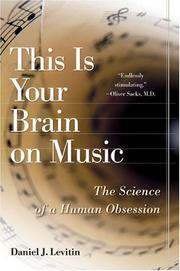
The foundational science for any serious musician. Levitin explains what the auditory cortex actually does with rhythm, timbre, and expectation — why a note landing slightly behind the beat feels groovy rather than wrong, and why tension-resolution in harmony triggers the same neurochemistry as certain drugs. Knowing the mechanics does not kill the magic; it deepens it.
Recommended by: Vinod Khosla

Musicians describe the one song that made them want to make music.
Marvel and DC's fifty-year rivalry: stolen ideas, poached staff, spies, price wars.
Recommended by: Marc Andreessen


 Tim Ferrissrecommends 5 books here
 Jason Calacanisrecommends 4 books here
 Bill Gatesrecommends 3 books here
 Ben Horowitzrecommends 2 books here
 Marc Andreessenrecommends 2 books here
 Mohnish Pabrairecommends 2 books here
 Ryan Holidayrecommends 2 books here
 Alexis Ohanianrecommends 2 books here
 Eric Weinsteinrecommends 2 books here
 Jim Collinsrecommends 1 book here
Show all 63
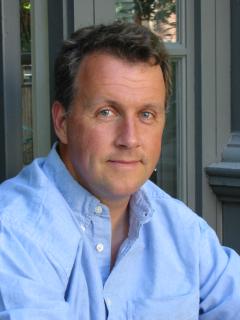 Paul Grahamrecommends 1 book here
 Warren Buffettrecommends 1 book here
 Reid Hoffmanrecommends 1 book here
 Guy Spierrecommends 1 book here
 Antonio García Martínezrecommends 1 book here
 Balaji S. Srinivasanrecommends 1 book here
 Brian Cheskyrecommends 1 book here
 Daniel Burkarecommends 1 book here
 Daniel Ekrecommends 1 book here
 Demis Hassabisrecommends 1 book here
 Ezra Kleinrecommends 1 book here
 James Altucherrecommends 1 book here
 Julie Zhuorecommends 1 book here
 Kara Swisherrecommends 1 book here
 Keith Raboisrecommends 1 book here
 Marie Forleorecommends 1 book here
 Mark Zuckerbergrecommends 1 book here
 Matt Mullenwegrecommends 1 book here
 Michael Bloombergrecommends 1 book here
 Patrick Bet-Davidrecommends 1 book here
 Patrick Collisonrecommends 1 book here
 Tobi Lütkerecommends 1 book here
 Tom Bilyeurecommends 1 book here
 Tucker Maxrecommends 1 book here
 Vinod Khoslarecommends 1 book here