Updates

  1. Person pages list letters, writing, profiles and links as sortable tables with filters, and show each person's companies as links; Fund letters show each letter's description in its own column.
  2. Experts show a checked job title and a short description of each person; 30 more people have photographs.
  3. Every company, fund, university and publication the experts work for has a page listing the people there.
  4. Fund letters show each letter's thesis and filter by it; 225 person pages list the essays, columns and newsletter issues the person wrote.
  5. Person pages list every essay and newsletter issue a person wrote, and their own books as a table in List view.
  6. Recommends shows the five largest kinds of book and the rest under More; browse pictures load sooner.
  7. Podcasts and talks link the original episode, filter by Audio and video or Press, and list each publisher once.
  8. Pages are wider, Recommends has List and Grid, and a filter clicked again turns off.
  9. Book cards sit in a ruled grid with Open Library and Goodreads links and each book's one-line note.
  10. Funds is now Investors; each investor's styles are buttons that filter the table.
  11. Podcasts and talks on a person's page filter by year and publisher and show as a list or a grid of pictures.
  12. Quotes show only people's own words: 472 summaries written by list sites are gone.
  13. Country pages open from Browse again, and every link on the shelf lands on a page.
  14. Subject and person pages show their sections as tabs, and each book appears once on a person's page.
  15. Book cards show the quote, who said it and the source; grids show five cards to a row.
  16. On a phone, a menu holds the sections, search, Updates, Feedback and dark mode.
  17. Feedback takes a screenshot of the page with no browser prompt, opens a screenshot full size when you click it, and clears itself once sent.
  18. Book cards are centred, search names the topic each book sits in, and any text cut short shows whole on hover.
  19. Search groups its results by kind: people, companies, geographies, subjects, topics, books, funds, fund letters and papers.
  20. The Books table lists who recommended each book by name, and the browser tab names the section you are in.
  21. Feedback can take a screenshot of the page, or one you paste or choose, and opens in the corner beside Updates.
  22. Each rail button reopens its section where you left it, and Browse, Table and People show on every book and subject page.
  23. Filters grey out choices that hold nothing instead of hiding them, and Books › People filters by authors or recommenders.
  24. Feedback takes a subject line and up to three screenshots.
  25. Biographies are grouped by the person they are about: 41 new pages, from Abraham Lincoln to Lee Kuan Yew.
  26. Sport splits into 23 sports, and Religion into one topic per faith.
  27. Book lists show as cards: the cover, one recommendation quote and every recommender by name.
  28. Seventeen subjects that had two or three pages under different names now have one page each.
  29. Every page lists its Experts as authors and recommenders, with a link to them on the Experts tab.
  30. Economics, Financial history, Financial panics and Accounting are subjects of their own, with one page per financial crisis.
  31. Book, person and subject pages open inside the app, so the tabs stay in view.
  32. 996 more book covers, and photographs or logos for 227 more people and companies.
  33. Books › Browse shows every subject as cards, and the rail holds Fund letters, Papers, Experts, Books and Funds.
  34. Every topic over 150 books splits into narrower topics, each with a page of its own.

Send feedback

What is it?
Screenshots, up to 3 (optional)
or paste one with Ctrl+V

We use your email only to reply to you.

Who Is Michael Ovitz?

Who Is Michael Ovitz?

Michael Ovitz
2018
T2 384 pages · about 6h 24m to read Open Librarygoodreads

CAA's founder on building the agency that repriced Hollywood talent

Summary

Ovitz co-founded Creative Artists Agency in 1975 with four colleagues who left the William Morris Agency, built it into the dominant talent agency in Hollywood, and then failed conspicuously as president of Disney under Michael Eisner in 1995 and 1996, leaving after fourteen months with a settlement of around one hundred and thirty million dollars.

The agency-building material is the substance. Ovitz describes the decision to share commissions across the whole firm rather than let agents own their clients, which prevented the defections that broke every previous agency; the practice of packaging, in which CAA assembled a writer, director and stars from its own client list and sold the complete project to a studio, which shifted leverage from studios to the agency; and the deliberate expansion into corporate advisory work, including advising Coca-Cola, Credit Lyonnais on MGM and Matsushita on the acquisition of MCA.

He describes his methods directly, including the cultivation of information, the use of secrecy and the deliberate creation of a reputation for retaliation. The Disney chapters are the most revealing and the least flattering. Ovitz argues that Eisner never gave him authority, and also concedes that he did not adapt from running his own firm to serving inside someone else's. He acknowledges specific failures including his handling of executives and his inability to accept a subordinate role.

The book is a self-account and the score-settling is visible. Others involved dispute his version, particularly of the Disney period and of his treatment of colleagues. The material on how a services firm builds structural power over its customers is the most transferable part.

Key takeaways 8

  1. Sharing commissions across the whole firm rather than allowing agents to own clients prevented the defections that had destroyed every previous agency.
  2. Packaging complete projects from the firm's own client list shifted negotiating leverage from the studios to the agency.
  3. Control of information about who is available, what they will accept and what competitors are doing was the agency's real asset.
  4. A services firm can build structural power over larger customers by controlling access to the inputs those customers require.
  5. Deliberately cultivating a reputation for retaliation deterred competition and defection, and Ovitz treats this as a strategy rather than as temperament.
  6. Expanding from talent representation into corporate advisory work used the same relationships to reach much larger fees.
  7. The skills that build and run your own firm do not transfer to a senior role inside someone else's, which Ovitz concedes about his own failure.
  8. A senior executive hired without clearly defined authority will fail regardless of capability, and the definition must precede the hire.

Who should read it

Operators building services firms who want a case on structural leverage over customers, and executives considering a senior role inside an organisation they will not control.

Who recommended it 6

Ben Horowitzreported
Keith Raboisreported

Similar books 6

Chosen by shared topics, the entries that hold them, and the people who recommended both.

Barry Diller · 2024

Media executive's memoir spanning Paramount, Fox and IAC

Recommended by: Bill Gates

Jamal Edwards · 2013

Recommended by: Richard Branson

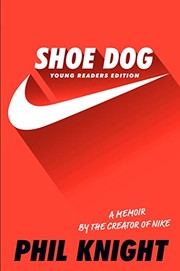
Phil Knight · 2016

How a running-shoe importer became Nike, surviving one cash crisis after another.

“…books I've recommended, highlighted to death, or forced on friends.” — Andrew Wilkinson

Source: Andrew Wilkinson's Bookshelf, neverenough.com

Recommended by: Andrew Wilkinson, Bill Gates, Mohnish Pabrai and 25 others

Sam Wyly · 2008

Entrepreneur's memoir of building and selling successive companies

Recommended by: Mohnish Pabrai

Where it sits in the reference 2

Business models
Industries

Topics

Biography and MemoirEntrepreneurship and StartupsFounders and EntrepreneursFounder MemoirsMedia and entertainment founders