Updates

  1. Person pages list letters, writing, profiles and links as sortable tables with filters, and show each person's companies as links; Fund letters show each letter's description in its own column.
  2. Experts show a checked job title and a short description of each person; 30 more people have photographs.
  3. Every company, fund, university and publication the experts work for has a page listing the people there.
  4. Fund letters show each letter's thesis and filter by it; 225 person pages list the essays, columns and newsletter issues the person wrote.
  5. Person pages list every essay and newsletter issue a person wrote, and their own books as a table in List view.
  6. Recommends shows the five largest kinds of book and the rest under More; browse pictures load sooner.
  7. Podcasts and talks link the original episode, filter by Audio and video or Press, and list each publisher once.
  8. Pages are wider, Recommends has List and Grid, and a filter clicked again turns off.
  9. Book cards sit in a ruled grid with Open Library and Goodreads links and each book's one-line note.
  10. Funds is now Investors; each investor's styles are buttons that filter the table.
  11. Podcasts and talks on a person's page filter by year and publisher and show as a list or a grid of pictures.
  12. Quotes show only people's own words: 472 summaries written by list sites are gone.
  13. Country pages open from Browse again, and every link on the shelf lands on a page.
  14. Subject and person pages show their sections as tabs, and each book appears once on a person's page.
  15. Book cards show the quote, who said it and the source; grids show five cards to a row.
  16. On a phone, a menu holds the sections, search, Updates, Feedback and dark mode.
  17. Feedback takes a screenshot of the page with no browser prompt, opens a screenshot full size when you click it, and clears itself once sent.
  18. Book cards are centred, search names the topic each book sits in, and any text cut short shows whole on hover.
  19. Search groups its results by kind: people, companies, geographies, subjects, topics, books, funds, fund letters and papers.
  20. The Books table lists who recommended each book by name, and the browser tab names the section you are in.
  21. Feedback can take a screenshot of the page, or one you paste or choose, and opens in the corner beside Updates.
  22. Each rail button reopens its section where you left it, and Browse, Table and People show on every book and subject page.
  23. Filters grey out choices that hold nothing instead of hiding them, and Books › People filters by authors or recommenders.
  24. Feedback takes a subject line and up to three screenshots.
  25. Biographies are grouped by the person they are about: 41 new pages, from Abraham Lincoln to Lee Kuan Yew.
  26. Sport splits into 23 sports, and Religion into one topic per faith.
  27. Book lists show as cards: the cover, one recommendation quote and every recommender by name.
  28. Seventeen subjects that had two or three pages under different names now have one page each.
  29. Every page lists its Experts as authors and recommenders, with a link to them on the Experts tab.
  30. Economics, Financial history, Financial panics and Accounting are subjects of their own, with one page per financial crisis.
  31. Book, person and subject pages open inside the app, so the tabs stay in view.
  32. 996 more book covers, and photographs or logos for 227 more people and companies.
  33. Books › Browse shows every subject as cards, and the rail holds Fund letters, Papers, Experts, Books and Funds.
  34. Every topic over 150 books splits into narrower topics, each with a page of its own.

Send feedback

What is it?
Screenshots, up to 3 (optional)
or paste one with Ctrl+V

We use your email only to reply to you.

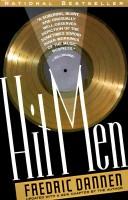
Hit Men

Hit Men

Fredric Dannen
1990
T2 402 pages · about 6h 42m to read Open Librarygoodreads

CBS Records and Walter Yetnikoff, the business Sony bought in 1988.

Summary

Dannen investigated the American record business in the 1970s and 1980s, and the book's centre is the independent promotion system: a network of freelance promoters, collectively called the Network, who controlled access to radio airplay and who were paid enormous sums by record companies to secure it.

The reporting establishes the economics. Record labels paid independent promoters hundreds of thousands of dollars per record, the promoters had exclusive relationships with specific radio stations, and a label that refused to pay found its records did not get played. Dannen documents the federal investigations into whether this constituted payola, the organised crime connections of several promoters, and the moment in 1986 when NBC News reporting caused the major labels to suspend the system, after which their promotion costs fell sharply and their chart performance did not change.

He also profiles the executives, principally Walter Yetnikoff at CBS Records, Morris Levy at Roulette, and David Geffen, and covers the artist contract terms, the accounting practices that kept artists in debt to labels through recoupment, and the returns and reserves policies that made royalty statements unverifiable.

The book is investigative journalism and is unsparing. It is from 1990 and the industry has been restructured twice since by CDs and then by streaming, so the specific mechanics are historical. What transfers is the analysis of an intermediary who controls access to distribution and extracts most of the value from both sides, which is a structure that recurs in every media business.

Key takeaways 7

  1. Independent promoters controlled access to radio airplay through exclusive station relationships, and record labels paid them because no alternative route to the audience existed.
  2. When the major labels suspended independent promotion in 1986, their promotion costs fell sharply and their chart performance did not change, which showed the payments bought nothing.
  3. An intermediary who controls the only access to distribution extracts most of the value from both the supplier and the customer.
  4. Recording contract recoupment provisions charged production, promotion and video costs against artist royalties, which kept most successful artists in debt to their labels.
  5. Royalty accounting used returns reserves and deductions that made statements unverifiable by the artists receiving them.
  6. The label's economics depended on a small number of large successes funding a majority of releases that lost money, which justified the contract terms to the labels.
  7. Regulatory prohibition of direct payola produced an intermediary layer that achieved the same result while remaining legal.

Who should read it

Operators and investors in media and content businesses studying how a distribution bottleneck concentrates value in an intermediary.

Who recommended it 1

Daniel Ekreported

Similar books 6

Chosen by shared topics, the entries that hold them, and the people who recommended both.
Donald S. Passman · 1991

How the music business works in contracts and money, from a music lawyer.

Kenny Werner

A method for playing music free of the fear and self-judgment that freeze performers.
David Byrne · 2012

Byrne argues that music is not created in a vacuum but is shaped by the spaces it's designed to fill — a cathedral's reverb, a club's noise floor, an iPod earbud. Part memoir, part cultural history, part production theory. The chapter on how CBGB's acoustics shaped Talking Heads's sound alone is worth the cover price.

Recommended by: Eric Weinstein

Dennis DeSantis

Strategies for electronic music producers stuck starting, finishing or arranging.

Greg Milner

Recording from cylinder to Pro Tools: should it capture reality or improve on it?

Where it sits in the reference 3

Companies
Industries
Industries

Topics

Company HistoriesArt and DesignMusic and the Music Business