
Effortless Mastery: Liberating the Master Musician Within
The jazz pianist Werner addresses the anxiety and self-judgment that freezes musicians at the moment of performance or creation. His meditation-inflected method for reaching a state of ease at the instrument is not mysticism — it is practical psychology applied to a real problem that many technically capable musicians never solve. Pairs directly with Wooten.
Similar books 6
Chosen by shared topics, the entries that hold them, and the people who recommended both.

Byrne argues that music is not created in a vacuum but is shaped by the spaces it's designed to fill — a cathedral's reverb, a club's noise floor, an iPod earbud. Part memoir, part cultural history, part production theory. The chapter on how CBGB's acoustics shaped Talking Heads's sound alone is worth the cover price.
Recommended by: Eric Weinstein

Strategies for electronic music producers stuck starting, finishing or arranging.

Recording from cylinder to Pro Tools: should it capture reality or improve on it?

A novel in which a teacher upends a musician's ideas about practice and mistakes.
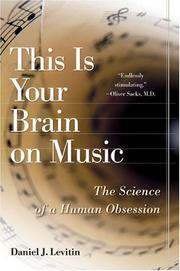
The foundational science for any serious musician. Levitin explains what the auditory cortex actually does with rhythm, timbre, and expectation — why a note landing slightly behind the beat feels groovy rather than wrong, and why tension-resolution in harmony triggers the same neurochemistry as certain drugs. Knowing the mechanics does not kill the magic; it deepens it.
Recommended by: Vinod Khosla
Where it sits in the reference 1
Topics