Music and the Music Business
Holds musicians' memoirs, music theory and practice, the science of music, and histories of the record and concert business.
Start here
- Hit MenFredric Dannen, 1990
- All You Need to Know About the Music BusinessDonald S. Passman, 1991
- This Is Your Brain on Music: The Science of a Human ObsessionDaniel J. Levitin, 2006
- How Music WorksDavid Byrne, 2012
- Effortless Mastery: Liberating the Master Musician WithinKenny Werner
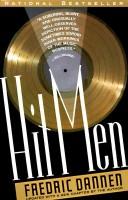

How the music business works in contracts and money, from a music lawyer.
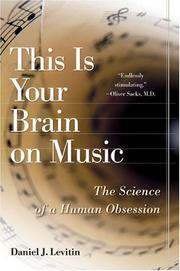
The foundational science for any serious musician. Levitin explains what the auditory cortex actually does with rhythm, timbre, and expectation — why a note landing slightly behind the beat feels groovy rather than wrong, and why tension-resolution in harmony triggers the same neurochemistry as certain drugs. Knowing the mechanics does not kill the magic; it deepens it.
Recommended by: Vinod Khosla

Byrne argues that music is not created in a vacuum but is shaped by the spaces it's designed to fill — a cathedral's reverb, a club's noise floor, an iPod earbud. Part memoir, part cultural history, part production theory. The chapter on how CBGB's acoustics shaped Talking Heads's sound alone is worth the cover price.
Recommended by: Eric Weinstein

A method for playing music free of the fear and self-judgment that freeze performers.

Strategies for electronic music producers stuck starting, finishing or arranging.

Recording from cylinder to Pro Tools: should it capture reality or improve on it?

A novel in which a teacher upends a musician's ideas about practice and mistakes.

Musicians describe the one song that made them want to make music.

Recommended by: Eric Weinstein
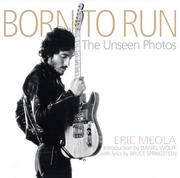


Recommended by: Matt Mullenweg

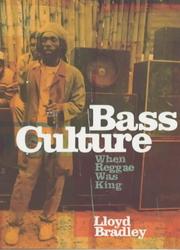
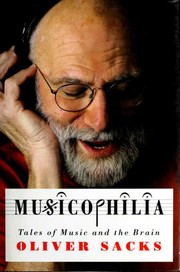
How music acts on the brain, through patients, musicians and ordinary people.
Recommended by: Tim Ferriss


“Ian Leslie's wonderful new book about the relationship between John Lennon and Paul McCartney. If you're into The Beatles, or even just interested in how creativity happens, it's a great read.” — Andrew Wilkinson
Source: Essay
Recommended by: Andrew Wilkinson
Recommended by: Tim Ferriss

Recommended by: Mohnish Pabrai

 Eric Weinsteinrecommends 4 books here
 Tim Ferrissrecommends 3 books here
 Mohnish Pabrairecommends 2 books here
 Bill Gurleyrecommends 2 books here
 Daniel Ekrecommends 2 books here
 Audrey Gelmanrecommends 1 book here
 Balaji S. Srinivasanrecommends 1 book here
 Bill Gatesrecommends 1 book here
 Bob Igerrecommends 1 book here
 Mark Zuckerbergrecommends 1 book here


