Updates

  1. Person pages list letters, writing, profiles and links as sortable tables with filters, and show each person's companies as links; Fund letters show each letter's description in its own column.
  2. Experts show a checked job title and a short description of each person; 30 more people have photographs.
  3. Every company, fund, university and publication the experts work for has a page listing the people there.
  4. Fund letters show each letter's thesis and filter by it; 225 person pages list the essays, columns and newsletter issues the person wrote.
  5. Person pages list every essay and newsletter issue a person wrote, and their own books as a table in List view.
  6. Recommends shows the five largest kinds of book and the rest under More; browse pictures load sooner.
  7. Podcasts and talks link the original episode, filter by Audio and video or Press, and list each publisher once.
  8. Pages are wider, Recommends has List and Grid, and a filter clicked again turns off.
  9. Book cards sit in a ruled grid with Open Library and Goodreads links and each book's one-line note.
  10. Funds is now Investors; each investor's styles are buttons that filter the table.
  11. Podcasts and talks on a person's page filter by year and publisher and show as a list or a grid of pictures.
  12. Quotes show only people's own words: 472 summaries written by list sites are gone.
  13. Country pages open from Browse again, and every link on the shelf lands on a page.
  14. Subject and person pages show their sections as tabs, and each book appears once on a person's page.
  15. Book cards show the quote, who said it and the source; grids show five cards to a row.
  16. On a phone, a menu holds the sections, search, Updates, Feedback and dark mode.
  17. Feedback takes a screenshot of the page with no browser prompt, opens a screenshot full size when you click it, and clears itself once sent.
  18. Book cards are centred, search names the topic each book sits in, and any text cut short shows whole on hover.
  19. Search groups its results by kind: people, companies, geographies, subjects, topics, books, funds, fund letters and papers.
  20. The Books table lists who recommended each book by name, and the browser tab names the section you are in.
  21. Feedback can take a screenshot of the page, or one you paste or choose, and opens in the corner beside Updates.
  22. Each rail button reopens its section where you left it, and Browse, Table and People show on every book and subject page.
  23. Filters grey out choices that hold nothing instead of hiding them, and Books › People filters by authors or recommenders.
  24. Feedback takes a subject line and up to three screenshots.
  25. Biographies are grouped by the person they are about: 41 new pages, from Abraham Lincoln to Lee Kuan Yew.
  26. Sport splits into 23 sports, and Religion into one topic per faith.
  27. Book lists show as cards: the cover, one recommendation quote and every recommender by name.
  28. Seventeen subjects that had two or three pages under different names now have one page each.
  29. Every page lists its Experts as authors and recommenders, with a link to them on the Experts tab.
  30. Economics, Financial history, Financial panics and Accounting are subjects of their own, with one page per financial crisis.
  31. Book, person and subject pages open inside the app, so the tabs stay in view.
  32. 996 more book covers, and photographs or logos for 227 more people and companies.
  33. Books › Browse shows every subject as cards, and the rail holds Fund letters, Papers, Experts, Books and Funds.
  34. Every topic over 150 books splits into narrower topics, each with a page of its own.

Send feedback

What is it?
Screenshots, up to 3 (optional)
or paste one with Ctrl+V

We use your email only to reply to you.

Ticket Masters: The Rise of the Concert Indu

Ticket Masters: The Rise of the Concert Industry and How the Public Got Scalped

Dean Budnick, Josh Baron
T4 no Open Library recordgoodreads

Summary

Budnick and Baron trace the business of selling concert tickets in the United States from the 1960s to the early 2010s. The reporting covers Ticketron, the founding of Ticketmaster, Fred Rosen's transformation of the company's economics, the consolidation of concert promotion under SFX and then Clear Channel, the formation of Live Nation, and the 2010 merger of Live Nation and Ticketmaster.

The commercial argument concerns where the money comes from. Rosen's insight was that the ticketing company should pay venues for exclusive contracts and recover the payment through service fees charged to buyers, which shifted the cost from the venue to the consumer and gave venues an incentive to sign exclusives. Because venues rather than fans are the customer, competition on fees does not occur. The authors document how service charges grew, how promoters and artists took shares of them, and how the exclusive venue contract became the structural barrier to entry.

They also cover the disputes: Pearl Jam's 1994 antitrust complaint to the Justice Department, which produced no action; the growth of the secondary market through StubHub and brokers, and the industry's shifting relationship with it; and the Justice Department's decision to permit the Live Nation merger with conditions.

The book is journalism rather than economic analysis, and it does not model the market formally. It also ends before the events of the following decade, including bot-driven scalping, dynamic pricing, the 2022 ticketing failures and the renewed antitrust action against Live Nation, all of which follow directly from the structure it describes.

Key takeaways 7

  1. Ticketmaster's customer is the venue, not the ticket buyer, which is why fee competition does not occur.
  2. Exclusive long-term venue contracts, paid for with advances funded by service fees, are the barrier to entry in ticketing.
  3. Service charges are shared with venues, promoters and sometimes artists, which aligns everyone in the chain against reducing them.
  4. Artists tolerate high fees because the fees are attributed to the ticketing company rather than to them.
  5. Face value has been kept below market-clearing prices for decades, which is what created the secondary market.
  6. Vertical integration of promotion, venues and ticketing removed the last parties with an interest in unbundling the fees.
  7. Antitrust enforcement repeatedly examined this market and repeatedly declined to act.

Who should read it

Investors and operators studying two-sided marketplaces where the paying customer is not the end user, and anyone analysing platform lock-in through supplier exclusivity.

Who recommended it 1 · 1 direct

Similar books 6

Chosen by shared topics, the entries that hold them, and the people who recommended both.

Bryce G. Hoffman · 2012

The 2006-2010 turnaround told with close management access.

Recommended by: Mohnish Pabrai

Bob Lutz · 2011

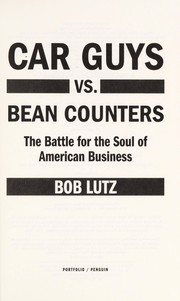
Insider account: Lutz on product culture versus finance control.

Recommended by: Mohnish Pabrai

Where it sits in the reference 3

Business themes
Industries
Business themes

Topics

Company HistoriesArt and DesignBusiness and ManagementMusic and the Music Business