
Updates

  1. Person pages list letters, writing, profiles and links as sortable tables with filters, and show each person's companies as links; Fund letters show each letter's description in its own column.
  2. Experts show a checked job title and a short description of each person; 30 more people have photographs.
  3. Every company, fund, university and publication the experts work for has a page listing the people there.
  4. Fund letters show each letter's thesis and filter by it; 225 person pages list the essays, columns and newsletter issues the person wrote.
  5. Person pages list every essay and newsletter issue a person wrote, and their own books as a table in List view.
  6. Recommends shows the five largest kinds of book and the rest under More; browse pictures load sooner.
  7. Podcasts and talks link the original episode, filter by Audio and video or Press, and list each publisher once.
  8. Pages are wider, Recommends has List and Grid, and a filter clicked again turns off.
  9. Book cards sit in a ruled grid with Open Library and Goodreads links and each book's one-line note.
  10. Funds is now Investors; each investor's styles are buttons that filter the table.
  11. Podcasts and talks on a person's page filter by year and publisher and show as a list or a grid of pictures.
  12. Quotes show only people's own words: 472 summaries written by list sites are gone.
  13. Country pages open from Browse again, and every link on the shelf lands on a page.
  14. Subject and person pages show their sections as tabs, and each book appears once on a person's page.
  15. Book cards show the quote, who said it and the source; grids show five cards to a row.
  16. On a phone, a menu holds the sections, search, Updates, Feedback and dark mode.
  17. Feedback takes a screenshot of the page with no browser prompt, opens a screenshot full size when you click it, and clears itself once sent.
  18. Book cards are centred, search names the topic each book sits in, and any text cut short shows whole on hover.
  19. Search groups its results by kind: people, companies, geographies, subjects, topics, books, funds, fund letters and papers.
  20. The Books table lists who recommended each book by name, and the browser tab names the section you are in.
  21. Feedback can take a screenshot of the page, or one you paste or choose, and opens in the corner beside Updates.
  22. Each rail button reopens its section where you left it, and Browse, Table and People show on every book and subject page.
  23. Filters grey out choices that hold nothing instead of hiding them, and Books › People filters by authors or recommenders.
  24. Feedback takes a subject line and up to three screenshots.
  25. Biographies are grouped by the person they are about: 41 new pages, from Abraham Lincoln to Lee Kuan Yew.
  26. Sport splits into 23 sports, and Religion into one topic per faith.
  27. Book lists show as cards: the cover, one recommendation quote and every recommender by name.
  28. Seventeen subjects that had two or three pages under different names now have one page each.
  29. Every page lists its Experts as authors and recommenders, with a link to them on the Experts tab.
  30. Economics, Financial history, Financial panics and Accounting are subjects of their own, with one page per financial crisis.
  31. Book, person and subject pages open inside the app, so the tabs stay in view.
  32. 996 more book covers, and photographs or logos for 227 more people and companies.
  33. Books › Browse shows every subject as cards, and the rail holds Fund letters, Papers, Experts, Books and Funds.
  34. Every topic over 150 books splits into narrower topics, each with a page of its own.

Send feedback

What is it?
Screenshots, up to 3 (optional)
or paste one with Ctrl+V

We use your email only to reply to you.

American Icon: Alan Mulally and the Fight to

American Icon: Alan Mulally and the Fight to Save Ford Motor Company

Bryce G. Hoffman
2012
T3 363 pages · about 6h 3m to read Open Librarygoodreads

The 2006-2010 turnaround told with close management access.

Summary

Hoffman, a Detroit News reporter, had access to Alan Mulally and to Ford's senior team during the turnaround that began when Mulally arrived from Boeing in 2006 and ran through the financial crisis. The book covers the strategy, called One Ford, and the management system, called the Business Plan Review, in operational detail.

The substantive decisions were: mortgage every asset including the blue oval trademark to raise 23.6 billion dollars in 2006, before credit markets closed, which is why Ford did not take a government bailout; sell Jaguar, Land Rover, Aston Martin and Volvo; consolidate global platforms so the same vehicle could be engineered once and sold everywhere; and cut the model range. The management change was a weekly meeting of the whole senior team, reviewing a fixed set of colour-coded metrics, with a rule that problems must be shown in red and that no one may attack the person reporting a problem.

The book is the best available account of a specific management operating system working under extreme pressure, and the detail on how Mulally changed a culture where executives concealed bad news is what makes it useful to operators. The obvious limitation is access journalism: the book is admiring, Mulally cooperated, and dissenting voices are thin. It also underweights the role of luck and timing, since the 2006 financing was completed just before the window closed and the bankruptcies of General Motors and Chrysler removed capacity that helped Ford afterwards. The debt Ford took on constrained it for years, which Hoffman treats mainly as courage.

Key takeaways 7

  1. Ford avoided bankruptcy because it borrowed 23.6 billion dollars against all of its assets in 2006, before credit markets closed, not because it operated better than its rivals during the crisis.
  2. A single weekly meeting reviewing the same metrics with the entire senior team, with no substitutes permitted, was the mechanism that made the turnaround visible and enforceable.
  3. Executives will conceal problems until a leader demonstrably rewards the first person who reports one.
  4. Consolidating to global vehicle platforms removed duplicated engineering spending that regional autonomy had made invisible.
  5. Divesting the premium brands freed management attention as much as it freed capital.
  6. A turnaround requires one plan that everyone can state, and the value of the plan comes from its shared specificity rather than its cleverness.
  7. Colour-coded status reporting only works when leaders visibly welcome red, since otherwise everything is reported green.

Who should read it

Executives running an operating cadence or a turnaround who want a documented example of a management system that changed behaviour in a large organisation.

Who recommended it 1 · 1 direct

Similar books 6

Chosen by shared topics, the entries that hold them, and the people who recommended both.
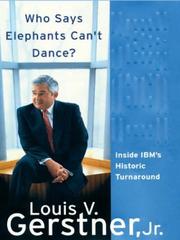
Louis V. Gerstner · 2002

How IBM was kept whole in 1993 and turned from hardware toward services.

Recommended by: Mohnish Pabrai, Aaron Levie

Risto Siilasmaa · 2018

Nokia's chairman on selling the phone unit to Microsoft and buying Alcatel-Lucent.

Stuart Slatter, David Lovett · 1999

The systematic practitioner framework.

Steve Miller · 2008

Insider account from a serial restructuring CEO.
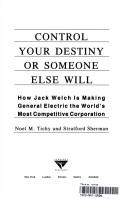
Noel M. Tichy, Stratford Sherman · 1993

The admiring contemporary account of Welch's restructuring.
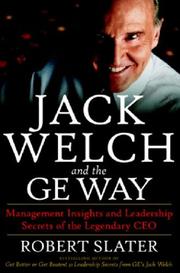
Robert Slater · 1998

Contemporary admiring account; useful as a record of what people believed.

Where it sits in the reference 5

Companies
Business themes
Business themes
Investment styles
Business themes

Topics

Company HistoriesLeadershipBusiness and Management