Updates

  1. Person pages list letters, writing, profiles and links as sortable tables with filters, and show each person's companies as links; Fund letters show each letter's description in its own column.
  2. Experts show a checked job title and a short description of each person; 30 more people have photographs.
  3. Every company, fund, university and publication the experts work for has a page listing the people there.
  4. Fund letters show each letter's thesis and filter by it; 225 person pages list the essays, columns and newsletter issues the person wrote.
  5. Person pages list every essay and newsletter issue a person wrote, and their own books as a table in List view.
  6. Recommends shows the five largest kinds of book and the rest under More; browse pictures load sooner.
  7. Podcasts and talks link the original episode, filter by Audio and video or Press, and list each publisher once.
  8. Pages are wider, Recommends has List and Grid, and a filter clicked again turns off.
  9. Book cards sit in a ruled grid with Open Library and Goodreads links and each book's one-line note.
  10. Funds is now Investors; each investor's styles are buttons that filter the table.
  11. Podcasts and talks on a person's page filter by year and publisher and show as a list or a grid of pictures.
  12. Quotes show only people's own words: 472 summaries written by list sites are gone.
  13. Country pages open from Browse again, and every link on the shelf lands on a page.
  14. Subject and person pages show their sections as tabs, and each book appears once on a person's page.
  15. Book cards show the quote, who said it and the source; grids show five cards to a row.
  16. On a phone, a menu holds the sections, search, Updates, Feedback and dark mode.
  17. Feedback takes a screenshot of the page with no browser prompt, opens a screenshot full size when you click it, and clears itself once sent.
  18. Book cards are centred, search names the topic each book sits in, and any text cut short shows whole on hover.
  19. Search groups its results by kind: people, companies, geographies, subjects, topics, books, funds, fund letters and papers.
  20. The Books table lists who recommended each book by name, and the browser tab names the section you are in.
  21. Feedback can take a screenshot of the page, or one you paste or choose, and opens in the corner beside Updates.
  22. Each rail button reopens its section where you left it, and Browse, Table and People show on every book and subject page.
  23. Filters grey out choices that hold nothing instead of hiding them, and Books › People filters by authors or recommenders.
  24. Feedback takes a subject line and up to three screenshots.
  25. Biographies are grouped by the person they are about: 41 new pages, from Abraham Lincoln to Lee Kuan Yew.
  26. Sport splits into 23 sports, and Religion into one topic per faith.
  27. Book lists show as cards: the cover, one recommendation quote and every recommender by name.
  28. Seventeen subjects that had two or three pages under different names now have one page each.
  29. Every page lists its Experts as authors and recommenders, with a link to them on the Experts tab.
  30. Economics, Financial history, Financial panics and Accounting are subjects of their own, with one page per financial crisis.
  31. Book, person and subject pages open inside the app, so the tabs stay in view.
  32. 996 more book covers, and photographs or logos for 227 more people and companies.
  33. Books › Browse shows every subject as cards, and the rail holds Fund letters, Papers, Experts, Books and Funds.
  34. Every topic over 150 books splits into narrower topics, each with a page of its own.

Send feedback

What is it?
Screenshots, up to 3 (optional)
or paste one with Ctrl+V

We use your email only to reply to you.

Transforming NOKIA

Transforming NOKIA

Risto Siilasmaa
2018
T2 336 pages · about 5h 36m to read Open Librarygoodreads

Insider account by the chairman who sold handsets to Microsoft.

Summary

Siilasmaa joined Nokia's board in 2008, became chairman in 2012, and led the company through the sale of its handset business to Microsoft and the acquisition of Alcatel-Lucent. This is his first-hand account of board-level crisis management.

The governance material is the substance. Siilasmaa describes a board that received polished presentations, did not ask about the software platform's actual state, and did not know until he specifically demanded a technical assessment that Symbian could not be made competitive and that MeeGo would not ship at scale in time. His conclusion is that the board's failure was a failure to ask, and he sets out what he calls entrepreneurial leadership and paranoid optimism: assume the worst plausible scenario, plan for it in detail, and then work to make the good outcome happen.

The practical device he describes is scenario planning taken seriously at board level. Before the Microsoft negotiation he had the board work through what Nokia would do in each outcome including the worst, which meant the company entered the negotiation with alternatives and could walk away. He attributes the eventual price and terms to that preparation.

The book is a chairman's account of his own tenure, and it presents his decisions favourably. The handset sale remains contested, and the book does not seriously engage with the argument that the Windows Phone decision made it inevitable. The material on board process, on demanding facts rather than presentations, and on preparing alternatives before a negotiation is transferable and is the reason to read it.

Key takeaways 7

  1. Nokia's board did not know the true state of its own software platform because it received presentations rather than technical assessments and did not demand them.
  2. A board's central failure is usually a failure to ask questions rather than a failure to decide correctly on what it was told.
  3. Paranoid optimism means planning the worst plausible scenario in full detail while working to produce the best one, and the planning is what makes the optimism defensible.
  4. Entering a negotiation with a fully prepared alternative determines the terms achieved more than any negotiating technique does.
  5. Scenario planning conducted by the board itself, rather than delegated to management, changes what the board is capable of deciding.
  6. A culture in which bad news is unwelcome produces reporting that removes exactly the information the board needs.
  7. Selling a failing business at the point of maximum remaining value requires deciding before the deterioration is visible in the results.

Who should read it

Directors and executives who want a first-hand account of board process failure and of preparing alternatives before a decisive negotiation.

Similar books 6

Chosen by shared topics, the entries that hold them, and the people who recommended both.

Dan Steinbock · 2010

Nokia's emerging-market operating model at the turn

Bryce G. Hoffman · 2012

The 2006-2010 turnaround told with close management access.

Recommended by: Mohnish Pabrai

Ken Segall · 2012

Simplicity as Apple's operating principle, from the adman who worked with Jobs.

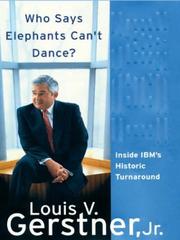
Louis V. Gerstner · 2002

How IBM was kept whole in 1993 and turned from hardware toward services.

Recommended by: Mohnish Pabrai, Aaron Levie
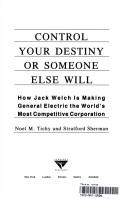
Noel M. Tichy, Stratford Sherman · 1993

The admiring contemporary account of Welch's restructuring.
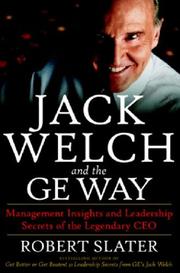
Robert Slater · 1998

Contemporary admiring account; useful as a record of what people believed.

Where it sits in the reference 6

Companies
Geographies
Business themes
Business themes
Industries
Business themes

Topics

Company HistoriesLeadershipBusiness and Management