Consumer Electronics and Devices
Prices per unit of performance fall continuously in this industry, so profit goes to whoever is early in a category, holds a brand premium, or controls a component or an operating system that rivals cannot match quickly. Sony led with the Trinitron and the Walkman and then lost digital music to Apple and flat panels to Samsung; Nokia sold about 40 percent of the world's handsets in 2007 and sold its phone business to Microsoft in 2014. Product cycles are short, unsold inventory loses value fast, and assembly sits with contract manufacturers whose labour conditions are part of the story. The literature covers Sony's founding and its contest with Samsung, the Nokia and BlackBerry collapses, Apple's engineering and design practice from the inside, and the factories where the devices are built.
Start here
- Made in JapanAkio Morita, Edwin M. Reingold, Mitsuko Shimomura, 1986
- Losing the SignalJacquie McNish, Sean Silcoff, 2015
- Creative SelectionKen Kocienda, 2018

Contemporary account of Sony at its engineering peak
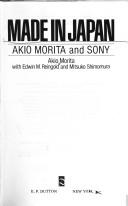
How Sony grew from Tokyo's ruins, and how Japanese and American business differ.
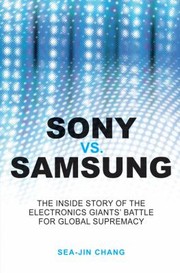
Strategy comparison explaining how Samsung overtook Sony.

Simplicity as Apple's operating principle, from the adman who worked with Jobs.
Recommended by: Andrew Wilkinson, Austen Allred and 1 other
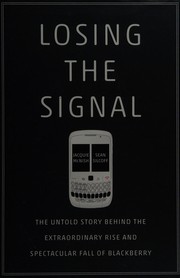
How BlackBerry maker Research In Motion rose to dominance and fell after the iPhone.
Recommended by: Andrew Wilkinson, Mohnish Pabrai
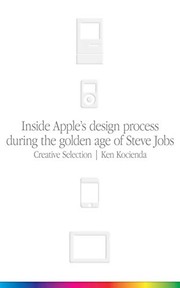
Insider account by the engineer who built the iPhone keyboard.
Recommended by: Chris Dixon, Jordan Hughes, Keith Rabois

Nokia's chairman on selling the phone unit to Microsoft and buying Alcatel-Lucent.

Foxconn from the inside; the labour cost of the contract model.

Fadell built the iPod, the iPhone, and Nest. Build is structured as a book of advice organized by career stage and product phase. It is unusually honest about failure, about the texture of executive dysfunction, and about what it actually takes to ship physical products at Apple-level quality. The section on storytelling for products is particularly strong.
 Keith Raboisrecommends 2 books here
 Mohnish Pabrairecommends 1 book here
 Chris Dixonrecommends 1 book here