Updates

  1. Person pages list letters, writing, profiles and links as sortable tables with filters, and show each person's companies as links; Fund letters show each letter's description in its own column.
  2. Experts show a checked job title and a short description of each person; 30 more people have photographs.
  3. Every company, fund, university and publication the experts work for has a page listing the people there.
  4. Fund letters show each letter's thesis and filter by it; 225 person pages list the essays, columns and newsletter issues the person wrote.
  5. Person pages list every essay and newsletter issue a person wrote, and their own books as a table in List view.
  6. Recommends shows the five largest kinds of book and the rest under More; browse pictures load sooner.
  7. Podcasts and talks link the original episode, filter by Audio and video or Press, and list each publisher once.
  8. Pages are wider, Recommends has List and Grid, and a filter clicked again turns off.
  9. Book cards sit in a ruled grid with Open Library and Goodreads links and each book's one-line note.
  10. Funds is now Investors; each investor's styles are buttons that filter the table.
  11. Podcasts and talks on a person's page filter by year and publisher and show as a list or a grid of pictures.
  12. Quotes show only people's own words: 472 summaries written by list sites are gone.
  13. Country pages open from Browse again, and every link on the shelf lands on a page.
  14. Subject and person pages show their sections as tabs, and each book appears once on a person's page.
  15. Book cards show the quote, who said it and the source; grids show five cards to a row.
  16. On a phone, a menu holds the sections, search, Updates, Feedback and dark mode.
  17. Feedback takes a screenshot of the page with no browser prompt, opens a screenshot full size when you click it, and clears itself once sent.
  18. Book cards are centred, search names the topic each book sits in, and any text cut short shows whole on hover.
  19. Search groups its results by kind: people, companies, geographies, subjects, topics, books, funds, fund letters and papers.
  20. The Books table lists who recommended each book by name, and the browser tab names the section you are in.
  21. Feedback can take a screenshot of the page, or one you paste or choose, and opens in the corner beside Updates.
  22. Each rail button reopens its section where you left it, and Browse, Table and People show on every book and subject page.
  23. Filters grey out choices that hold nothing instead of hiding them, and Books › People filters by authors or recommenders.
  24. Feedback takes a subject line and up to three screenshots.
  25. Biographies are grouped by the person they are about: 41 new pages, from Abraham Lincoln to Lee Kuan Yew.
  26. Sport splits into 23 sports, and Religion into one topic per faith.
  27. Book lists show as cards: the cover, one recommendation quote and every recommender by name.
  28. Seventeen subjects that had two or three pages under different names now have one page each.
  29. Every page lists its Experts as authors and recommenders, with a link to them on the Experts tab.
  30. Economics, Financial history, Financial panics and Accounting are subjects of their own, with one page per financial crisis.
  31. Book, person and subject pages open inside the app, so the tabs stay in view.
  32. 996 more book covers, and photographs or logos for 227 more people and companies.
  33. Books › Browse shows every subject as cards, and the rail holds Fund letters, Papers, Experts, Books and Funds.
  34. Every topic over 150 books splits into narrower topics, each with a page of its own.

Send feedback

What is it?
Screenshots, up to 3 (optional)
or paste one with Ctrl+V

We use your email only to reply to you.

Build

Build

Tony Fadell
T3 no Open Library recordgoodreads

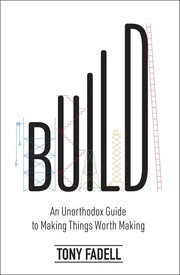
Fadell built the iPod, the iPhone, and Nest. Build is structured as a book of advice organized by career stage and product phase. It is unusually honest about failure, about the texture of executive dysfunction, and about what it actually takes to ship physical products at Apple-level quality. The section on storytelling for products is particularly strong.

Summary

Fadell led the iPod team at Apple, worked on the first iPhone, then founded Nest and sold it to Google. He wrote this as practical advice organised around the stages of a career and a company.

The structure moves from individual to company. The early sections cover choosing what to work on, learning by doing rather than by planning, dealing with managers, and the transition from doing work to managing people, which he treats as a different job requiring different skills rather than a promotion.

The product sections are the strongest. Fadell argues that a product must solve a problem the customer actually has, that the customer journey begins with the advertisement and the packaging rather than with the product itself, and that the first version should be built for people who share the founder's frustration rather than for a mass market. He distinguishes painkillers from vitamins, argues that a product needs both a rational and an emotional justification because customers buy on emotion and justify rationally, and describes the discipline of setting a hard deadline as a forcing function on scope.

The company sections cover hiring, the specific mistakes founders make in fundraising, the difference between a product company and a business, the decision to sell, and the experience of being acquired, on which he is unusually candid about what went wrong at Nest inside Google.

The book is one operator's experience and does not claim research support. Fadell's cases are drawn from consumer hardware at Apple and Nest, and the advice reflects that context: hardware development cycles, physical constraints, retail and packaging. Founders in software or services should translate. He is opinionated and the tone will not suit everyone.

Key takeaways 7

  1. Managing people is a different job from doing the work, not a promotion, and it requires learning skills the previous role did not develop.
  2. The customer journey starts with the advertisement and the packaging, so those are part of the product rather than marketing around it.
  3. A first product should be built for people who share the founder's own frustration rather than for a general market.
  4. Products need both a rational justification and an emotional one, because customers decide emotionally and justify rationally.
  5. A hard deadline functions as a scope constraint that no amount of prioritisation discipline can replace.
  6. Founders should understand what an acquirer intends to do with the company before selling, because the stated intention frequently does not survive.
  7. Solving a problem the founder personally has is the most reliable source of the judgement required to make product decisions.

Who should read it

Founders and product leaders, particularly in hardware, who want direct operating advice from someone who shipped category-defining products.

Similar books 6

Chosen by shared topics, the entries that hold them, and the people who recommended both.

Jim Collins, William C. Lazier · 2020

Expanded edition of the 1992 book

Jim Collins, William C. Lazier · 1992

How leaders turn a founder-driven startup into a company that lasts.

Recommended by: Reed Hastings
Reid Hoffman, Chris Yeh · 2018

When and how to put speed before efficiency to capture a market before rivals.

Alexander Osterwalder, Yves Pigneur · 2010

The Business Model Canvas: nine blocks for how a firm creates and captures value.

Recommended by: Nir Eyal

Where it sits in the reference 3

Business themes
Industries
Business themes

Topics

Business and Management