Updates

  1. Person pages list letters, writing, profiles and links as sortable tables with filters, and show each person's companies as links; Fund letters show each letter's description in its own column.
  2. Experts show a checked job title and a short description of each person; 30 more people have photographs.
  3. Every company, fund, university and publication the experts work for has a page listing the people there.
  4. Fund letters show each letter's thesis and filter by it; 225 person pages list the essays, columns and newsletter issues the person wrote.
  5. Person pages list every essay and newsletter issue a person wrote, and their own books as a table in List view.
  6. Recommends shows the five largest kinds of book and the rest under More; browse pictures load sooner.
  7. Podcasts and talks link the original episode, filter by Audio and video or Press, and list each publisher once.
  8. Pages are wider, Recommends has List and Grid, and a filter clicked again turns off.
  9. Book cards sit in a ruled grid with Open Library and Goodreads links and each book's one-line note.
  10. Funds is now Investors; each investor's styles are buttons that filter the table.
  11. Podcasts and talks on a person's page filter by year and publisher and show as a list or a grid of pictures.
  12. Quotes show only people's own words: 472 summaries written by list sites are gone.
  13. Country pages open from Browse again, and every link on the shelf lands on a page.
  14. Subject and person pages show their sections as tabs, and each book appears once on a person's page.
  15. Book cards show the quote, who said it and the source; grids show five cards to a row.
  16. On a phone, a menu holds the sections, search, Updates, Feedback and dark mode.
  17. Feedback takes a screenshot of the page with no browser prompt, opens a screenshot full size when you click it, and clears itself once sent.
  18. Book cards are centred, search names the topic each book sits in, and any text cut short shows whole on hover.
  19. Search groups its results by kind: people, companies, geographies, subjects, topics, books, funds, fund letters and papers.
  20. The Books table lists who recommended each book by name, and the browser tab names the section you are in.
  21. Feedback can take a screenshot of the page, or one you paste or choose, and opens in the corner beside Updates.
  22. Each rail button reopens its section where you left it, and Browse, Table and People show on every book and subject page.
  23. Filters grey out choices that hold nothing instead of hiding them, and Books › People filters by authors or recommenders.
  24. Feedback takes a subject line and up to three screenshots.
  25. Biographies are grouped by the person they are about: 41 new pages, from Abraham Lincoln to Lee Kuan Yew.
  26. Sport splits into 23 sports, and Religion into one topic per faith.
  27. Book lists show as cards: the cover, one recommendation quote and every recommender by name.
  28. Seventeen subjects that had two or three pages under different names now have one page each.
  29. Every page lists its Experts as authors and recommenders, with a link to them on the Experts tab.
  30. Economics, Financial history, Financial panics and Accounting are subjects of their own, with one page per financial crisis.
  31. Book, person and subject pages open inside the app, so the tabs stay in view.
  32. 996 more book covers, and photographs or logos for 227 more people and companies.
  33. Books › Browse shows every subject as cards, and the rail holds Fund letters, Papers, Experts, Books and Funds.
  34. Every topic over 150 books splits into narrower topics, each with a page of its own.

Send feedback

What is it?
Screenshots, up to 3 (optional)
or paste one with Ctrl+V

We use your email only to reply to you.

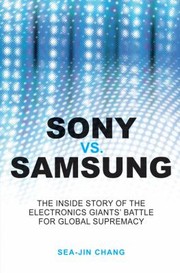
Sony vs Samsung

Sony vs Samsung

Sea-Jin Chang
2008
T3 250 pages · about 4h 10m to read Open Librarygoodreads

Strategy comparison explaining how Samsung overtook Sony.

Summary

Chang, a business school professor who has studied Korean and Japanese firms extensively, compares Sony and Samsung Electronics over the period in which Samsung overtook Sony in market value and in most product categories.

His explanation is organisational rather than technological. Sony was built on autonomous business units with strong internal identities, which produced innovation in the analogue era but prevented coordination when digital products required components and software to work together. Chang documents the internal competition that produced incompatible products, the failure to combine hardware with the content businesses Sony had acquired, and the resistance of profitable divisions to cannibalising themselves, which cost Sony the portable music market it had created.

Samsung, by contrast, made large centralised bets on component businesses, particularly memory semiconductors and displays, funded by the chairman's authority against internal and external objection. Chang describes the group's willingness to invest counter-cyclically in memory during downturns, which drove out competitors, and the vertical integration that let the finished-goods businesses use in-house components. He also documents the management practices imported after Lee Kun-hee's 1993 Frankfurt declaration: sending managers abroad for a year, aggressive external recruitment, and design investment.

He is careful about the costs of the Samsung model, including the concentration of authority in the family, the governance problems and the difficulty of innovating outside the categories the centre has selected.

The comparison was written in 2008 and a second edition extended it. Both companies have changed substantially since: Sony recovered through image sensors, gaming and content, while Samsung faced its own succession and governance crises. The organisational analysis remains the useful part.

Key takeaways 7

  1. Sony's autonomous business units produced innovation in the analogue era and prevented coordination once digital products required integration.
  2. Sony failed to combine its hardware and content businesses because each division protected its own economics.
  3. Samsung made large centralised bets on memory semiconductors that no divisional process would have approved.
  4. Investing counter-cyclically in semiconductor capacity during downturns drove out competitors who could not fund it.
  5. Vertical integration into components gave Samsung's finished-goods businesses cost and supply advantages competitors lacked.
  6. Concentrated family authority enabled decisions that professional management structures would have blocked, at the cost of governance quality.
  7. Divisions with profitable existing products will not cannibalise them, so the decision must come from above or not at all.

Who should read it

Operators and investors in technology hardware who want an organisational explanation of why one incumbent lost a lead and another built one.

Similar books 6

Chosen by shared topics, the entries that hold them, and the people who recommended both.
Akio Morita, Edwin M. Reingold, Mitsuko Shimomura · 1986

How Sony grew from Tokyo's ruins, and how Japanese and American business differ.

Nick Lyons · 1976

Contemporary account of Sony at its engineering peak
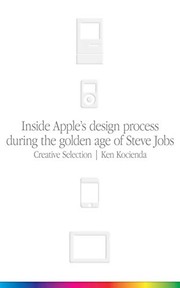
Ken Kocienda · 2018

Insider account by the engineer who built the iPhone keyboard.

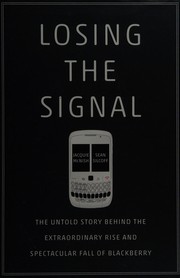
Jacquie McNish, Sean Silcoff · 2015

How BlackBerry maker Research In Motion rose to dominance and fell after the iPhone.

Where it sits in the reference 3

Companies
Companies
Industries

Topics

Company HistoriesTechnology and ComputingTech company stories