Updates

  1. Person pages list letters, writing, profiles and links as sortable tables with filters, and show each person's companies as links; Fund letters show each letter's description in its own column.
  2. Experts show a checked job title and a short description of each person; 30 more people have photographs.
  3. Every company, fund, university and publication the experts work for has a page listing the people there.
  4. Fund letters show each letter's thesis and filter by it; 225 person pages list the essays, columns and newsletter issues the person wrote.
  5. Person pages list every essay and newsletter issue a person wrote, and their own books as a table in List view.
  6. Recommends shows the five largest kinds of book and the rest under More; browse pictures load sooner.
  7. Podcasts and talks link the original episode, filter by Audio and video or Press, and list each publisher once.
  8. Pages are wider, Recommends has List and Grid, and a filter clicked again turns off.
  9. Book cards sit in a ruled grid with Open Library and Goodreads links and each book's one-line note.
  10. Funds is now Investors; each investor's styles are buttons that filter the table.
  11. Podcasts and talks on a person's page filter by year and publisher and show as a list or a grid of pictures.
  12. Quotes show only people's own words: 472 summaries written by list sites are gone.
  13. Country pages open from Browse again, and every link on the shelf lands on a page.
  14. Subject and person pages show their sections as tabs, and each book appears once on a person's page.
  15. Book cards show the quote, who said it and the source; grids show five cards to a row.
  16. On a phone, a menu holds the sections, search, Updates, Feedback and dark mode.
  17. Feedback takes a screenshot of the page with no browser prompt, opens a screenshot full size when you click it, and clears itself once sent.
  18. Book cards are centred, search names the topic each book sits in, and any text cut short shows whole on hover.
  19. Search groups its results by kind: people, companies, geographies, subjects, topics, books, funds, fund letters and papers.
  20. The Books table lists who recommended each book by name, and the browser tab names the section you are in.
  21. Feedback can take a screenshot of the page, or one you paste or choose, and opens in the corner beside Updates.
  22. Each rail button reopens its section where you left it, and Browse, Table and People show on every book and subject page.
  23. Filters grey out choices that hold nothing instead of hiding them, and Books › People filters by authors or recommenders.
  24. Feedback takes a subject line and up to three screenshots.
  25. Biographies are grouped by the person they are about: 41 new pages, from Abraham Lincoln to Lee Kuan Yew.
  26. Sport splits into 23 sports, and Religion into one topic per faith.
  27. Book lists show as cards: the cover, one recommendation quote and every recommender by name.
  28. Seventeen subjects that had two or three pages under different names now have one page each.
  29. Every page lists its Experts as authors and recommenders, with a link to them on the Experts tab.
  30. Economics, Financial history, Financial panics and Accounting are subjects of their own, with one page per financial crisis.
  31. Book, person and subject pages open inside the app, so the tabs stay in view.
  32. 996 more book covers, and photographs or logos for 227 more people and companies.
  33. Books › Browse shows every subject as cards, and the rail holds Fund letters, Papers, Experts, Books and Funds.
  34. Every topic over 150 books splits into narrower topics, each with a page of its own.

Send feedback

What is it?
Screenshots, up to 3 (optional)
or paste one with Ctrl+V

We use your email only to reply to you.

Samsung Rising: The Inside Story of the Sout

Samsung Rising: The Inside Story of the South Korean Giant That Set Out to Beat Apple and Conquer Tech

Geoffrey Cain
2020
T2 Open Librarygoodreads

The main English-language narrative, including the bribery scandal.

Summary

Geoffrey Cain reported from Korea for several years and wrote this history of Samsung Electronics and of the Lee family that controls it. The book combines corporate history with reporting on the family and on Samsung's position in Korean politics.

The business narrative covers the group's origins as a trading company, the move into electronics as a low-cost manufacturer, Lee Kun-hee's 1993 Frankfurt declaration in which he ordered a shift from volume to quality, including the public burning of defective phones, the memory chip business that became the group's profit engine, and the mobile phone strategy that took the company from copying to competing with Apple. Cain covers the design and marketing effort, the litigation with Apple, and the Galaxy Note 7 battery recall.

The political material covers the family's control of the group through a small direct shareholding supported by circular cross-holdings, the succession from Lee Kun-hee to Lee Jae-yong, the 2015 merger of Samsung C&T and Cheil Industries that facilitated that succession, the bribery case involving President Park Geun-hye, and Lee Jae-yong's conviction and imprisonment. Cain's sourcing is largely from former employees and his access to the company itself was limited, which he acknowledges. The book is journalism rather than analysis and readers wanting the semiconductor business specifically will find it thin.

Key takeaways 7

  1. Lee Kun-hee's 1993 quality campaign redirected Samsung from competing on cost to competing on product, and the shift took a decade.
  2. Memory semiconductors supplied the profits that funded Samsung's entry into consumer products where it initially lost money.
  3. The Lee family controls the group through a small direct stake supported by circular cross-shareholdings among affiliates.
  4. The 2015 merger of two affiliates was structured to facilitate family succession, and the national pension fund's vote in favour became a criminal matter.
  5. Samsung's vertical integration across components and finished products gives it cost information and supply security competitors lack.
  6. Cain argues that Samsung's relationship with the Korean state has been reciprocal rather than one-directional in either direction.
  7. The Galaxy Note 7 recall demonstrated that vertical integration concentrates risk as well as capability, since the battery was made in-house.

Who should read it

Investors in Korean equities and in electronics supply chains who want the corporate and political history behind the group's control structure.

Similar books 6

Chosen by shared topics, the entries that hold them, and the people who recommended both.
Sea-Jin Chang · 2008

Strategy comparison explaining how Samsung overtook Sony.
Joe Studwell · 2013

Why some Asian nations grew rich: land reform, export-led industry, directed credit.

“it's a good read for anyone who wants to understand what actually determines whether a developing economy will succeed.” — Bill Gates

Source: Gates Notes review of How Asia Works

Recommended by: Bill Gates, Mohnish Pabrai, Patrick Collison
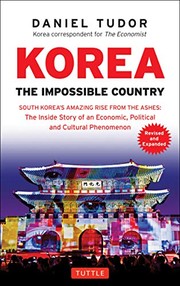
Daniel Tudor · 2012

The society and politics a foreign investor in Samsung is buying into.

Chris Miller · 2022

How chips became the key to economic and military power, made in a few chokepoints.

Recommended by: Andrew Wilkinson
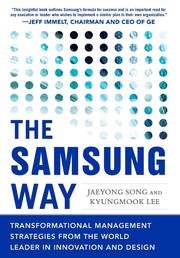
Jaeyong Song, Kyungmook Lee · 2014

Insider-access management study of Lee Kun-hee's reforms

Where it sits in the reference 2

Companies
Geographies

Topics

Company HistoriesTechnology and ComputingTech company stories