Updates

  1. Person pages list letters, writing, profiles and links as sortable tables with filters, and show each person's companies as links; Fund letters show each letter's description in its own column.
  2. Experts show a checked job title and a short description of each person; 30 more people have photographs.
  3. Every company, fund, university and publication the experts work for has a page listing the people there.
  4. Fund letters show each letter's thesis and filter by it; 225 person pages list the essays, columns and newsletter issues the person wrote.
  5. Person pages list every essay and newsletter issue a person wrote, and their own books as a table in List view.
  6. Recommends shows the five largest kinds of book and the rest under More; browse pictures load sooner.
  7. Podcasts and talks link the original episode, filter by Audio and video or Press, and list each publisher once.
  8. Pages are wider, Recommends has List and Grid, and a filter clicked again turns off.
  9. Book cards sit in a ruled grid with Open Library and Goodreads links and each book's one-line note.
  10. Funds is now Investors; each investor's styles are buttons that filter the table.
  11. Podcasts and talks on a person's page filter by year and publisher and show as a list or a grid of pictures.
  12. Quotes show only people's own words: 472 summaries written by list sites are gone.
  13. Country pages open from Browse again, and every link on the shelf lands on a page.
  14. Subject and person pages show their sections as tabs, and each book appears once on a person's page.
  15. Book cards show the quote, who said it and the source; grids show five cards to a row.
  16. On a phone, a menu holds the sections, search, Updates, Feedback and dark mode.
  17. Feedback takes a screenshot of the page with no browser prompt, opens a screenshot full size when you click it, and clears itself once sent.
  18. Book cards are centred, search names the topic each book sits in, and any text cut short shows whole on hover.
  19. Search groups its results by kind: people, companies, geographies, subjects, topics, books, funds, fund letters and papers.
  20. The Books table lists who recommended each book by name, and the browser tab names the section you are in.
  21. Feedback can take a screenshot of the page, or one you paste or choose, and opens in the corner beside Updates.
  22. Each rail button reopens its section where you left it, and Browse, Table and People show on every book and subject page.
  23. Filters grey out choices that hold nothing instead of hiding them, and Books › People filters by authors or recommenders.
  24. Feedback takes a subject line and up to three screenshots.
  25. Biographies are grouped by the person they are about: 41 new pages, from Abraham Lincoln to Lee Kuan Yew.
  26. Sport splits into 23 sports, and Religion into one topic per faith.
  27. Book lists show as cards: the cover, one recommendation quote and every recommender by name.
  28. Seventeen subjects that had two or three pages under different names now have one page each.
  29. Every page lists its Experts as authors and recommenders, with a link to them on the Experts tab.
  30. Economics, Financial history, Financial panics and Accounting are subjects of their own, with one page per financial crisis.
  31. Book, person and subject pages open inside the app, so the tabs stay in view.
  32. 996 more book covers, and photographs or logos for 227 more people and companies.
  33. Books › Browse shows every subject as cards, and the rail holds Fund letters, Papers, Experts, Books and Funds.
  34. Every topic over 150 books splits into narrower topics, each with a page of its own.

Send feedback

What is it?
Screenshots, up to 3 (optional)
or paste one with Ctrl+V

We use your email only to reply to you.

Korea: The Impossible Country

Korea: The Impossible Country

Daniel Tudor
2012
T3 336 pages · about 5h 36m to read Open Librarygoodreads

The society and politics a foreign investor in Samsung is buying into.

Summary

Daniel Tudor covered Korea for The Economist and wrote this as a general introduction to the country for readers who know it only through its exports. The structure moves from history and religion through culture and social norms to contemporary business and politics.

The economic material is the part most useful to a business reader. Tudor covers the Park Chung-hee period, the directed credit that built the chaebol, the 1997 crisis and the restructuring that followed, and the current position of the large groups in Korean society. He explains the education system and the private academies, the examination culture, and the way both shape labour market entry. He also covers the parts of Korean life that the development story omits: the suicide rate, the position of women in the workforce, the treatment of foreign workers, and the gap between the chaebol employment that a minority obtain and the small-firm and self-employed sector where most Koreans work.

Tudor's framing concept is that Korea achieved in forty years what took other countries a century, and that the social costs of that compression are still being paid. He writes as an outsider who has lived in the country and is sympathetic without being uncritical. The book is journalism and offers no original research; readers wanting the economics of Korean development should go to the specialist literature. As orientation for someone doing business in Korea it is the best single volume available.

Key takeaways 7

  1. Korean industrialisation compressed into forty years the social changes that took Western countries a century, and the social costs reflect the speed.
  2. The chaebol grew from directed credit under Park Chung-hee, which means their scale is a policy outcome rather than a market result.
  3. Chaebol employment covers a small minority of Korean workers while dominating the aspirations of the whole education system.
  4. Examination competition determines lifetime outcomes at eighteen, which sustains a private tutoring sector that most families cannot afford to leave.
  5. The 1997 crisis forced chaebol restructuring but left the family control structures intact through circular shareholdings.
  6. Korean workplace hierarchy derives from age and educational cohort rather than from role, which constrains how information travels upward.
  7. Tudor argues that Korean self-criticism about the country's culture is itself a national characteristic and is usually overstated.

Who should read it

Operators and investors starting work in Korea who need social and institutional context behind the corporate structures they will deal with.

Similar books 6

Chosen by shared topics, the entries that hold them, and the people who recommended both.
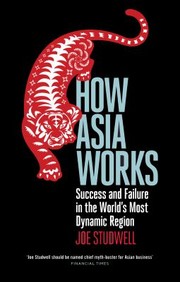
Joe Studwell · 2013

Why some Asian nations grew rich: land reform, export-led industry, directed credit.

“it's a good read for anyone who wants to understand what actually determines whether a developing economy will succeed.” — Bill Gates

Source: Gates Notes review of How Asia Works

Recommended by: Bill Gates, Mohnish Pabrai, Patrick Collison

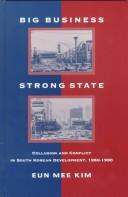
Eun Mee Kim · 1997

The state-chaebol bargain and how it shifted over forty years.
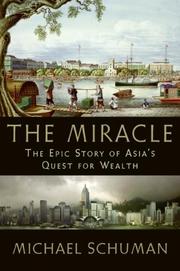
Michael Schuman · 2009

Asia's growth stories told through the people who drove them.

Recommended by: Mohnish Pabrai
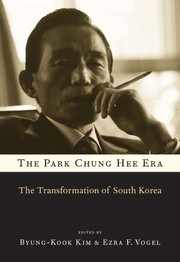
Byung-Kook Kim, Ezra F. Vogel · 2011

The authoritative volume on how the developmental state was built.
Where it sits in the reference 2

Companies
Geographies

Topics

Sociology and CultureGeneral HistoryAsia, Africa, Latin America and the Middle EastGlobalisation and national societies