Globalisation and national societies
Holds portraits of single countries and regions, from India, China, Japan and the Gulf to Italy and Scandinavia, and books that follow a commodity such as cocoa, cotton or coffee around the world.
Start here
- The Lucky CountryDonald Horne, 1964
- Japan as Number OneEzra F. Vogel, 1979
- The Embarrassment of RichesSimon Schama, 1987
- The Clash of Civilizations and the Remaking of World OrderSamuel P. Huntington, 1996
- Making Capitalism Without CapitalistsGil Eyal, Iván Szelényi, Eleanor Townsley, 1998

An indictment of 1960s Australia as provincial, philistine and living on its luck.

What Japan's institutions had solved that America had not, and what to learn.

The culture of a society that got rich first and was uneasy about it.

After the Cold War, conflict will follow cultural and religious fault lines.
Recommended by: Mohnish Pabrai, Patrick Collison and 3 others
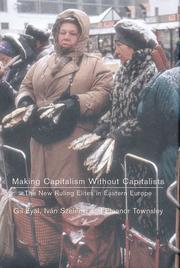
Who took charge of Central Europe's economies after 1989, without a capitalist class.

The Finnish model: how a welfare state produced a technology cluster.

Flags of convenience and the legal nowhere that ships are owned in.
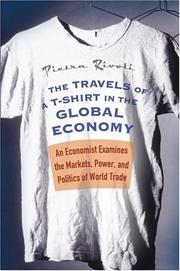
One T-shirt traced from a Texas cotton farm to a Chinese factory and beyond.

Ten forces around 2000 that let anyone, anywhere compete in the global economy.
Recommended by: Mohnish Pabrai, Bill Gates, Jamie Dimon and 2 others
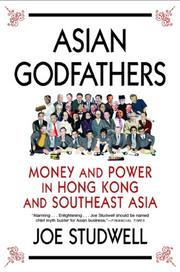
How Southeast Asia's tycoons got rich from political favours, not productivity.

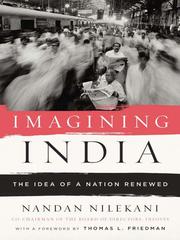
An introduction to modern India's rise and its many contradictions.
Recommended by: Mohnish Pabrai

A class analysis of the Gulf states that rejects the standard rentier-state view.

Six advantages, from competition to the work ethic, that let the West pull ahead.
Recommended by: Mohnish Pabrai

Why Italy's economy underperformed, and the firms and places showing it can change.

Japan after the 2011 earthquake, tsunami and Fukushima, and how it might recover.
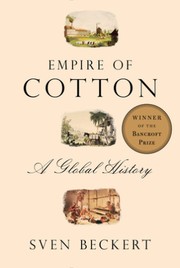
A global history of cotton used to trace how capitalism developed.

Flags of convenience, crew abuse and jurisdictional voids at sea.
What happened to Eastern Europe in the thirty years after 1989, measured.

Artisanal cobalt mining in Congo and its place in the battery supply chain.

The supply-chain breakdown of 2020 to 2022, traced through shipments and people.
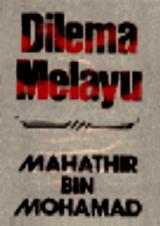
Mahathir's case for Malay preferences that became the New Economic Policy.
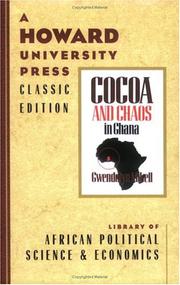
How marketing-board pricing destroyed the country's main export industry.

Comparative coffee political economy; sets Colombia's growers' federation in context.

The Overseas Chinese business families and their fortunes around the Pacific.

Spain's institutions and business culture after Franco.
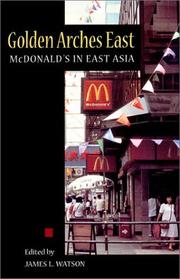
Edited fieldwork on how the format was localised across Asia.
Written straight after the 1997 crisis on opacity, related-party dealing and family control.
Scottish Enlightenment as the source of modern commercial and economic thinking
Recommended by: Charlie Munger, Mohnish Pabrai
How experts, capital and land were arranged in modern Egypt.

How informal credit, trust networks and trade finance work when the banking system does not.

A writer who moved to Italy in 1999 on its courts, bureaucracy and darker side.

Why economic reform in the Middle East reshuffled privilege rather than ending it.

Cocoa supply chain and child labour behind confectionery majors.

The emirate's development model and its structural dependencies.

Saudi Arabia's oil wealth, religious establishment and attempts at reform.
Foreign investment, labour and the costs of the transition, told critically.

The developer-banker-politician network that inflated the property bubble.

How Dubai became a centre for business and luxury, and the migrant labour beneath it.
Vietnam's rapid change under Party control, state firms and the doi moi reforms.

The society and politics a foreign investor in Samsung is buying into.

Indonesia's contradictions, and what its decentralised state means for business.

How Chinese private champions including Alibaba actually built scale.

Greece's crisis seen in its villages and streets: tax evasion and informal work.

Southeast Asia's politics and conflicts, seen by a mediator at the negotiating table.

McKinsey survey of operating companies; Ghana appears among the consumer-market cases.

The insecure jobs and falling mobility behind Germany's export success.
How deeply the two economies are now integrated.
A framework for post-communist regimes, built on the Hungarian case.

The social traits that the authors argue sustain Israel's success.


Recommended by: Patrick Collison

The cultural rift between America and Japan, through people working across it.



Globalization as the new international system, seen from Amazon farms to Wall Street.
Recommended by: Mohnish Pabrai


Recommended by: Patrick Collison

France's maps, migrations, languages and tribal disputes, from 1789 to 1914.
Recommended by: Mohnish Pabrai, Tyler Cowen

Academic study of the bottling and distribution system abroad.
Recommended by: Mohnish Pabrai

Nine people in India, among them a monk and a Jain nun, and how they live faith.
Recommended by: Mohnish Pabrai

Ten essays on China's economic and political change and what it means for America.
Recommended by: Patrick Collison


Recommended by: Patrick Collison

West African cocoa economics for a buyer of the crop.

Recommended by: Patrick Collison, Diana Kimball


Recommended by: Patrick Collison

Recommended by: Mohnish Pabrai

How entrepreneurs and tech investors are building companies in the Middle East.
Recommended by: Andrew Chen, Brad Feld
Recommended by: Nick Crocker, Patrick Collison

Journalistic, but the Denmark chapters on debt, tax and the flexicurity bargain are substantive.


Recommended by: Mohnish Pabrai

Longer version of the same argument, aimed at American admirers of the model.

Popular and partisan, but the clearest short account of the Nordic bargain.
Recommended by: Mohnish Pabrai

How to split, stack and season firewood and build a fire, the Scandinavian way.
Recommended by: Patrick O'Shaughnessy


 Mohnish Pabrairecommends 18 books here
 Patrick Collisonrecommends 10 books here
 Jamie Dimonrecommends 2 books here
 Tim Ferrissrecommends 2 books here
 Charlie Mungerrecommends 1 book here
 Paul Grahamrecommends 1 book here
 Ray Daliorecommends 1 book here
 Brad Feldrecommends 1 book here
 John Doerrrecommends 1 book here
 Tyler Cowenrecommends 1 book here
 Balaji S. Srinivasanrecommends 1 book here
Show all 24
 Bill Gatesrecommends 1 book here
 Caterina Fakerecommends 1 book here
 Claire Diaz-Ortizrecommends 1 book here
 Jack Dorseyrecommends 1 book here
 Meg Whitmanrecommends 1 book here
 Stewart Brandrecommends 1 book here
 Tucker Maxrecommends 1 book here