Updates

  1. Person pages list letters, writing, profiles and links as sortable tables with filters, and show each person's companies as links; Fund letters show each letter's description in its own column.
  2. Experts show a checked job title and a short description of each person; 30 more people have photographs.
  3. Every company, fund, university and publication the experts work for has a page listing the people there.
  4. Fund letters show each letter's thesis and filter by it; 225 person pages list the essays, columns and newsletter issues the person wrote.
  5. Person pages list every essay and newsletter issue a person wrote, and their own books as a table in List view.
  6. Recommends shows the five largest kinds of book and the rest under More; browse pictures load sooner.
  7. Podcasts and talks link the original episode, filter by Audio and video or Press, and list each publisher once.
  8. Pages are wider, Recommends has List and Grid, and a filter clicked again turns off.
  9. Book cards sit in a ruled grid with Open Library and Goodreads links and each book's one-line note.
  10. Funds is now Investors; each investor's styles are buttons that filter the table.
  11. Podcasts and talks on a person's page filter by year and publisher and show as a list or a grid of pictures.
  12. Quotes show only people's own words: 472 summaries written by list sites are gone.
  13. Country pages open from Browse again, and every link on the shelf lands on a page.
  14. Subject and person pages show their sections as tabs, and each book appears once on a person's page.
  15. Book cards show the quote, who said it and the source; grids show five cards to a row.
  16. On a phone, a menu holds the sections, search, Updates, Feedback and dark mode.
  17. Feedback takes a screenshot of the page with no browser prompt, opens a screenshot full size when you click it, and clears itself once sent.
  18. Book cards are centred, search names the topic each book sits in, and any text cut short shows whole on hover.
  19. Search groups its results by kind: people, companies, geographies, subjects, topics, books, funds, fund letters and papers.
  20. The Books table lists who recommended each book by name, and the browser tab names the section you are in.
  21. Feedback can take a screenshot of the page, or one you paste or choose, and opens in the corner beside Updates.
  22. Each rail button reopens its section where you left it, and Browse, Table and People show on every book and subject page.
  23. Filters grey out choices that hold nothing instead of hiding them, and Books › People filters by authors or recommenders.
  24. Feedback takes a subject line and up to three screenshots.
  25. Biographies are grouped by the person they are about: 41 new pages, from Abraham Lincoln to Lee Kuan Yew.
  26. Sport splits into 23 sports, and Religion into one topic per faith.
  27. Book lists show as cards: the cover, one recommendation quote and every recommender by name.
  28. Seventeen subjects that had two or three pages under different names now have one page each.
  29. Every page lists its Experts as authors and recommenders, with a link to them on the Experts tab.
  30. Economics, Financial history, Financial panics and Accounting are subjects of their own, with one page per financial crisis.
  31. Book, person and subject pages open inside the app, so the tabs stay in view.
  32. 996 more book covers, and photographs or logos for 227 more people and companies.
  33. Books › Browse shows every subject as cards, and the rail holds Fund letters, Papers, Experts, Books and Funds.
  34. Every topic over 150 books splits into narrower topics, each with a page of its own.

Send feedback

What is it?
Screenshots, up to 3 (optional)
or paste one with Ctrl+V

We use your email only to reply to you.

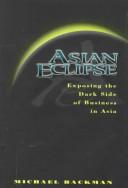
Asian Eclipse: Exposing the Dark Side of Bus

Asian Eclipse: Exposing the Dark Side of Business in Asia

Michael Backman
1999
T3 350 pages · about 5h 50m to read Open Librarygoodreads

Written straight after the 1997 crisis on opacity, related-party dealing and family control.

Summary

Backman, a business analyst who had worked in the region, wrote this after the 1997 Asian financial crisis to argue that the crisis exposed corporate governance and business practice problems that had been present throughout the growth period.

His catalogue covers the specific mechanisms. Family conglomerates controlled listed companies through pyramid structures and cross-shareholdings, so a family could control a group with a small fraction of the economic interest, which created an incentive to move value from companies where their stake was small to those where it was large. Related-party transactions moved assets and cash between group companies at prices no arm's length party would accept. Accounting and disclosure standards were weak and audit was unreliable. Banks lent to companies connected to their owners. Political connections determined who received licences, contracts and credit, which meant the return on political relationships exceeded the return on operating performance.

He examines these across countries: the Indonesian conglomerates under Suharto, Malaysian corporate structures and the political connections behind them, Korean chaebol governance and their debt levels, Thai finance companies, and the overseas Chinese business networks that operated across borders on personal relationships.

Backman argues that these arrangements were not incidental to the growth model but part of it, and that the crisis was their consequence rather than an external shock.

The book is sharply written and was well received when published. It generalises across very different countries, and its treatment of ethnic Chinese business networks has been criticised for essentialism. Corporate governance in several of these markets improved substantially after the crisis, with Korea in particular changing chaebol disclosure and debt practices, so parts of the analysis describe a period rather than a permanent condition.

Key takeaways 7

  1. Pyramid structures and cross-shareholdings let controlling families exercise control with a small fraction of the economic interest.
  2. When control and economic interest diverge, the controlling party has an incentive to move value between group companies.
  3. Related-party transactions at non-market prices were the standard mechanism for extracting value from listed subsidiaries.
  4. Banks lending to companies connected to their own owners removed the credit assessment that lending is supposed to provide.
  5. Political connections determined access to licences, contracts and credit, so returns to relationships exceeded returns to operating performance.
  6. Weak disclosure and unreliable audit meant minority shareholders could not detect what was happening to their capital.
  7. These arrangements were part of the growth model rather than incidental to it, which is why the crisis exposed all of them at once.

Who should read it

Investors in Asian equities who need to understand ownership structures and related-party mechanisms, recognising that governance has improved in several markets since.

Similar books 6

Chosen by shared topics, the entries that hold them, and the people who recommended both.

Acha Leke, Mutsa Chironga, Georges Desvaux · 2018

McKinsey survey of operating companies; Ghana appears among the consumer-market cases.
Jonathan Boston, John Martin, June Pallot, Pat Walsh · 1996

The state-sector redesign other governments copied; contracts, outputs, accountability.

Ulrike Schaede · 2020

Japanese firms after 1990 moved into hidden upstream niches rather than stagnate.

Tyler Cowen · 2019

A defence of American business on fraud, CEO pay, monopoly and tech, issue by issue.

Thomas J. Tierney · 2011

Recommended by: Andrew Wilkinson, Bill Gates

Where it sits in the reference 3

Geographies
Business themes
Business themes

Topics

Business and ManagementSociology and CulturePolitics and GovernmentAsia and the PacificGlobalisation and national societies