Updates

  1. Person pages list letters, writing, profiles and links as sortable tables with filters, and show each person's companies as links; Fund letters show each letter's description in its own column.
  2. Experts show a checked job title and a short description of each person; 30 more people have photographs.
  3. Every company, fund, university and publication the experts work for has a page listing the people there.
  4. Fund letters show each letter's thesis and filter by it; 225 person pages list the essays, columns and newsletter issues the person wrote.
  5. Person pages list every essay and newsletter issue a person wrote, and their own books as a table in List view.
  6. Recommends shows the five largest kinds of book and the rest under More; browse pictures load sooner.
  7. Podcasts and talks link the original episode, filter by Audio and video or Press, and list each publisher once.
  8. Pages are wider, Recommends has List and Grid, and a filter clicked again turns off.
  9. Book cards sit in a ruled grid with Open Library and Goodreads links and each book's one-line note.
  10. Funds is now Investors; each investor's styles are buttons that filter the table.
  11. Podcasts and talks on a person's page filter by year and publisher and show as a list or a grid of pictures.
  12. Quotes show only people's own words: 472 summaries written by list sites are gone.
  13. Country pages open from Browse again, and every link on the shelf lands on a page.
  14. Subject and person pages show their sections as tabs, and each book appears once on a person's page.
  15. Book cards show the quote, who said it and the source; grids show five cards to a row.
  16. On a phone, a menu holds the sections, search, Updates, Feedback and dark mode.
  17. Feedback takes a screenshot of the page with no browser prompt, opens a screenshot full size when you click it, and clears itself once sent.
  18. Book cards are centred, search names the topic each book sits in, and any text cut short shows whole on hover.
  19. Search groups its results by kind: people, companies, geographies, subjects, topics, books, funds, fund letters and papers.
  20. The Books table lists who recommended each book by name, and the browser tab names the section you are in.
  21. Feedback can take a screenshot of the page, or one you paste or choose, and opens in the corner beside Updates.
  22. Each rail button reopens its section where you left it, and Browse, Table and People show on every book and subject page.
  23. Filters grey out choices that hold nothing instead of hiding them, and Books › People filters by authors or recommenders.
  24. Feedback takes a subject line and up to three screenshots.
  25. Biographies are grouped by the person they are about: 41 new pages, from Abraham Lincoln to Lee Kuan Yew.
  26. Sport splits into 23 sports, and Religion into one topic per faith.
  27. Book lists show as cards: the cover, one recommendation quote and every recommender by name.
  28. Seventeen subjects that had two or three pages under different names now have one page each.
  29. Every page lists its Experts as authors and recommenders, with a link to them on the Experts tab.
  30. Economics, Financial history, Financial panics and Accounting are subjects of their own, with one page per financial crisis.
  31. Book, person and subject pages open inside the app, so the tabs stay in view.
  32. 996 more book covers, and photographs or logos for 227 more people and companies.
  33. Books › Browse shows every subject as cards, and the rail holds Fund letters, Papers, Experts, Books and Funds.
  34. Every topic over 150 books splits into narrower topics, each with a page of its own.

Send feedback

What is it?
Screenshots, up to 3 (optional)
or paste one with Ctrl+V

We use your email only to reply to you.

Big Business

Big Business

Tyler Cowen
2019
T2 272 pages · about 4h 32m to read Open Librarygoodreads

The contrarian defence of corporate scale.

Summary

Cowen argues that American business is more trustworthy, more productive and less harmful than the political consensus of both parties now holds, and he makes the case issue by issue: fraud, chief executive pay, monopoly power, the technology companies, finance, and the relationship between business and government.

His specific claims include: corporate fraud is rarer than perceived and businesses are more honest than individuals in most transactions; chief executive pay largely tracks firm size and market value in ways consistent with a competitive market for talent rather than with board capture; market concentration statistics are misleading because national concentration has risen while local concentration, which is what consumers experience, has generally fallen; the large technology companies deliver enormous consumer surplus that no measure captures; and finance's share of the economy reflects real services provided, including to households and to an ageing population managing retirement assets.

His explanation for the hostility is psychological. He argues people relate to companies through a frame borrowed from personal relationships, expecting loyalty and reciprocity that a commercial relationship does not involve, and are then disappointed by behaviour that is simply commercial.

The book is deliberately contrarian and Cowen states counterarguments fairly. The chapters on chief executive pay and on concentration are the most contested, and the empirical literature on both has moved since 2019 in directions less favourable to his position. The consumer surplus argument for technology companies is stronger. Read it as the best available statement of the pro-business case rather than as a settled account.

Key takeaways 7

  1. Corporate fraud is rarer than public perception suggests, and businesses behave more honestly in transactions than individuals do.
  2. Chief executive pay tracks firm size and market value in patterns consistent with a competitive market for scarce management talent.
  3. National market concentration has risen while local concentration, which determines what consumers actually face, has generally fallen.
  4. Large technology companies generate consumer surplus that no economic measure captures, because the services are free at the point of use.
  5. Finance's share of the economy reflects genuine services, including managing retirement assets for an ageing population, rather than pure rent extraction.
  6. People apply expectations of loyalty and reciprocity borrowed from personal relationships to companies, and are then disappointed by ordinary commercial behaviour.
  7. Business is more constrained by competition and by reputation than critics allow, and the constraints operate without regulation in most cases.

Who should read it

Investors and operators who want the strongest statement of the case that business criticism is overstated, read alongside the contrary evidence.

About Tyler Cowen

Professor of economics at George Mason University, director of the Mercatus Center and co-author of the Marginal Revolution blog.

The books apply price theory to questions operators actually face: which skills complement machines, how large firms really behave, why long-run growth should outrank near-term redistribution. Talent sets out a practical interviewing method for finding underrated people, drawn from his own grant-making at Emergent Ventures.

George Mason University, Mercatus Center, Marginal Revolution

Similar books 6

Chosen by shared topics, the entries that hold them, and the people who recommended both.

John Kenneth Galbraith · 1967

How large corporations run by a technostructure of experts plan rather than compete.

Recommended by: Paul Graham

Ulrike Schaede · 2020

Japanese firms after 1990 moved into hidden upstream niches rather than stagnate.

Richard A. Posner · 1976

Antitrust should rest on the economics of efficiency, not on protecting competitors.

Michael Backman · 1999

Written straight after the 1997 crisis on opacity, related-party dealing and family control.
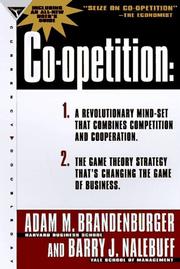
Adam M. Brandenburger, Barry J. Nalebuff · 1996

Game theory applied to business, which is cooperative and competitive at once.

Recommended by: Mohnish Pabrai

Where it sits in the reference 5

Academics
Business themes
Business themes
Business themes
Economics

Topics

Business and ManagementEconomicsPolitics and GovernmentGlobalisation, development and offshore money