
Updates

  1. Person pages list letters, writing, profiles and links as sortable tables with filters, and show each person's companies as links; Fund letters show each letter's description in its own column.
  2. Experts show a checked job title and a short description of each person; 30 more people have photographs.
  3. Every company, fund, university and publication the experts work for has a page listing the people there.
  4. Fund letters show each letter's thesis and filter by it; 225 person pages list the essays, columns and newsletter issues the person wrote.
  5. Person pages list every essay and newsletter issue a person wrote, and their own books as a table in List view.
  6. Recommends shows the five largest kinds of book and the rest under More; browse pictures load sooner.
  7. Podcasts and talks link the original episode, filter by Audio and video or Press, and list each publisher once.
  8. Pages are wider, Recommends has List and Grid, and a filter clicked again turns off.
  9. Book cards sit in a ruled grid with Open Library and Goodreads links and each book's one-line note.
  10. Funds is now Investors; each investor's styles are buttons that filter the table.
  11. Podcasts and talks on a person's page filter by year and publisher and show as a list or a grid of pictures.
  12. Quotes show only people's own words: 472 summaries written by list sites are gone.
  13. Country pages open from Browse again, and every link on the shelf lands on a page.
  14. Subject and person pages show their sections as tabs, and each book appears once on a person's page.
  15. Book cards show the quote, who said it and the source; grids show five cards to a row.
  16. On a phone, a menu holds the sections, search, Updates, Feedback and dark mode.
  17. Feedback takes a screenshot of the page with no browser prompt, opens a screenshot full size when you click it, and clears itself once sent.
  18. Book cards are centred, search names the topic each book sits in, and any text cut short shows whole on hover.
  19. Search groups its results by kind: people, companies, geographies, subjects, topics, books, funds, fund letters and papers.
  20. The Books table lists who recommended each book by name, and the browser tab names the section you are in.
  21. Feedback can take a screenshot of the page, or one you paste or choose, and opens in the corner beside Updates.
  22. Each rail button reopens its section where you left it, and Browse, Table and People show on every book and subject page.
  23. Filters grey out choices that hold nothing instead of hiding them, and Books › People filters by authors or recommenders.
  24. Feedback takes a subject line and up to three screenshots.
  25. Biographies are grouped by the person they are about: 41 new pages, from Abraham Lincoln to Lee Kuan Yew.
  26. Sport splits into 23 sports, and Religion into one topic per faith.
  27. Book lists show as cards: the cover, one recommendation quote and every recommender by name.
  28. Seventeen subjects that had two or three pages under different names now have one page each.
  29. Every page lists its Experts as authors and recommenders, with a link to them on the Experts tab.
  30. Economics, Financial history, Financial panics and Accounting are subjects of their own, with one page per financial crisis.
  31. Book, person and subject pages open inside the app, so the tabs stay in view.
  32. 996 more book covers, and photographs or logos for 227 more people and companies.
  33. Books › Browse shows every subject as cards, and the rail holds Fund letters, Papers, Experts, Books and Funds.
  34. Every topic over 150 books splits into narrower topics, each with a page of its own.

Send feedback

What is it?
Screenshots, up to 3 (optional)
or paste one with Ctrl+V

We use your email only to reply to you.

Antitrust Law

Antitrust Law

Richard A. Posner
1976
T1 272 pages · about 4h 32m to read Open Librarygoodreads

The Chicago School's economic reformulation of doctrine.

Summary

Posner wrote this as an economic analysis of antitrust law, arguing that the field should be governed entirely by economic reasoning about efficiency rather than by legal categories or by concern for competitors.

His positions align closely with Bork's, though Posner's treatment is more technical and he differs on specifics. He argues that the only proper goal of antitrust is economic efficiency, that most vertical arrangements including resale price maintenance and exclusive dealing do not reduce output and should be permitted, that predatory pricing is rarely a rational strategy because the losses during the campaign exceed what can be recovered, that the law should focus on cartel behaviour and on horizontal mergers producing substantial concentration, and that the courts' historical hostility to size and to efficient competitors harmed consumers.

His distinctive contributions include the analysis of tacit collusion, meaning coordination among firms without explicit agreement. Posner argues that in concentrated markets firms can reach supracompetitive prices through interdependent behaviour without communicating, that this produces the same harm as an explicit cartel, and that antitrust should therefore be able to reach it. This position was more interventionist than the rest of his framework and has been influential without being adopted by courts, which have generally required evidence of agreement.

The second edition, published in 2001, revised the treatment substantially in light of the intervening development of the law and of industrial organisation economics, including the game-theoretic literature that complicated several of the original conclusions.

Posner's framework, like Bork's, dominated American antitrust for decades and is now under sustained challenge from scholars arguing that price-focused analysis fails in platform markets, that concentration has risen with measurable harms, and that the efficiency-only goal was never what the statutes intended. Posner himself later expressed doubts about aspects of the consumer welfare approach as applied.

Key takeaways 7

  1. Antitrust law should be governed by economic analysis of efficiency rather than by legal categories or by protection of competitors.
  2. Most vertical arrangements do not reduce output and should therefore be permitted regardless of their effect on individual distributors.
  3. Predatory pricing is rarely rational because the losses during the campaign exceed what can be recovered afterward.
  4. Firms in concentrated markets can reach supracompetitive prices through interdependent behaviour without any explicit agreement.
  5. Tacit collusion produces the same harm as an explicit cartel and should be reachable by antitrust law even without evidence of agreement.
  6. Courts historically penalised efficient firms for their size, which harmed the consumers antitrust exists to protect.
  7. Cartel conduct and horizontal mergers producing substantial concentration are where enforcement effort should be concentrated.

Who should read it

Lawyers, economists and operators who want the rigorous economic statement of the framework that governed American antitrust for four decades.

Similar books 6

Chosen by shared topics, the entries that hold them, and the people who recommended both.
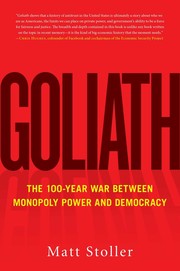
Matt Stoller · 2019

A political history of American monopoly and of the tradition that fought it.

Recommended by: David Heinemeier Hansson
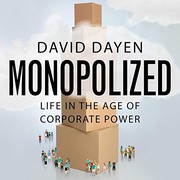
David Dayen · 2020

Concentration traced sector by sector through its effects on customers.
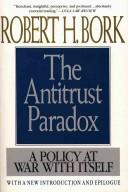
Robert H. Bork · 1978

Antitrust law should pursue one goal, consumer welfare, and drop the rest.

Tim Wu · 2018

How antitrust shrank to a consumer price test, and the case for breaking up giants.

Recommended by: Jeff Jordan
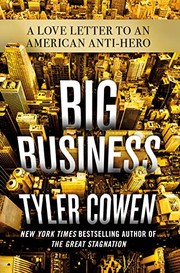
Tyler Cowen · 2019

A defence of American business on fraud, CEO pay, monopoly and tech, issue by issue.

Where it sits in the reference 2

Business themes
Economics

Topics

Politics and GovernmentEconomicsReference WorksRegulation, central banks and public policyFinance, accounting and economics references