
Updates

  1. Person pages list letters, writing, profiles and links as sortable tables with filters, and show each person's companies as links; Fund letters show each letter's description in its own column.
  2. Experts show a checked job title and a short description of each person; 30 more people have photographs.
  3. Every company, fund, university and publication the experts work for has a page listing the people there.
  4. Fund letters show each letter's thesis and filter by it; 225 person pages list the essays, columns and newsletter issues the person wrote.
  5. Person pages list every essay and newsletter issue a person wrote, and their own books as a table in List view.
  6. Recommends shows the five largest kinds of book and the rest under More; browse pictures load sooner.
  7. Podcasts and talks link the original episode, filter by Audio and video or Press, and list each publisher once.
  8. Pages are wider, Recommends has List and Grid, and a filter clicked again turns off.
  9. Book cards sit in a ruled grid with Open Library and Goodreads links and each book's one-line note.
  10. Funds is now Investors; each investor's styles are buttons that filter the table.
  11. Podcasts and talks on a person's page filter by year and publisher and show as a list or a grid of pictures.
  12. Quotes show only people's own words: 472 summaries written by list sites are gone.
  13. Country pages open from Browse again, and every link on the shelf lands on a page.
  14. Subject and person pages show their sections as tabs, and each book appears once on a person's page.
  15. Book cards show the quote, who said it and the source; grids show five cards to a row.
  16. On a phone, a menu holds the sections, search, Updates, Feedback and dark mode.
  17. Feedback takes a screenshot of the page with no browser prompt, opens a screenshot full size when you click it, and clears itself once sent.
  18. Book cards are centred, search names the topic each book sits in, and any text cut short shows whole on hover.
  19. Search groups its results by kind: people, companies, geographies, subjects, topics, books, funds, fund letters and papers.
  20. The Books table lists who recommended each book by name, and the browser tab names the section you are in.
  21. Feedback can take a screenshot of the page, or one you paste or choose, and opens in the corner beside Updates.
  22. Each rail button reopens its section where you left it, and Browse, Table and People show on every book and subject page.
  23. Filters grey out choices that hold nothing instead of hiding them, and Books › People filters by authors or recommenders.
  24. Feedback takes a subject line and up to three screenshots.
  25. Biographies are grouped by the person they are about: 41 new pages, from Abraham Lincoln to Lee Kuan Yew.
  26. Sport splits into 23 sports, and Religion into one topic per faith.
  27. Book lists show as cards: the cover, one recommendation quote and every recommender by name.
  28. Seventeen subjects that had two or three pages under different names now have one page each.
  29. Every page lists its Experts as authors and recommenders, with a link to them on the Experts tab.
  30. Economics, Financial history, Financial panics and Accounting are subjects of their own, with one page per financial crisis.
  31. Book, person and subject pages open inside the app, so the tabs stay in view.
  32. 996 more book covers, and photographs or logos for 227 more people and companies.
  33. Books › Browse shows every subject as cards, and the rail holds Fund letters, Papers, Experts, Books and Funds.
  34. Every topic over 150 books splits into narrower topics, each with a page of its own.

Send feedback

What is it?
Screenshots, up to 3 (optional)
or paste one with Ctrl+V

We use your email only to reply to you.

The Curse of Bigness

The Curse of Bigness

Tim Wu
2018
T2 192 pages · about 3h 12m to read Open Librarygoodreads

The counter-case, and the Brandeisian revival.

Summary

Wu, a law professor who coined the term net neutrality, argues that American antitrust law has been narrowed to a consumer welfare standard focused on price, that this narrowing was a deliberate intellectual project led by Robert Bork and the Chicago school, and that it abandoned the original purpose of the antitrust laws.

His historical argument is that the Sherman Act and its successors were passed for political reasons: to prevent concentrations of private power that could dominate government and remove economic independence from citizens. He traces this through Brandeis, whose phrase gives the book its title, through the trust-busting era, and through the mid-century enforcement that broke up or constrained AT&T, IBM and others. He argues that the technology industry's development was made possible by those interventions, since the AT&T consent decree released the transistor patents and the IBM case forced software to be sold separately.

His case against the current standard is that measuring harm by short-run consumer prices cannot detect harms to innovation, to labour, to suppliers or to political structure, and that free products defeat the test entirely.

His proposals include reviving merger review with structural presumptions, breaking up the largest technology platforms, and restoring a broader standard of harm.

The book is short and polemical. Economists in the antitrust field dispute both the historical claim about the statutes' purpose and the practical claim that a broader standard is administrable. The argument has since moved substantially toward Wu's position in enforcement practice, which makes the book a useful statement of where that shift came from.

Key takeaways 7

  1. American antitrust law was enacted to prevent concentrations of private power from dominating government, not primarily to lower consumer prices.
  2. The consumer welfare standard was a deliberate intellectual project that narrowed enforcement to price effects, and it succeeded within about fifteen years.
  3. A price-based standard cannot detect harms to innovation, labour, suppliers or political structure, and free products defeat the test entirely.
  4. The AT&T and IBM antitrust actions created the conditions for the computing and software industries by forcing the release of patents and the unbundling of software.
  5. Merger review should operate with structural presumptions against high concentration rather than requiring proof of predicted price effects.
  6. Dominant firms acquire nascent competitors specifically to prevent competition, and this is invisible to a standard that examines current market shares.
  7. Economic concentration and political concentration reinforce each other, which is why antitrust is a constitutional question rather than only an economic one.

Who should read it

Investors and operators in concentrated industries who need to understand the intellectual case behind the shift in antitrust enforcement.

Who recommended it 1

Jeff Jordanreported

Similar books 6

Chosen by shared topics, the entries that hold them, and the people who recommended both.
Robert H. Bork · 1978

Antitrust law should pursue one goal, consumer welfare, and drop the rest.

Richard A. Posner · 1976

Antitrust should rest on the economics of efficiency, not on protecting competitors.
Matt Stoller · 2019

A political history of American monopoly and of the tradition that fought it.

Recommended by: David Heinemeier Hansson
David Dayen · 2020

Concentration traced sector by sector through its effects on customers.
Tyler Cowen · 2019

A defence of American business on fraud, CEO pay, monopoly and tech, issue by issue.
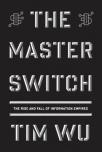
Tim Wu · 2010

Every US information industry moved from an open era to control by one firm.

Recommended by: Patrick Collison, Andrew Chen

Where it sits in the reference 3

Business models
Business themes
Economics

Topics

EconomicsPolitics and GovernmentRegulation, central banks and public policy