Updates

  1. Person pages list letters, writing, profiles and links as sortable tables with filters, and show each person's companies as links; Fund letters show each letter's description in its own column.
  2. Experts show a checked job title and a short description of each person; 30 more people have photographs.
  3. Every company, fund, university and publication the experts work for has a page listing the people there.
  4. Fund letters show each letter's thesis and filter by it; 225 person pages list the essays, columns and newsletter issues the person wrote.
  5. Person pages list every essay and newsletter issue a person wrote, and their own books as a table in List view.
  6. Recommends shows the five largest kinds of book and the rest under More; browse pictures load sooner.
  7. Podcasts and talks link the original episode, filter by Audio and video or Press, and list each publisher once.
  8. Pages are wider, Recommends has List and Grid, and a filter clicked again turns off.
  9. Book cards sit in a ruled grid with Open Library and Goodreads links and each book's one-line note.
  10. Funds is now Investors; each investor's styles are buttons that filter the table.
  11. Podcasts and talks on a person's page filter by year and publisher and show as a list or a grid of pictures.
  12. Quotes show only people's own words: 472 summaries written by list sites are gone.
  13. Country pages open from Browse again, and every link on the shelf lands on a page.
  14. Subject and person pages show their sections as tabs, and each book appears once on a person's page.
  15. Book cards show the quote, who said it and the source; grids show five cards to a row.
  16. On a phone, a menu holds the sections, search, Updates, Feedback and dark mode.
  17. Feedback takes a screenshot of the page with no browser prompt, opens a screenshot full size when you click it, and clears itself once sent.
  18. Book cards are centred, search names the topic each book sits in, and any text cut short shows whole on hover.
  19. Search groups its results by kind: people, companies, geographies, subjects, topics, books, funds, fund letters and papers.
  20. The Books table lists who recommended each book by name, and the browser tab names the section you are in.
  21. Feedback can take a screenshot of the page, or one you paste or choose, and opens in the corner beside Updates.
  22. Each rail button reopens its section where you left it, and Browse, Table and People show on every book and subject page.
  23. Filters grey out choices that hold nothing instead of hiding them, and Books › People filters by authors or recommenders.
  24. Feedback takes a subject line and up to three screenshots.
  25. Biographies are grouped by the person they are about: 41 new pages, from Abraham Lincoln to Lee Kuan Yew.
  26. Sport splits into 23 sports, and Religion into one topic per faith.
  27. Book lists show as cards: the cover, one recommendation quote and every recommender by name.
  28. Seventeen subjects that had two or three pages under different names now have one page each.
  29. Every page lists its Experts as authors and recommenders, with a link to them on the Experts tab.
  30. Economics, Financial history, Financial panics and Accounting are subjects of their own, with one page per financial crisis.
  31. Book, person and subject pages open inside the app, so the tabs stay in view.
  32. 996 more book covers, and photographs or logos for 227 more people and companies.
  33. Books › Browse shows every subject as cards, and the rail holds Fund letters, Papers, Experts, Books and Funds.
  34. Every topic over 150 books splits into narrower topics, each with a page of its own.

Send feedback

What is it?
Screenshots, up to 3 (optional)
or paste one with Ctrl+V

We use your email only to reply to you.

An Introduction to the Economics of Informat

An Introduction to the Economics of Information

Ines Macho-Stadler, David Perez-Castrillo
1997
T4 277 pages · about 4h 37m to read Open Librarygoodreads

Summary

Macho-Stadler and Perez-Castrillo wrote a graduate textbook on the economics of information, covering the standard models of contracting under asymmetric information.

The organisation follows the field's three central problems. Moral hazard arises when one party takes an action the other cannot observe, so the contract must be written on observable outcomes that imperfectly reflect the action. The authors develop the principal-agent model, derive the optimal contract under risk aversion, and show the trade-off between insurance and incentives: a risk-averse agent should be insured against outcomes they cannot control, but insurance removes the incentive to act, so the optimal contract exposes the agent to some risk purely to motivate effort.

Adverse selection arises when one party knows something relevant before contracting. The authors develop the screening model in which the uninformed party offers a menu of contracts designed so that each type of counterparty selects the one intended for it, and derive the standard results: the most efficient type receives an information rent, and the contracts offered to less efficient types are distorted away from efficiency to make the sorting work.

Signalling covers the case where the informed party moves first, taking a costly action that credibly conveys their type because it would be more costly for a different type to imitate.

They also cover mechanism design and the revelation principle, moral hazard with multiple agents including tournaments and team production, and repeated relationships.

The book is a technical textbook requiring microeconomics and mathematics. It teaches the models rather than their applications, so readers wanting to see the theory applied to contracting or organisational design must make the translation themselves. The models underpin most modern thinking about incentives, insurance, corporate governance and market design.

Key takeaways 7

  1. When effort cannot be observed, a contract must be written on outcomes, which forces a trade-off between insuring the agent and motivating them.
  2. An optimal incentive contract deliberately exposes a risk-averse agent to risk they cannot control, purely to induce effort.
  3. A party with private information about their own type earns an information rent that the uninformed party cannot recover.
  4. Offering a menu of contracts designed so each type self-selects is the standard response to adverse selection.
  5. Contracts offered to less efficient types are distorted away from efficiency to make the sorting mechanism work.
  6. A signal conveys information credibly only when it would be more costly for a different type to send it.
  7. Relative performance evaluation across agents filters out common shocks and improves the information content of an outcome measure.

Who should read it

Readers with economics training who need the formal models underlying incentive design, contracting and market mechanisms.

Similar books 6

Chosen by shared topics, the entries that hold them, and the people who recommended both.
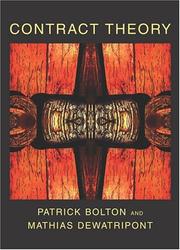
Patrick Bolton, Mathias Dewatripont · 2005
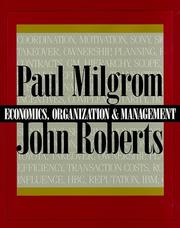
Paul Milgrom, John Roberts · 1992

How firms are organised, using agency, contracts and transaction-cost economics.

Richard A. Posner · 1976

Antitrust should rest on the economics of efficiency, not on protecting competitors.
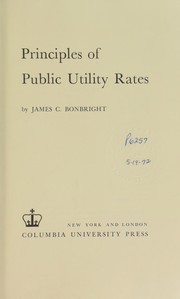
James C. Bonbright · 1961

The economic criteria for setting regulated utility rates.

Where it sits in the reference 2

Mental models
Economics

Topics

EconomicsReference WorksFinance, accounting and economics references