
Updates

  1. Person pages list letters, writing, profiles and links as sortable tables with filters, and show each person's companies as links; Fund letters show each letter's description in its own column.
  2. Experts show a checked job title and a short description of each person; 30 more people have photographs.
  3. Every company, fund, university and publication the experts work for has a page listing the people there.
  4. Fund letters show each letter's thesis and filter by it; 225 person pages list the essays, columns and newsletter issues the person wrote.
  5. Person pages list every essay and newsletter issue a person wrote, and their own books as a table in List view.
  6. Recommends shows the five largest kinds of book and the rest under More; browse pictures load sooner.
  7. Podcasts and talks link the original episode, filter by Audio and video or Press, and list each publisher once.
  8. Pages are wider, Recommends has List and Grid, and a filter clicked again turns off.
  9. Book cards sit in a ruled grid with Open Library and Goodreads links and each book's one-line note.
  10. Funds is now Investors; each investor's styles are buttons that filter the table.
  11. Podcasts and talks on a person's page filter by year and publisher and show as a list or a grid of pictures.
  12. Quotes show only people's own words: 472 summaries written by list sites are gone.
  13. Country pages open from Browse again, and every link on the shelf lands on a page.
  14. Subject and person pages show their sections as tabs, and each book appears once on a person's page.
  15. Book cards show the quote, who said it and the source; grids show five cards to a row.
  16. On a phone, a menu holds the sections, search, Updates, Feedback and dark mode.
  17. Feedback takes a screenshot of the page with no browser prompt, opens a screenshot full size when you click it, and clears itself once sent.
  18. Book cards are centred, search names the topic each book sits in, and any text cut short shows whole on hover.
  19. Search groups its results by kind: people, companies, geographies, subjects, topics, books, funds, fund letters and papers.
  20. The Books table lists who recommended each book by name, and the browser tab names the section you are in.
  21. Feedback can take a screenshot of the page, or one you paste or choose, and opens in the corner beside Updates.
  22. Each rail button reopens its section where you left it, and Browse, Table and People show on every book and subject page.
  23. Filters grey out choices that hold nothing instead of hiding them, and Books › People filters by authors or recommenders.
  24. Feedback takes a subject line and up to three screenshots.
  25. Biographies are grouped by the person they are about: 41 new pages, from Abraham Lincoln to Lee Kuan Yew.
  26. Sport splits into 23 sports, and Religion into one topic per faith.
  27. Book lists show as cards: the cover, one recommendation quote and every recommender by name.
  28. Seventeen subjects that had two or three pages under different names now have one page each.
  29. Every page lists its Experts as authors and recommenders, with a link to them on the Experts tab.
  30. Economics, Financial history, Financial panics and Accounting are subjects of their own, with one page per financial crisis.
  31. Book, person and subject pages open inside the app, so the tabs stay in view.
  32. 996 more book covers, and photographs or logos for 227 more people and companies.
  33. Books › Browse shows every subject as cards, and the rail holds Fund letters, Papers, Experts, Books and Funds.
  34. Every topic over 150 books splits into narrower topics, each with a page of its own.

Send feedback

What is it?
Screenshots, up to 3 (optional)
or paste one with Ctrl+V

We use your email only to reply to you.

The New Industrial State

The New Industrial State

John Kenneth Galbraith
1967
T1 427 pages · about 7h 7m to read Open Librarygoodreads

Summary

Galbraith argues that the large corporation had become the central institution of the American economy and that classical market theory no longer described how it operated. His central concept is the technostructure: the collective of managers, engineers, planners and specialists who actually make corporate decisions, as distinct from shareholders who own the firm and from any individual executive.

His claims follow from the requirements of modern production. Large-scale technology requires long lead times and enormous capital commitments, which makes uncertainty intolerable. The firm therefore plans: it manages demand through advertising, it secures supply through vertical integration and long-term contracts, it finances from retained earnings to avoid the discipline of capital markets, and it seeks accommodation with the state rather than opposing it. The technostructure's objective is not profit maximisation, which would serve shareholders, but growth and security, which serve the technostructure.

He argues this makes the large firm and the state converge, since both are planning organisations with similar personnel and objectives, and that the distinction between socialism and capitalism has less content than the political argument assumes.

The book was enormously influential and is now largely rejected. The conglomerates Galbraith described were broken up, the market for corporate control disciplined the technostructure exactly as he said it could not, shareholder value became the explicit objective, and consumer demand proved far less manipulable than his advertising argument required. It remains worth reading as the strongest statement of the managerialist position and because parts of the analysis apply again to firms with entrenched control structures.

Key takeaways 7

  1. Decisions in large corporations are made by a technostructure of managers and specialists rather than by shareholders or by any individual executive.
  2. The technostructure pursues growth and security rather than profit maximisation, because those objectives serve the people who actually decide.
  3. Large-scale technology requires long lead times and heavy capital commitment, which makes market uncertainty intolerable and planning necessary.
  4. Firms finance from retained earnings specifically to avoid the discipline that external capital markets would impose on their decisions.
  5. Advertising exists to manage demand so that the firm's production plans can be executed, rather than to inform consumers about choices.
  6. The large corporation and the state converge because both are planning organisations, which reduces the practical content of the distinction between economic systems.
  7. Shareholders in a large corporation hold a claim on income without any influence on decisions, which makes their ownership nominal.

Who should read it

Readers interested in the managerialist theory of the corporation and in an influential argument that the subsequent decades largely refuted.

About John Kenneth Galbraith

Harvard economist, wartime price administrator and US ambassador to India; died in 2006.

The Great Crash 1929 is the standard narrative of the boom, the leverage stacked inside investment trusts and the collapse that followed, written close enough to the events to use the participants directly. A Short History of Financial Euphoria condenses four centuries of speculation into a recurring pattern of leverage, the belief that a familiar instrument is genuinely new, and very short memory.

Harvard

Who recommended it 1

Paul Grahamreported

Similar books 6

Chosen by shared topics, the entries that hold them, and the people who recommended both.

Tyler Cowen · 2019

A defence of American business on fraud, CEO pay, monopoly and tech, issue by issue.
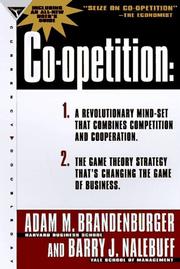
Adam M. Brandenburger, Barry J. Nalebuff · 1996

Game theory applied to business, which is cooperative and competitive at once.

Recommended by: Mohnish Pabrai

Paul Milgrom, John Roberts · 1992

How firms are organised, using agency, contracts and transaction-cost economics.
Colins Mayer

Recommended by: Satya Nadella

Where it sits in the reference 4

Academics
Business themes
Business themes
Economics

Topics

EconomicsBusiness and Management