
How the World Ran Out of Everything
The pandemic freight squeeze traced through the whole chain.
Summary
Peter Goodman, global economics correspondent for the New York Times, reports on the supply-chain breakdown that began in 2020 and continued through 2022. He follows individual shipments and individual workers: a container of goods from a Chinese factory through the port of Los Angeles, a truck driver waiting outside the terminal, a warehouse worker, a meatpacking plant in South Dakota, a railroad brakeman. The reporting method is deliberately concrete, and the argument builds from the cases.
Goodman's thesis is that the fragility was manufactured rather than accidental. He identifies just-in-time inventory management, imported from Toyota and stripped of the supplier relationships that made it work in Japan, as the first cause. He then documents consolidation: three alliances controlling most container shipping capacity, four companies controlling most American beef processing, seven railroads reduced to a handful running precision scheduled railroading with fewer crews and longer trains. He argues that in each case the consolidation allowed firms to cut buffer capacity because the market would not punish them for shortages.
The book is journalism with a clear political position, and readers who think shareholder-value pressure is a secondary factor will find the causal claims stated more firmly than the evidence supports. Goodman does not seriously engage the argument that pandemic demand shifts, from services to goods, would have overwhelmed any system. He is stronger on trucking and rail labour, where he shows in detail how firms transferred waiting time and risk to workers who were not paid for it. The policy prescriptions at the end are thin.
Key takeaways 7
- Just-in-time inventory management transferred risk from manufacturers to workers and to consumers without pricing that transfer.
- Concentration in shipping, meatpacking and rail removed the excess capacity that had previously absorbed demand shocks.
- Precision scheduled railroading raised operating ratios by cutting crews and lengthening trains, and it degraded service reliability.
- American truck drivers are typically paid by the mile, so port congestion cost them income while costing carriers nothing.
- Container shipping lines earned record profits during the disruption, which shows that scarcity favoured incumbents rather than harming them.
- Reshoring will not by itself produce resilience, because the same incentives to strip buffers apply to domestic production.
- Goodman argues that firms held inventory down because financial markets rewarded the working-capital reduction rather than because logistics improved.
Who should read it
Operators responsible for sourcing or logistics, and investors in transport and industrial companies, who want a detailed account of where buffer capacity went and who paid for its absence.
Similar books 6
Chosen by shared topics, the entries that hold them, and the people who recommended both.
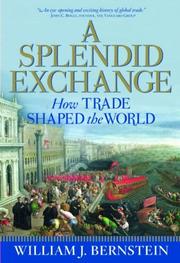
Long-distance trade from Mesopotamia and the spice routes to modern globalisation.
Recommended by: Patrick Collison, Mohnish Pabrai, Nick Szabo
The economics of shipping: the market cycle, freight rates and vessel costs.
Recommended by: Patrick Collison
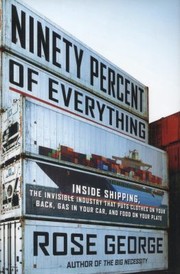
Aboard a Maersk box ship; the economics of the trade Denmark dominates.
Recommended by: Mohnish Pabrai
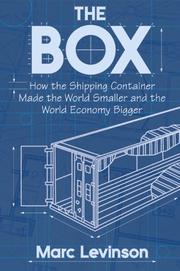
How the shipping container cut freight costs and remade global trade.
Recommended by: Bill Gates, Mohnish Pabrai, Paul Graham and 1 other
Globalization as the new international system, seen from Amazon farms to Wall Street.
Recommended by: Mohnish Pabrai
One T-shirt traced from a Texas cotton farm to a Chinese factory and beyond.
Where it sits in the reference 2
Topics