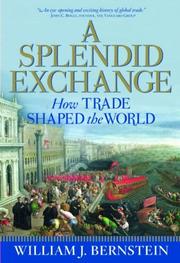
A Splendid Exchange: How Trade Shaped the World
How trade shaped the world, from Mesopotamia to the shipping container
Summary
Bernstein writes a history of long-distance trade from Mesopotamian and Egyptian exchange through the Indian Ocean spice routes, the Muslim trading world, the Portuguese and Dutch companies, the Atlantic slave and sugar economies, the nineteenth-century free trade argument, and the twentieth-century return of protection and then liberalisation.
His organising claims are that the desire to trade is a persistent human characteristic rather than a modern development, that transport cost and disease determined which routes existed and which commodities moved, and that the political consequences of trade have always been contested because trade creates concentrated losers and diffuse winners. He gives substantial attention to the mechanics: the monsoon wind cycle that governed Indian Ocean sailing schedules, the caravan economics of the silk routes, the role of the Dutch East India Company as a chartered military organisation rather than a merchant firm, and the effect of steam and the telegraph on nineteenth-century commodity price convergence.
Bernstein is a physician turned financial writer, and this is synthesis from secondary sources rather than archival history. It is readable and wide-ranging, and it is useful to investors as background on why trade routes concentrate, why intermediary positions are so valuable and so fragile, and why trade politics recurs in the same form. Specialists have criticised the compression and some factual slips in the ancient and medieval sections, and the treatment of comparative advantage is standard textbook rather than engaged with the modern trade literature. The final chapters on the politics of globalisation were written in 2008 and read as optimistic now.
Key takeaways 7
- Long-distance trade is documented from the earliest complex societies, which contradicts the view that market exchange is a recent institutional development.
- Transport cost, not comparative advantage, determined which goods moved over long distances for most of history, which is why early trade was concentrated in high value-to-weight commodities.
- Disease transmission along trade routes repeatedly reshaped populations and the routes themselves, and epidemics travelled with commerce as a matter of course.
- Chartered trading companies such as the Dutch East India Company were military and territorial organisations, and their profits came from coercion of supply as much as from trade.
- Steam power and the telegraph in the nineteenth century converged commodity prices across continents for the first time, which created the first genuinely global market.
- Trade politics recurs in the same form because gains are diffuse across consumers while losses are concentrated in identifiable producers who organise.
- Control of a chokepoint on a trade route has been the most reliable source of wealth in commercial history, and chokepoints shift when technology changes.
Who should read it
Investors and operators who want long-run context on trade routes, chokepoints and the recurring politics of protection.
About William J. Bernstein
Neurologist turned investment theorist; principal, Efficient Frontier Advisors; author and financial historian
Serious, widely cited writing on asset allocation plus economic histories that outlived their news cycle, though he has no public money-management record.
Who recommended it 3 · 1 direct
Similar books 6
Chosen by shared topics, the entries that hold them, and the people who recommended both.
How the shipping container cut freight costs and remade global trade.
Recommended by: Bill Gates, Mohnish Pabrai, Paul Graham and 1 other
An attack on the IMF's one-size-fits-all policies in the crises of the 1990s.
Recommended by: Patrick Collison
The economics of shipping: the market cycle, freight rates and vessel costs.
Recommended by: Patrick Collison
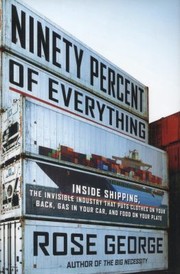
Aboard a Maersk box ship; the economics of the trade Denmark dominates.
Recommended by: Mohnish Pabrai

Ten forces around 2000 that let anyone, anywhere compete in the global economy.
Recommended by: Mohnish Pabrai, Bill Gates, Jamie Dimon and 2 others

Recommended by: Nick Szabo
Where it sits in the reference 4
Topics