William J. Bernstein
Neurologist and financial theorist who writes on modern portfolio theory for investors managing their own portfolios; also wrote the histories The Birth of Plenty and A Splendid Exchange.
Serious, widely cited writing on asset allocation plus economic histories that outlived their news cycle, though he has no public money-management record.
12 books of their own · 34 letters · 17 articles
Start here
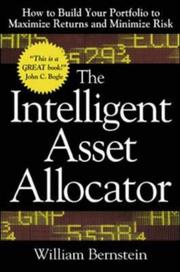
Modern portfolio theory for individual investors, explained without heavy maths.
Recommended by: The Barefoot Investor


Recommended by: Mohnish Pabrai, Morgan Housel
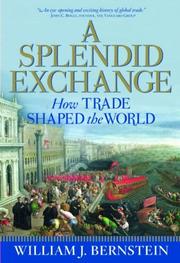
Long-distance trade from Mesopotamia and the spice routes to modern globalisation.
Recommended by: Patrick Collison, Mohnish Pabrai, Nick Szabo

Investing for Adults series, volume 1
Investing for Adults series, volume 2



Quantitative asset allocation for small investors, built from a clean sheet of paper.

 The Intelligent Asset Allocator | Modern portfolio theory for individual investors, explained without heavy maths. | 2000 | T4 | The Barefoot Investor |
 The Four Pillars of Investing | – | 2002 | – | |
 The Birth of Plenty | – | 2004 | T4 | Mohnish Pabrai, Morgan Housel |
 A Splendid Exchange: How Trade Shaped the World | Long-distance trade from Mesopotamia and the spice routes to modern globalisation. | 2008 | T2 | Patrick Collison, Mohnish Pabrai, Nick Szabo |
 The Investor's Manifesto | – | 2009 | – | |
 The Ages of the Investor | Investing for Adults series, volume 1 | 2012 | – | |
| Skating Where the Puck Was | Investing for Adults series, volume 2 | 2012 | – | |
 Deep Risk | Investing for Adults series, volume 3 | 2013 | – | |
 Masters of the Word | – | 2013 | Nick Szabo | |
 If You Can: How Millennials Can Get Rich Slowly | – | 2014 | – | |
 Rational Expectations: Asset Allocation for Investing Adults | Quantitative asset allocation for small investors, built from a clean sheet of paper. | 2014 | – | |
 The Delusions of Crowds | – | 2021 | – |
| Efficient Frontier, issue 105 (2005) | William Bernstein argues the 2004 election makes partial privatisation of Social Security near-certain, and examines what it would mean. | 2005 | ||
| Efficient Frontier, issue 405 (2005) | William Bernstein announces Efficient Frontier's last quarterly issue after eight and a half years. | 2005 | ||
| Efficient Frontier, issue 104 (2004) | William Bernstein responds to critics of his books. | 2004 | ||
| Efficient Frontier, issue 404 (2004) | William Bernstein writes on collecting risk premiums, patience and spreading your bets, and on markets that are efficient but not rational. | 2004 | ||
| Efficient Frontier, issue 704 (2004) | William Bernstein applies the logic of collective action to the mutual fund industry, quoting Madison. | 2004 | ||
| Efficient Frontier, issue 904 (2004) | William Bernstein examines how human institutions shape economic outcomes, drawing on the U.S. founders. | 2004 | ||
| Efficient Frontier, issue 103 (2003) | William Bernstein writes an open letter to the new SEC chairman, William Donaldson, in 2003. | 2003 | ||
| Efficient Frontier, issue 403 (2003) | William Bernstein announces Efficient Frontier will publish less often. | 2003 | ||
| Efficient Frontier, issue 703 (2003) | William Bernstein rereads Benjamin Graham's The Intelligent Investor and draws lessons for small investors. | 2003 | ||
| Efficient Frontier, issue 903 (2003) | William Bernstein applies Keynes's paradox of thrift to the advice finance writers give. | 2003 | ||
| Efficient Frontier, issue 102 (2002) | William Bernstein imagines explaining the world's economic players to Thomas Friedman. | 2002 | ||
| Efficient Frontier, issue 402 (2002) | William Bernstein shows that securities markets are old: European bond prices go back to the 13th century. | 2002 | ||
| Efficient Frontier, issue 702 (2002) | William Bernstein examines the equity risk premium, with U.S. stocks, bonds and bills returning 8.42%, 4.88% and 4.21% from 1802 to 2001. | 2002 | ||
| Efficient Frontier, issue 902 (2002) | William Bernstein continues his series on how GDP growth relates to security returns. | 2002 | ||
| Efficient Frontier, issue 101 (2001) | William Bernstein rebuts the claim that indexing works only in efficient U.S. large-cap markets. | 2001 | ||
| Efficient Frontier, issue 401 (2001) | William Bernstein draws on Irving Fisher's The Theory of Interest. | 2001 | ||
| Efficient Frontier, issue 701 (2001) | William Bernstein examines value investors' long wait in the wilderness through the late 1990s. | 2001 | ||
| Efficient Frontier, issue 901 (2001) | William Bernstein reconsiders his doubts about exchange-traded funds. | 2001 | ||
| Efficient Frontier, issue 100 (2000) | William Bernstein reviews Richard Thaler's behavioural Undiscovered Managers funds. | 2000 | ||
| Efficient Frontier, issue 400 (2000) | William Bernstein draws lessons from Nova's documentary The Trillion Dollar Bet on Long-Term Capital Management. | 2000 | ||
| Efficient Frontier, issue 700 (2000) | William Bernstein argues technological progress does not translate into high stock returns for shareholders. | 2000 | ||
| Efficient Frontier, issue 900 (2000) | William Bernstein explains why he dislikes midcap stocks as an asset class. | 2000 | ||
| Efficient Frontier, issue 199 (1999) | William Bernstein admits his addiction to market indicators and warns against relying on them. | 1999 | ||
| Efficient Frontier, issue 499 (1999) | William Bernstein explains the interplay between return and risk. | 1999 | ||
| Efficient Frontier, issue 799 (1999) | William Bernstein warns against the romantic delusions of investors in 1999's internet chat rooms. | 1999 | ||
| Efficient Frontier, issue 999 (1999) | William Bernstein examines the relationship between return and risk, from Treasury bills upward. | 1999 | ||
| Efficient Frontier, issue 198 (1998) | William Bernstein visits the Bearded Ladies investment club to test its famous results. | 1998 | ||
| Efficient Frontier, issue 498 (1998) | William Bernstein explains why investors should understand the cost of capital as corporate treasurers do. | 1998 | ||
| Efficient Frontier, issue 998 (1998) | William Bernstein quotes Tweedy Browne's "We don't invest where we can't drink the water" on foreign investing. | 1998 | ||
| Efficient Frontier, issue 197 (1997) | William Bernstein introduces Efficient Frontier and examines precious metals as an asset class. | 1997 | ||
| Efficient Frontier, issue 497 (1997) | William Bernstein warns that portfolio optimisers mislead investors. | 1997 | ||
| Efficient Frontier, issue 797 (1997) | William Bernstein warns against relying on library fund ratings to pick managers. | 1997 | ||
| Efficient Frontier, issue 997 (1997) | William Bernstein shows that top-performing fund managers and global assets tend to revert to the mean. | 1997 | ||
| Efficient Frontier, issue 996 (1996) | William Bernstein recommends readings in finance and portfolio theory for Efficient Frontier readers. | 1996 |
| Remembrance of Harry Markowitz | Efficient Frontier | 2023 |
| The Dark Side of Financial Advice | Efficient Frontier | 2013 |
| The $100 Billion Oxymoron | Efficient Frontier | 2012 |
| Joe Nocera and the Retirement Crisis | Efficient Frontier | 2012 |
| The Paradox of Wealth / Stuff | Efficient Frontier | 2011 |
| Fixed Income and the Coming of Age | Efficient Frontier | 2011 |
| Skating Where the Puck Was: BRIC Investing | Efficient Frontier | 2010 |
| Of Markets, Economies, and Excel | Efficient Frontier | 2010 |
| Fifty Years from Now | Efficient Frontier | 2008 |
| Mea Culpa | Efficient Frontier | 2006 |
| Estate Planning for the Rest of Us | Efficient Frontier | 2006 |
| The Cross-Section of Expected Returns / Mean Reversion | Efficient Frontier | 2005 |
| The Case Against Gold | Efficient Frontier | 2005 |
| The Cost of Capital | Efficient Frontier | 2005 |
| The Online Asset Allocator | Efficient Frontier | 2000 |
| The Basics of Investing and Portfolio Theory | Efficient Frontier | 1996 |
| Efficient Frontier: An Online Journal of Practical Asset Allocation (issue archive, 1996-2012) | Efficient Frontier |