Updates

  1. Person pages list letters, writing, profiles and links as sortable tables with filters, and show each person's companies as links; Fund letters show each letter's description in its own column.
  2. Experts show a checked job title and a short description of each person; 30 more people have photographs.
  3. Every company, fund, university and publication the experts work for has a page listing the people there.
  4. Fund letters show each letter's thesis and filter by it; 225 person pages list the essays, columns and newsletter issues the person wrote.
  5. Person pages list every essay and newsletter issue a person wrote, and their own books as a table in List view.
  6. Recommends shows the five largest kinds of book and the rest under More; browse pictures load sooner.
  7. Podcasts and talks link the original episode, filter by Audio and video or Press, and list each publisher once.
  8. Pages are wider, Recommends has List and Grid, and a filter clicked again turns off.
  9. Book cards sit in a ruled grid with Open Library and Goodreads links and each book's one-line note.
  10. Funds is now Investors; each investor's styles are buttons that filter the table.
  11. Podcasts and talks on a person's page filter by year and publisher and show as a list or a grid of pictures.
  12. Quotes show only people's own words: 472 summaries written by list sites are gone.
  13. Country pages open from Browse again, and every link on the shelf lands on a page.
  14. Subject and person pages show their sections as tabs, and each book appears once on a person's page.
  15. Book cards show the quote, who said it and the source; grids show five cards to a row.
  16. On a phone, a menu holds the sections, search, Updates, Feedback and dark mode.
  17. Feedback takes a screenshot of the page with no browser prompt, opens a screenshot full size when you click it, and clears itself once sent.
  18. Book cards are centred, search names the topic each book sits in, and any text cut short shows whole on hover.
  19. Search groups its results by kind: people, companies, geographies, subjects, topics, books, funds, fund letters and papers.
  20. The Books table lists who recommended each book by name, and the browser tab names the section you are in.
  21. Feedback can take a screenshot of the page, or one you paste or choose, and opens in the corner beside Updates.
  22. Each rail button reopens its section where you left it, and Browse, Table and People show on every book and subject page.
  23. Filters grey out choices that hold nothing instead of hiding them, and Books › People filters by authors or recommenders.
  24. Feedback takes a subject line and up to three screenshots.
  25. Biographies are grouped by the person they are about: 41 new pages, from Abraham Lincoln to Lee Kuan Yew.
  26. Sport splits into 23 sports, and Religion into one topic per faith.
  27. Book lists show as cards: the cover, one recommendation quote and every recommender by name.
  28. Seventeen subjects that had two or three pages under different names now have one page each.
  29. Every page lists its Experts as authors and recommenders, with a link to them on the Experts tab.
  30. Economics, Financial history, Financial panics and Accounting are subjects of their own, with one page per financial crisis.
  31. Book, person and subject pages open inside the app, so the tabs stay in view.
  32. 996 more book covers, and photographs or logos for 227 more people and companies.
  33. Books › Browse shows every subject as cards, and the rail holds Fund letters, Papers, Experts, Books and Funds.
  34. Every topic over 150 books splits into narrower topics, each with a page of its own.

Send feedback

What is it?
Screenshots, up to 3 (optional)
or paste one with Ctrl+V

We use your email only to reply to you.

The Birth of Plenty

The Birth of Plenty

William J. Bernstein
2004
T4 434 pages · about 7h 14m to read Open Librarygoodreads

Summary

Bernstein argues that sustained economic growth began around 1820 and that it required four institutional conditions to be present simultaneously: secure property rights, scientific rationalism, effective capital markets, and efficient transport and communications.

His historical claim is that per capita income was roughly flat for all of human history until the early nineteenth century and then began compounding, and that this discontinuity requires an explanation which the usual candidates do not supply. Resources, population and technology were all present in earlier societies that did not grow. His four factors, he argues, first appeared together in the Netherlands and then in England, which is why growth began there.

On property rights he argues the requirement is not merely legal ownership but protection from expropriation by the state, which is what makes long-horizon investment rational. On scientific rationalism he argues the essential change was the acceptance that claims should be tested against observation rather than authority. On capital markets he argues the ability to convert savings into productive investment through impersonal institutions was what allowed enterprises to exceed what a family could fund. On transport he argues that steam power was what made national markets possible.

The framework is a synthesis of institutional economics for general readers, drawing on North, Landes and others. Economic historians dispute the four-factor formulation as too neat, the 1820 date as too precise, and the treatment of colonial extraction and of Chinese and Islamic scientific traditions as inadequate.

Key takeaways 7

  1. Per capita income was roughly flat for all of human history until around 1820, and the discontinuity requires an institutional explanation.
  2. Sustained growth required four conditions present simultaneously: secure property rights, scientific rationalism, capital markets and efficient transport.
  3. Property rights require protection from expropriation by the state rather than merely legal ownership, since it is state predation that makes long-horizon investment irrational.
  4. Scientific rationalism means claims are tested against observation rather than authority, which is what made cumulative technical improvement possible.
  5. Capital markets convert savings into investment through impersonal institutions, which allows enterprises to exceed what any family can fund.
  6. Steam-powered transport created national markets, which is what allowed the division of labour to extend beyond a locality.
  7. Resources, population and technology were present in earlier societies that did not grow, which is why the explanation must be institutional.

Who should read it

Readers wanting an accessible institutional account of why sustained growth began where and when it did, with the four-factor framing treated as contested.

About William J. Bernstein

Neurologist turned investment theorist; principal, Efficient Frontier Advisors; author and financial historian

Serious, widely cited writing on asset allocation plus economic histories that outlived their news cycle, though he has no public money-management record.

Efficient Frontier Advisors

Who recommended it 2 · 2 direct

Similar books 6

Chosen by shared topics, the entries that hold them, and the people who recommended both.
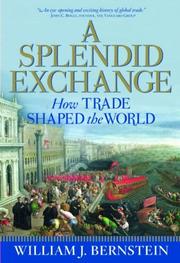
William J. Bernstein · 2008

Long-distance trade from Mesopotamia and the spice routes to modern globalisation.

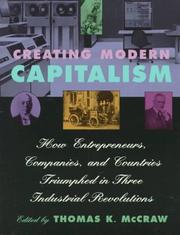
Thomas K. McCraw · 1997

How Britain, Germany, Japan and the US each built their own form of capitalism.

Recommended by: Mohnish Pabrai

Vaclav Smil · 2013

How American manufacturing rose to lead the world, and why its share then fell.

Recommended by: Mohnish Pabrai

Nancy F. Koehn · 1990

Why Britain's empire after the Seven Years War struggled with the costs of power.

Recommended by: Mohnish Pabrai

David S. Landes · 1998

Why some nations grew rich over 500 years, with culture as the deciding factor.

Where it sits in the reference 2

Investors
Economics

Topics

EconomicsGeneral HistoryEconomic and Business History