Economic history and long-run growth
Histories of how economies grew rich over centuries, from the Dutch Republic and the Industrial Revolution to American growth and the long-run gains in human welfare.
Start here
- The First Modern EconomyJan de Vries, Ad van der Woude, 1997
- Empire of CottonSven Beckert, 2014
- Capitalism in AmericaAlan Greenspan, Adrian Wooldridge, 2018
- Enlightenment NowSteven Pinker
- Factfulness: Ten Reasons We're Wrong About the WorldHans Rosling
Why the Dutch Republic of 1500 to 1815 was the first modern economy.
A global history of cotton used to trace how capitalism developed.

American economic growth from colonial times to now, driven by creative destruction.

Steven Pinker's 500-page empirical survey of progress across 15 dimensions: health, wealth, equality, safety, knowledge, quality of life. Explicitly frames market economies and Enlightenment liberalism as the institutional sources of that progress. Has been criticized for cherry-picking metrics and underweighting catastrophic risks; the data itself is worth engaging with regardless.
Recommended by: Bill Gates, Andrew Wilkinson, Daniel Petre and 2 others
Hans Rosling was a global health professor, not an economist, which gives his data-driven case for human progress particular credibility. He shows, in meticulous detail, that almost every quantitative measure of human welfare has improved dramatically over the past century. He attributes this to global trade and economic development without being a polemicist.
Recommended by: Bill Gates, Alfred Lin, Daniel Petre and 4 others

Prosperity grows as trade and specialisation let ideas meet and combine.
“…books I've recommended, highlighted to death, or forced on friends.” — Andrew Wilkinson
Source: Andrew Wilkinson's Bookshelf, neverenough.com
Recommended by: Andrew Wilkinson, Bill Gates, Frank Martin and 10 others

Recommended by: Patrick Collison

Recommended by: Mohnish Pabrai

An interpretation of the New Deal and of the historians who have written on it.
Recommended by: Paul Graham

Why Britain's empire after the Seven Years War struggled with the costs of power.
Recommended by: Mohnish Pabrai
How Britain, Germany, Japan and the US each built their own form of capitalism.
Recommended by: Mohnish Pabrai

Why some nations grew rich over 500 years, with culture as the deciding factor.
Recommended by: Charlie Munger, Mohnish Pabrai, Jamie Dimon and 1 other

Recommended by: Mohnish Pabrai, Morgan Housel

Recommended by: Mohnish Pabrai, Patrick Collison

Recommended by: Patrick Collison

Recommended by: Emmett Shear

Recommended by: Patrick Collison, Raoul Pal
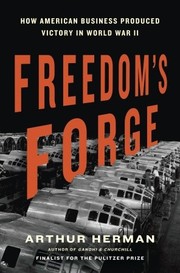
How Knudsen and Kaiser led America's industrial build-up for the Second World War.
“One of the best books I've read, it's a great story of industrial production and heroes.” — Christopher Bloomstran
Source: Semper Augustus 2020 Letter to Clients, 'To Read or Not to Read', p. 57
Recommended by: Christopher Bloomstran, Patrick Collison


How American manufacturing rose to lead the world, and why its share then fell.
Recommended by: Mohnish Pabrai

How organisms, populations, machines, economies and civilisations grow, and stop.
Recommended by: Bill Gates

Seventy-one short pieces that correct common impressions with plain arithmetic.
Recommended by: Bill Gates, Mark Zuckerberg and 1 other

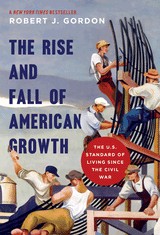
Why the inventions of 1870 to 1970 raised living standards as nothing since has.
“This is a heavyweight (literally) masterpiece... It's a data-rich textbook as well as a phenomenal read.” — Christopher Bloomstran
Source: Semper Augustus 2020 Letter to Clients, 'To Read or Not to Read', p. 57
Recommended by: Bill Gates, Christopher Bloomstran and 2 others
 Vaclav Smilwrote 3 books here
 Matt Ridleywrote 1 book here
 Alan Greenspanwrote 1 book here
 Mohnish Pabrairecommends 8 books here
 Bill Gatesrecommends 6 books here
 Patrick Collisonrecommends 6 books here
 Paul Grahamrecommends 2 books here
 Alfred Linrecommends 2 books here
 Mark Zuckerbergrecommends 2 books here
 Naval Ravikantrecommends 2 books here
 Charlie Mungerrecommends 1 book here
 Howard Marksrecommends 1 book here
Show all 31
 Marc Andreessenrecommends 1 book here
 Emmett Shearrecommends 1 book here
 Jamie Dimonrecommends 1 book here
 John Arnoldrecommends 1 book here
 Melinda Gatesrecommends 1 book here
 Ryan Petersonrecommends 1 book here
 Satya Nadellarecommends 1 book here
 Trevor Ncuberecommends 1 book here