
Numbers Don't Lie
Summary
Smil presents seventy-one short pieces, each examining a subject through quantities, covering people, countries, machines, fuels, transport, food, environment and general trends. Each runs two or three pages and states figures with sources.
The recurring purpose is to correct impressions formed without arithmetic. He shows the actual energy costs of food production including the fuel required per kilogram of chicken, beef and tomatoes; the actual efficiency of engines, turbines and lighting across history; the actual quantities involved in steel, cement, plastics and ammonia production, which he calls the four material pillars of civilisation and which have no low-carbon substitutes available at scale; the actual rates of adoption of past technologies against the claims made about current ones; the real trajectory of life expectancy and its causes; and the arithmetic of vaccination, diet and air travel risk.
His consistent argument is that discussion of energy, environment and technology proceeds without the numbers, and that the numbers change the conclusions. He is sceptical about rapid transitions on this basis, since he calculates the physical quantities that would have to be replaced. Smil is uninterested in narrative and the pieces do not build. He states quantities and lets the reader draw the conclusion, which some readers find bracing and others find flat.
The format works better as a reference than as sequential reading. The figures date, and several energy cost figures have shifted since publication. His scepticism about transition speed is contested by the pace of renewable deployment, though the material pillars argument about steel, cement, plastics and ammonia has not been answered.
Key takeaways 8
- Discussion of energy, environment and technology proceeds without arithmetic, and the numbers frequently reverse the conclusions.
- Steel, cement, plastics and ammonia are the four material pillars of modern civilisation and have no low-carbon substitutes available at scale.
- Food production carries energy costs that vary enormously by product, and the differences between them exceed most other dietary considerations.
- Historical technology adoption took decades from invention to widespread use, which is the base rate against which current claims should be measured.
- Efficiency improvements in engines, turbines and lighting have been enormous and have been accompanied by increases in total consumption.
- Life expectancy gains came primarily from reductions in infant mortality and infectious disease rather than from extending old age.
- Physical quantities determine what transitions are possible, since replacing a system requires producing the replacement at the same scale.
- Smil states quantities and lets readers draw conclusions, which makes the book a reference rather than an argument.
Who should read it
Readers who want quantitative correction of impressions about energy, food, technology and environment, used as a reference rather than read through.
About Vaclav Smil
Distinguished professor emeritus at the University of Manitoba; writes quantitative histories of energy, food, materials and technical change.
Each book counts the physical inputs an economy consumes - joules, tonnes of steel, ammonia, cement - and establishes the historical rates at which past energy transitions actually moved. Those numbers let an investor size decarbonisation timelines and test claims about how fast an energy system can be rebuilt.
Who recommended it 3 · 1 direct
Similar books 6
Chosen by shared topics, the entries that hold them, and the people who recommended both.

How organisms, populations, machines, economies and civilisations grow, and stop.
Recommended by: Bill Gates

How American manufacturing rose to lead the world, and why its share then fell.
Recommended by: Mohnish Pabrai
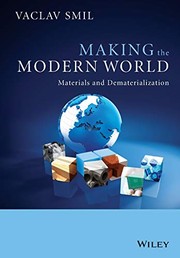
How much steel, cement and plastic the world uses, and whether growth needs less.
Recommended by: Bill Gates, Mohnish Pabrai

A short primer on energy: its forms, units and role in nature and economies.
Recommended by: Bill Gates, Mark Zuckerberg

Prosperity grows as trade and specialisation let ideas meet and combine.
“…books I've recommended, highlighted to death, or forced on friends.” — Andrew Wilkinson
Source: Andrew Wilkinson's Bookshelf, neverenough.com
Recommended by: Andrew Wilkinson, Bill Gates, Frank Martin and 10 others

How Haber and Bosch's ammonia synthesis transformed world food production.
Recommended by: Mohnish Pabrai, Bill Gates
Where it sits in the reference 2
Topics