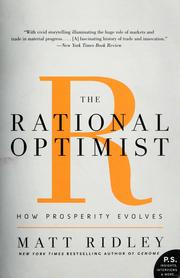
The Rational Optimist: How Prosperity Evolves
Matt Ridley's evolutionary argument that exchange and specialization are the deep engine of human progress — older than capitalism, older than agriculture. His data on long-run improvement in living standards is well-sourced; his dismissiveness toward environmental risks is the book's main weakness and worth holding separately from its core claim.
Summary
Ridley argues that human prosperity increases over time because ideas meet and combine through exchange, and that specialisation plus trade, not intelligence or invention alone, drives the improvement. His phrase for it is that ideas have sex. He dates the mechanism to the appearance of long-distance exchange in the archaeological record and traces it through Phoenician trade, medieval Italian city states, the Industrial Revolution and modern global supply chains.
The evidence is a long compilation of measures showing improvement: life expectancy, income per head, child mortality, calories, literacy, and the falling time-price of goods such as artificial light, which Ridley calculates in hours of labour required across several centuries. He argues that self-sufficiency is poverty, that the division of labour extends with the size of the market, and that innovation depends on population density and connection rather than on individual genius.
The second half attacks pessimism directly, arguing that predicted catastrophes from population, resource exhaustion, famine and pollution repeatedly failed to arrive because prices, substitution and innovation responded. He is dismissive of both government direction and of large corporations, arguing that both restrict the exchange that produces improvement.
The book has serious weaknesses. Ridley's treatment of climate change dismisses the risk in ways that have aged badly and that many scientists rejected at publication. He was chairman of Northern Rock when it failed in 2007, which is directly relevant to his arguments about regulation and about the self-correcting properties of markets, and he does not address it adequately. The optimism relies on extrapolating past adaptation to future problems, which is an assumption rather than a demonstration.
Key takeaways 8
- Prosperity increases because specialisation and exchange let ideas combine, not because individuals become more intelligent.
- Self-sufficiency is another name for poverty, since a person producing everything they consume produces very little.
- The time-price of goods, measured in hours of work required to buy them, has fallen enormously and is the correct measure of living standards.
- Innovation depends on the density and connectedness of a population, so isolated societies stagnate or regress regardless of individual ability.
- Predicted catastrophes from resource exhaustion failed to occur because prices signalled scarcity and produced substitution and innovation.
- Trade preceded agriculture and made it possible, rather than following from it.
- Top-down direction by governments and by large corporations both restrict the exchange that generates improvement.
- Pessimism is systematically overrepresented in public discussion because bad news arrives as events while good news arrives as slow trends.
Who should read it
Investors and founders who want the case for long-run growth through exchange and innovation, read with awareness that the author's climate and financial-regulation positions are contested.
About Matt Ridley
British science writer and member of the House of Lords, former chairman of Northern Rock, writing on evolution, genomics, trade and innovation.
The Rational Optimist argues that exchange and specialisation, not individual intelligence, drive rising living standards, and assembles the long-run price and productivity evidence behind the claim. How Innovation Works applies the same method to case histories, showing invention as incremental, collective and largely detached from formal research spending.
Who recommended it 13 · 7 direct
“…books I've recommended, highlighted to death, or forced on friends.”
“Matt Ridley's book The Rational Optimist is a great chronicle of the evolution of development of different societies, the industrial revolution and now the technology and communications revolution.”
“I really highly, highly recommend picking up Genome, The Red Queen, Origins of Virtue, The Rational Optimist, and The Evolution of Everything.”
“I really liked The Rational Optimist, by Matt Ridley. The general theme of the book is that while it may not feel like it all the time, things are getting better in the global economy and will…”
Similar books 6
Chosen by shared topics, the entries that hold them, and the people who recommended both.
Sex evolved as a defence against parasites, and that shapes human mating.
“I really highly, highly recommend picking up Genome, The Red Queen, Origins of Virtue, The Rational Optimist, and The Evolution of Everything.” — Naval Ravikant
Source: The Tim Ferriss Show — Naval Ravikant Q&A, full transcript
Recommended by: Mohnish Pabrai, Naval Ravikant, Seth Klarman and 1 other
Why some nations grew rich over 500 years, with culture as the deciding factor.
Recommended by: Charlie Munger, Mohnish Pabrai, Jamie Dimon and 1 other
Innovation is gradual, collective and bottom-up, not the work of lone inventors.
“It's a must-read for entrepreneurs and government officials who want to either be innovative themselves or foster innovation.” — Naval Ravikant
Source: Nav.al — 'Matt Ridley: How Innovation Works, Part 2'
Recommended by: Naval Ravikant, Balaji S. Srinivasan
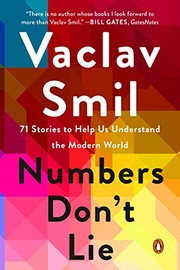
Seventy-one short pieces that correct common impressions with plain arithmetic.
Recommended by: Bill Gates, Mark Zuckerberg and 1 other
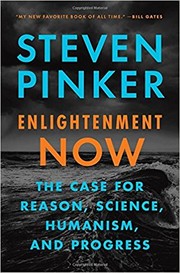
Steven Pinker's 500-page empirical survey of progress across 15 dimensions: health, wealth, equality, safety, knowledge, quality of life. Explicitly frames market economies and Enlightenment liberalism as the institutional sources of that progress. Has been criticized for cherry-picking metrics and underweighting catastrophic risks; the data itself is worth engaging with regardless.
Recommended by: Bill Gates, Andrew Wilkinson, Daniel Petre and 2 others
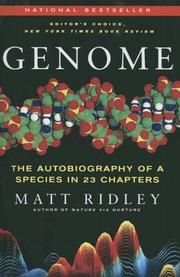
Twenty-three chapters, one per chromosome, each using a gene to open a subject.
“I highly recommend Genome as well, to figure out the rational basis behind ethics and the origin of virtue.” — Naval Ravikant
Source: Nav.al — 'Matt Ridley: How Innovation Works, Part 2' (Naval's podcast, edited transcript)
Recommended by: Charlie Munger, Mohnish Pabrai and 2 others
Where it sits in the reference 4
Topics