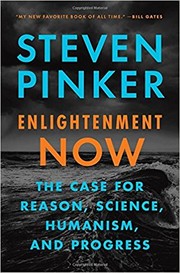
Enlightenment Now
Steven Pinker's 500-page empirical survey of progress across 15 dimensions: health, wealth, equality, safety, knowledge, quality of life. Explicitly frames market economies and Enlightenment liberalism as the institutional sources of that progress. Has been criticized for cherry-picking metrics and underweighting catastrophic risks; the data itself is worth engaging with regardless.
Summary
Pinker assembles data across seventy-five charts to argue that measures of human wellbeing have improved substantially, and attributes the improvement to the application of reason, science and humanism. The domains include life expectancy, child mortality, disease, famine, wealth, inequality, environmental quality, peace, safety, terrorism, democracy, equal rights, literacy, leisure and happiness.
The empirical section is the book's substance and the numbers are largely uncontroversial in direction. Global extreme poverty has fallen dramatically, life expectancy has risen everywhere, child mortality has collapsed, literacy is near-universal among the young, and violent death rates have fallen over centuries.
The second half is argument rather than data. Pinker defends Enlightenment values against critics on both the political right and left, attacks what he calls declinism in intellectual culture, argues that pessimism is systematically overrepresented because news reports events rather than trends, and addresses the objections from existential risk, climate change and inequality.
The criticisms are substantial. Pinker's causal attribution of the improvements to Enlightenment ideas is asserted rather than demonstrated, and the same data supports other explanations including fossil energy, colonial extraction and specific institutional developments. His treatment of climate change is thinner than the risk warrants and his dismissal of degrowth arguments is brisk. Critics including John Gray argue that the intellectual history is a caricature. The environmental chapter has aged least well. The data compilation is genuinely useful; the causal story should be treated as one interpretation among several.
Key takeaways 8
- Measures of human wellbeing including life expectancy, child mortality, literacy, poverty and violent death have improved substantially over the last two centuries.
- Global extreme poverty has fallen dramatically within living memory, faster than at any previous point in history.
- Perceptions of decline come from news reporting events rather than trends, since gradual improvement produces no reportable moments.
- Progress is not automatic and results from specific applications of knowledge to human problems, which means it can stop.
- Inequality within countries has risen while inequality between countries has fallen, and the two are frequently conflated in public argument.
- Environmental quality on several measures has improved in wealthy countries, which Pinker attributes to technology and wealth rather than to reduced consumption.
- Pinker's attribution of the improvements to Enlightenment reason is asserted rather than demonstrated, and the data supports other explanations.
- The treatment of climate change and of existential risk is brief relative to the weight those risks carry in the argument.
Who should read it
Readers who want the assembled data on long-run improvement, with the causal argument and the environmental chapters treated as contested.
Who recommended it 5 · 1 direct
Similar books 6
Chosen by shared topics, the entries that hold them, and the people who recommended both.
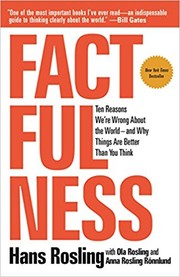
Hans Rosling was a global health professor, not an economist, which gives his data-driven case for human progress particular credibility. He shows, in meticulous detail, that almost every quantitative measure of human welfare has improved dramatically over the past century. He attributes this to global trade and economic development without being a polemicist.
Recommended by: Bill Gates, Alfred Lin, Daniel Petre and 4 others
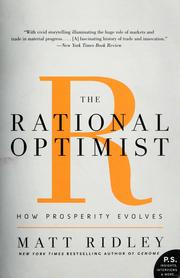
Prosperity grows as trade and specialisation let ideas meet and combine.
“…books I've recommended, highlighted to death, or forced on friends.” — Andrew Wilkinson
Source: Andrew Wilkinson's Bookshelf, neverenough.com
Recommended by: Andrew Wilkinson, Bill Gates, Frank Martin and 10 others
Kahneman's synthesis of behavioral economics is the cognitive science underpinning every negotiation tactic. Anchoring, loss aversion, framing effects, and the planning fallacy — understanding why these biases operate, not just that they exist, makes you harder to exploit and more honest about your own irrationality.
“…books I've recommended, highlighted to death, or forced on friends.” — Andrew Wilkinson
Source: Andrew Wilkinson's Bookshelf, neverenough.com
Recommended by: Andrew Wilkinson, Charles de Vaulx and 32 others
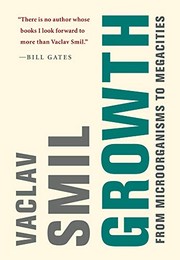
How organisms, populations, machines, economies and civilisations grow, and stop.
Recommended by: Bill Gates
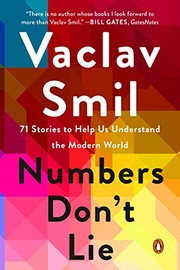
Seventy-one short pieces that correct common impressions with plain arithmetic.
Recommended by: Bill Gates, Mark Zuckerberg and 1 other
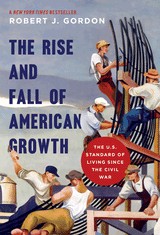
Why the inventions of 1870 to 1970 raised living standards as nothing since has.
“This is a heavyweight (literally) masterpiece... It's a data-rich textbook as well as a phenomenal read.” — Christopher Bloomstran
Source: Semper Augustus 2020 Letter to Clients, 'To Read or Not to Read', p. 57
Recommended by: Bill Gates, Christopher Bloomstran and 2 others
Where it sits in the reference 2
Topics