
Comparative Advantage
Ricardo's result that trade pays even when one party is better at everything, because what matters is relative rather than absolute cost. Inside a firm it argues for concentrating people on what they give up least to do. It also explains why supply chains fragment across borders, and what is surrendered when they are pulled back.
Start here
- The Undercover EconomistTim Harford, 2005
- Economics in One LessonHenry Hazlitt, 1946
- The Wealth of NationsAdam Smith, 1776

How the division of labour and free markets make a nation rich.
Recommended by: Naval Ravikant, Patrick Collison and 7 others

Rent, wages, profit and comparative advantage, reasoned from first assumptions.

Hazlitt's 1946 distillation of Bastiat's 'broken window' insight: good economic reasoning requires seeing both what is visible and what is made invisible by a policy. A short book that teaches a single analytical habit, and that habit is genuinely useful regardless of your politics.
“I've given dozens of copies of this classic to students... The book should be required reading on every campus.” — Christopher Bloomstran
Source: Semper Augustus 2020 Letter to Clients, 'To Read or Not to Read', p. 57
Recommended by: Christopher Bloomstran, Changpeng Zhao and 3 others

Diamond's central question — why did some civilizations come to dominate others over 10,000 years? — is precisely the kind of question that requires long-term thinking to even ask. The answer, rooted in geography and biology rather than culture or intelligence, is a model for how to reason about slow causes and fast effects.
“This is an insightful read on the pace at which societies develop and why.” — Christopher Bloomstran
Source: Semper Augustus 2023 Letter to Clients, 'Worldly Wisdom', p. 81
Recommended by: Charlie Munger, Christopher Bloomstran and 14 others

Why some nations grew rich over 500 years, with culture as the deciding factor.
Recommended by: Charlie Munger, Mohnish Pabrai, Jamie Dimon and 1 other

Thomas Sowell's deliberately introductory survey of how prices, incentives, and tradeoffs work across housing, labor, international trade, and discrimination. Dense with empirical examples. Its main contribution to this list is showing the gap between policy intentions and policy consequences.

Price theory in daily life: coffee near stations, supermarket tiers and used cars.
Recommended by: Mohnish Pabrai, Naval Ravikant

Prosperity grows as trade and specialisation let ideas meet and combine.
“…books I've recommended, highlighted to death, or forced on friends.” — Andrew Wilkinson
Source: Andrew Wilkinson's Bookshelf, neverenough.com
Recommended by: Andrew Wilkinson, Bill Gates, Frank Martin and 10 others

Economics argued through a novel; markets and their moral defence
“there is a book called The Invisible Heart which explains basic economics to most people” — Joel Greenblatt
Source: Masters in Business transcript: Joel Greenblatt (2018)
Recommended by: Joel Greenblatt, Mohnish Pabrai
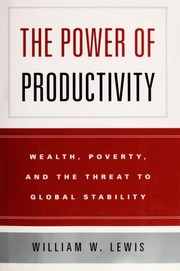
Sector-level explanation of why productivity differs so much between countries
“on how technology-driven productivity growth improves human welfare and creates more jobs and higher wages” — Marc Andreessen
Source: @pmarca, companion thread to 'It's Time to Build'
Recommended by: Marc Andreessen, Patrick Collison


 Mohnish Pabrairecommends 6 books here
 Marc Andreessenrecommends 5 books here
 Naval Ravikantrecommends 4 books here
 Charlie Mungerrecommends 3 books here
 Ray Daliorecommends 2 books here
 Tyler Cowenrecommends 2 books here
 Bill Gatesrecommends 2 books here
 Jamie Dimonrecommends 2 books here
 Patrick Collisonrecommends 2 books here
Show all 32
 Simon Sinekrecommends 1 book here
 Alfred Linrecommends 1 book here
 Changpeng Zhaorecommends 1 book here
 Daniel Ekrecommends 1 book here
 Elon Muskrecommends 1 book here
 John Arnoldrecommends 1 book here
 Mark Zuckerbergrecommends 1 book here
 Ryan Petersonrecommends 1 book here
 Scott Farquharrecommends 1 book here
 Stewart Brandrecommends 1 book here
- The Pendulum in International AffairsHoward Marks · memo · The pendulum framing applied outside markets.
- Explore or Exploit?Shane Parrish · essay · The opportunity cost of sticking with the known.
- Do Things That Don't ScalePaul Graham · essay · Why early growth comes from unscalable manual effort.