
Basic Economics: A Common Sense Guide to the Economy
Thomas Sowell's deliberately introductory survey of how prices, incentives, and tradeoffs work across housing, labor, international trade, and discrimination. Dense with empirical examples. Its main contribution to this list is showing the gap between policy intentions and policy consequences.
Similar books 6
Chosen by shared topics, the entries that hold them, and the people who recommended both.

Hazlitt's 1946 distillation of Bastiat's 'broken window' insight: good economic reasoning requires seeing both what is visible and what is made invisible by a policy. A short book that teaches a single analytical habit, and that habit is genuinely useful regardless of your politics.
“I've given dozens of copies of this classic to students... The book should be required reading on every campus.” — Christopher Bloomstran
Source: Semper Augustus 2020 Letter to Clients, 'To Read or Not to Read', p. 57
Recommended by: Christopher Bloomstran, Changpeng Zhao and 3 others
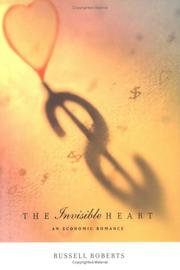
Economics argued through a novel; markets and their moral defence
“there is a book called The Invisible Heart which explains basic economics to most people” — Joel Greenblatt
Source: Masters in Business transcript: Joel Greenblatt (2018)
Recommended by: Joel Greenblatt, Mohnish Pabrai

Price theory in daily life: coffee near stations, supermarket tiers and used cars.
Recommended by: Mohnish Pabrai, Naval Ravikant
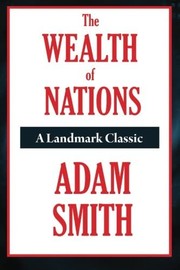
How the division of labour and free markets make a nation rich.
Recommended by: Naval Ravikant, Patrick Collison and 7 others

Economics for daily life: motivating people, choosing food, giving to charity.
Recommended by: Graham Duncan
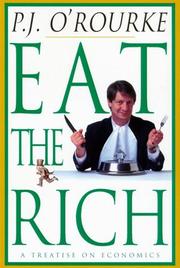
Where it sits in the reference 3
Topics