
Opportunity Cost
The cost of any investment is the best alternative it displaces, not the dollars it consumes. Buffett and Munger apply it as a hurdle: a new idea must beat buying more of the best existing holding, or the answer is no. Judged against that bar most pretty-good opportunities are quietly expensive.
Start here
- Economics in One LessonHenry Hazlitt, 1946
- Basic EconomicsThomas Sowell, 1999
- The OutsidersWilliam N. Thorndike, 2012
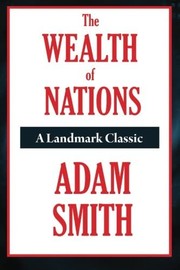
How the division of labour and free markets make a nation rich.
Recommended by: Naval Ravikant, Patrick Collison and 7 others

Hazlitt's 1946 distillation of Bastiat's 'broken window' insight: good economic reasoning requires seeing both what is visible and what is made invisible by a policy. A short book that teaches a single analytical habit, and that habit is genuinely useful regardless of your politics.
“I've given dozens of copies of this classic to students... The book should be required reading on every campus.” — Christopher Bloomstran
Source: Semper Augustus 2020 Letter to Clients, 'To Read or Not to Read', p. 57
Recommended by: Christopher Bloomstran, Changpeng Zhao and 3 others
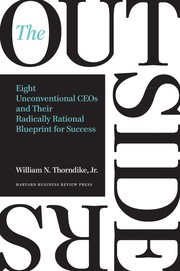
Eight CEOs who beat the market by allocating capital, not by running operations.
“…books I've recommended, highlighted to death, or forced on friends.” — Andrew Wilkinson
Source: Andrew Wilkinson's Bookshelf, neverenough.com
Recommended by: Andrew Wilkinson, Dan Loeb, Francois Rochon and 12 others

Every Berkshire annual letter since 1965, in order, as the company grew.
“…books I've recommended, highlighted to death, or forced on friends.” — Andrew Wilkinson
Source: Andrew Wilkinson's Bookshelf, neverenough.com
Recommended by: Andrew Wilkinson, Arnold Van Den Berg and 5 others

Thomas Sowell's deliberately introductory survey of how prices, incentives, and tradeoffs work across housing, labor, international trade, and discrimination. Dense with empirical examples. Its main contribution to this list is showing the gap between policy intentions and policy consequences.
 Adam Smithwrote 1 book here
 Warren Buffettwrote 1 book here
 Mohnish Pabrairecommends 3 books here
 Charlie Mungerrecommends 2 books here
 Marc Andreessenrecommends 2 books hereWarren Buffettrecommends 2 books here
 Naval Ravikantrecommends 2 books here
 Patrick Collisonrecommends 2 books here
 Ray Daliorecommends 1 book here
 Tyler Cowenrecommends 1 book here
Show all 27
 Guy Spierrecommends 1 book here
 William Ackmanrecommends 1 book here
 Alfred Linrecommends 1 book here
 Brian Armstrongrecommends 1 book here
 Changpeng Zhaorecommends 1 book here
 Elon Muskrecommends 1 book here
 Ryan Petersonrecommends 1 book here
- Cost of CapitalMichael J. Mauboussin · paper · The hurdle every alternative use of capital must clear.
- Capital AllocationMichael J. Mauboussin · paper · Ranking uses of capital against the best alternative.
- An Owner's ManualWarren Buffett · essay · Berkshire's economic principles, including opportunity cost.
- Explore or Exploit?Shane Parrish · essay · The opportunity cost of sticking with the known.