The Wealth of Nations
The origin point. Smith's argument that specialization and voluntary exchange create wealth still underlies most of what follows. Often misread as a simple endorsement of greed; actually a nuanced account of how self-interest, constrained by competition and moral sympathy, tends toward social benefit.
Summary
Smith published in 1776 the first systematic account of how a commercial economy produces wealth. He opens with the division of labour, using the pin factory to show that specialisation multiplies output far beyond what individual effort explains, and argues that the division of labour is limited by the extent of the market, which makes transport, trade and market size the determinants of productivity.
He then develops the price mechanism, distinguishing natural price from market price and explaining how competition drives the second toward the first. His account of self-interest as the source of provision, stated through the butcher, brewer and baker, is the passage most quoted and most often stripped of its context. The invisible hand appears once in the entire work, in a passage about domestic investment preference.
Book four is a sustained attack on mercantilism, arguing that treating exports as gain and imports as loss confuses money with wealth, and that restrictions imposed to protect domestic producers transfer wealth from consumers to those producers. Smith is explicit that merchants and manufacturers lobby for these restrictions against the public interest, and that any regulation proposed by them deserves suspicion.
Book five covers the proper functions of government, which Smith takes to include defence, justice, public works, education and certain infrastructure that private parties will not provide. He supports progressive taxation and criticises joint stock companies with separated ownership and management. The work is long, digressive and contains extended historical material on grain prices and silver that few readers need. The labour theory of value it uses was superseded. Modern quotation of Smith frequently misrepresents him, particularly on the role of government and on the trustworthiness of businessmen.
Key takeaways 8
- The division of labour, not individual effort or natural resources, explains the large majority of productivity gains.
- Specialisation is limited by the extent of the market, so transport costs and market size determine how productive an economy can become.
- People obtain what they need by appealing to others' self-interest rather than to their benevolence, which makes exchange rather than goodwill the organising mechanism.
- Competition drives market prices toward the cost of production, and the mechanism works only where entry is unrestricted.
- Mercantilist restrictions transfer wealth from consumers to protected producers while reducing total output.
- Businessmen in the same trade combine against the public interest whenever they meet, and any commercial regulation they propose should be examined with suspicion.
- Government has necessary functions including defence, justice, public works and education that markets will not supply adequately.
- Managers of other people's money in joint stock companies will not watch it with the same care as owners, which is the earliest clear statement of the agency problem.
Who should read it
Readers who want the primary source on markets, specialisation and trade rather than the version of Smith used in political argument.
About Adam Smith
Scottish moral philosopher at the University of Glasgow who founded modern economics with The Wealth of Nations in 1776.
The Wealth of Nations set out how division of labour, self-interest and competitive prices coordinate production without central direction, and it supplies the vocabulary economics still argues in: specialisation, capital accumulation, natural and market price. The Theory of Moral Sentiments supplies the other half, placing exchange inside a system of sympathy and judgement.
Who recommended it 9 · 2 direct
Similar books 6
Chosen by shared topics, the entries that hold them, and the people who recommended both.
Hazlitt's 1946 distillation of Bastiat's 'broken window' insight: good economic reasoning requires seeing both what is visible and what is made invisible by a policy. A short book that teaches a single analytical habit, and that habit is genuinely useful regardless of your politics.
“I've given dozens of copies of this classic to students... The book should be required reading on every campus.” — Christopher Bloomstran
Source: Semper Augustus 2020 Letter to Clients, 'To Read or Not to Read', p. 57
Recommended by: Christopher Bloomstran, Changpeng Zhao and 3 others
Books One to Three: division of labour, money, prices, wages, profit and capital.
Recommended by: Mohnish Pabrai
Books Four and Five: the case against mercantilism, and the role of the state.
Recommended by: Mohnish Pabrai
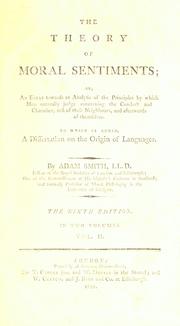
How moral judgement grows from sympathy and an imagined impartial spectator.
Recommended by: Mohnish Pabrai
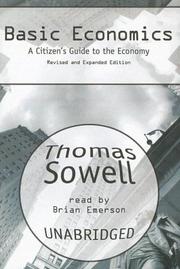
Thomas Sowell's deliberately introductory survey of how prices, incentives, and tradeoffs work across housing, labor, international trade, and discrimination. Dense with empirical examples. Its main contribution to this list is showing the gap between policy intentions and policy consequences.
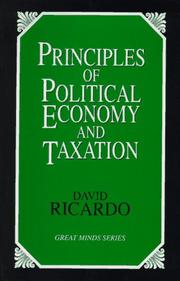
Rent, wages, profit and comparative advantage, reasoned from first assumptions.
Where it sits in the reference 4
Topics