Classic economic thought and economists
The founding texts of economics by Smith, Ricardo, Malthus, Marx, Keynes, Hayek, Mises and Schumpeter, with histories of economic ideas and biographies of economists.
Start here
- On the Principles of Political Economy and TaxationDavid Ricardo, 1817
- The Economic Consequences of the PeaceJohn Maynard Keynes, 1919
- Capitalism, Socialism and DemocracyJoseph A. Schumpeter, 1942
- Marginal Revolutionaries: How Austrian Economists Fought the War of IdeasJanek Wasserman, 2019
- The Road to SerfdomF. A. Hayek

Rent, wages, profit and comparative advantage, reasoned from first assumptions.

Why Germany could not pay the 1919 reparations, and what they would do to Europe.
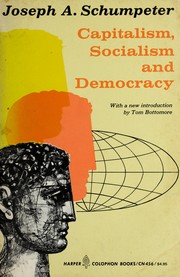
Capitalism runs on creative destruction, and its success may lead it to socialism.

History of the Vienna school as a network, including its financing and its export to the US.

Hayek's 1944 warning that central economic planning corrodes political freedom alongside economic efficiency. Written for a British Left audience, it argued that the path to socialism and the path to fascism share structural features. Its critics say it proves too much; its admirers say history vindicated it.
Recommended by: Li Lu, Marc Andreessen, Peter Thiel

How the division of labour and free markets make a nation rich.
Recommended by: Naval Ravikant, Patrick Collison and 7 others
How moral judgement grows from sympathy and an imagined impartial spectator.
Recommended by: Mohnish Pabrai
The original population-versus-resources argument that still frames the debate
Recommended by: Mohnish Pabrai

Recommended by: Mohnish Pabrai, Warren Buffett
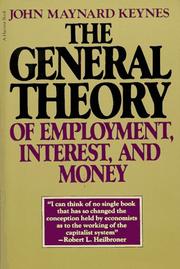
Recommended by: Mohnish Pabrai, Eric Weinstein and 1 other
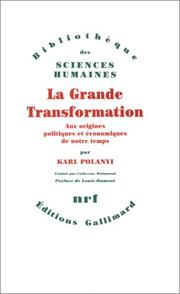
How the Industrial Revolution's self-regulating market upended society.
Recommended by: Satya Nadella

A critique of socialism: why morality and markets are not products of reason.
Recommended by: Nick Szabo

Recommended by: Eric Weinstein

How economics copied the maths of 19th-century physics, and what that cost it.
“there's a wonderful book called More Heat Than Light by a professor named Phil Mirowski, which documents how economists mapped over equations from Newtonian physics” — Michael Mauboussin
Source: The Tim Ferriss Show #659 — official transcript
Recommended by: Michael Mauboussin, Eric Weinstein

Polemic against Keynesian policy from an Austrian-leaning investor
“This is another timely classic given the present condition. The outline structure of the book is brilliant.” — Christopher Bloomstran
Source: Semper Augustus 2020 Letter to Clients, 'To Read or Not to Read', p. 57
Recommended by: Christopher Bloomstran
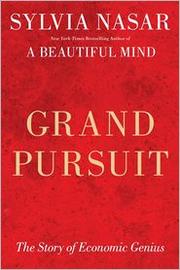
Recommended by: Mohnish Pabrai
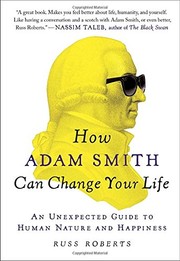
Recommended by: Tim O’Reilly

Books One to Three: division of labour, money, prices, wages, profit and capital.
Recommended by: Mohnish Pabrai

Books Four and Five: the case against mercantilism, and the role of the state.
Recommended by: Mohnish Pabrai

Recommended by: Mohnish Pabrai
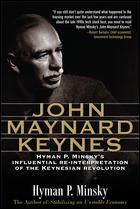
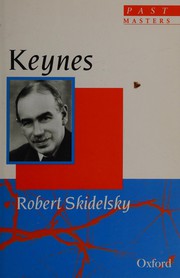

 Mohnish Pabrairecommends 10 books here
 Marc Andreessenrecommends 3 books here
 Eric Weinsteinrecommends 3 books here
 Warren Buffettrecommends 2 books here
 Elon Muskrecommends 2 books here
 Patrick Collisonrecommends 2 books here
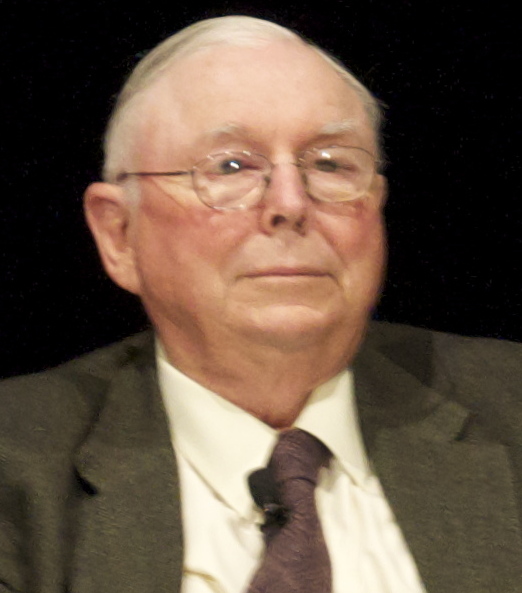 Charlie Mungerrecommends 1 book here
 Peter Thielrecommends 1 book here
 Ray Daliorecommends 1 book here


