
The Power of Productivity
Sector-level explanation of why productivity differs so much between countries
Summary
Lewis founded the McKinsey Global Institute and this book presents the conclusions from twelve years of its country productivity studies, covering the United States, Japan, Germany, France, Korea, Brazil, Russia, India and others. The method was sector-level micro analysis: rather than working from national aggregates, MGI teams studied specific industries such as retail, automotive, housing construction, food processing and banking, and compared productivity plant by plant.
The central finding is that differences in national income are explained overwhelmingly by differences in productivity within specific sectors, that those differences are caused by competitive conditions in product markets rather than by capital, education or labour market institutions, and that the most important barrier is regulation and informality that protects unproductive incumbents. He gives the example of Japanese retail and food processing, which were far less productive than American equivalents despite Japan's world-leading automotive productivity, and attributes this to land use rules and distribution regulations that protected small stores.
His most contested claim concerns informality. Lewis argues that large informal sectors in Brazil, India and Russia are not a symptom of poverty but a cause, because informal firms avoid taxes and regulations and can therefore survive at productivity levels that would make them uncompetitive if everyone complied.
The evidence is proprietary McKinsey studies not available for independent verification, which is the book's main methodological limitation. The consultant authorship also shapes the policy conclusions, which favour product market deregulation consistently.
Key takeaways 7
- National income differences are explained by productivity differences within specific sectors rather than by aggregate factors such as capital stock or education.
- Competition in product markets is the primary determinant of sector productivity, more so than labour markets, capital availability or workforce skills.
- Regulations protecting incumbent firms, including land use rules and distribution restrictions, are the largest single cause of low productivity in developed and developing economies alike.
- Large informal sectors cause low productivity rather than resulting from it, because firms that avoid taxes and rules survive at productivity levels compliance would eliminate.
- A country can have world-leading productivity in one sector and very poor productivity in another, which shows the cause is sector-specific rather than national.
- Consumers rather than producers should be the reference point for economic policy, since policies protecting producers reduce the productivity that raises incomes.
- Foreign direct investment raises productivity mainly by introducing competitive pressure on domestic incumbents rather than by transferring capital.
Who should read it
Investors and policy readers who want the sector-level micro evidence on what actually determines national productivity differences.
Who recommended it 2 · 2 direct
“on how technology-driven productivity growth improves human welfare and creates more jobs and higher wages”
Similar books 6
Chosen by shared topics, the entries that hold them, and the people who recommended both.

1968 warning that American corporations would come to dominate Europe
Recommended by: Patrick Collison, Peter Thiel

How the division of labour and free markets make a nation rich.
Recommended by: Naval Ravikant, Patrick Collison and 7 others

Long-distance trade from Mesopotamia and the spice routes to modern globalisation.
Recommended by: Patrick Collison, Mohnish Pabrai, Nick Szabo

Hazlitt's 1946 distillation of Bastiat's 'broken window' insight: good economic reasoning requires seeing both what is visible and what is made invisible by a policy. A short book that teaches a single analytical habit, and that habit is genuinely useful regardless of your politics.
“I've given dozens of copies of this classic to students... The book should be required reading on every campus.” — Christopher Bloomstran
Source: Semper Augustus 2020 Letter to Clients, 'To Read or Not to Read', p. 57
Recommended by: Christopher Bloomstran, Changpeng Zhao and 3 others
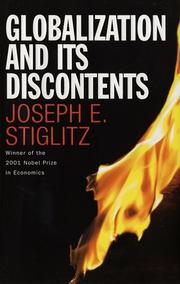
An attack on the IMF's one-size-fits-all policies in the crises of the 1990s.
Recommended by: Patrick Collison

Recommended by: Bill Gates, Patrick Collison
Where it sits in the reference 3
Topics