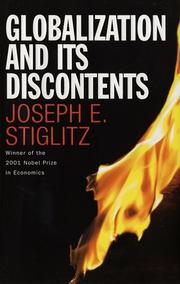
Globalization and Its Discontents
The insider critique of IMF conditionality and capital account liberalization.
Summary
Stiglitz was chief economist at the World Bank and won the Nobel Prize for work on information asymmetry, and this book is his attack on the International Monetary Fund's conduct during the 1990s crises. His central charge is that the IMF applied a standard programme of fiscal contraction, high interest rates, rapid capital account liberalisation and privatisation regardless of the circumstances, and that in several cases this deepened the crises it was intended to resolve.
His specific cases include the East Asian crisis of 1997, where he argues that the countries affected had sound fiscal positions and that the IMF's demand for contraction was the opposite of what conditions required; the Russian transition, where he argues that rapid privatisation without institutional preparation transferred state assets to a small group and destroyed output; and Argentina, where the currency arrangement the IMF supported produced the collapse.
His contrast cases are China and Malaysia, which did not follow the prescriptions, and which he argues fared better. His institutional argument is that the IMF's governance gives disproportionate weight to creditor countries and to financial interests within them, that its decisions are made without transparency or accountability to the populations affected, and that its economics reflects an outdated model that ignores information asymmetry and market failure.
The book is polemical and Stiglitz was writing after leaving the institution he criticises. The IMF and Kenneth Rogoff responded publicly and disputed both the account and the counterfactual. The specific criticism of capital account liberalisation sequencing has been substantially accepted since, including by the IMF itself.
Key takeaways 8
- The IMF applied a standard programme of contraction, high rates, capital liberalisation and privatisation regardless of the circumstances of each crisis.
- The East Asian countries affected in 1997 had sound fiscal positions, which means the standard contractionary prescription addressed a problem they did not have.
- Rapid privatisation without institutional preparation transferred state assets to a small group and destroyed output in Russia.
- Capital account liberalisation before domestic financial institutions are capable of handling flows produces crises rather than growth.
- Countries that did not follow the prescriptions, including China and Malaysia, fared better through the same period.
- The sequencing of reforms determines their effect, and correct policies applied in the wrong order produce the opposite result.
- The IMF's governance gives disproportionate weight to creditor countries and its decisions face no accountability to the populations affected.
- The institution disputed both the account and the counterfactual, and the criticism of liberalisation sequencing has since been substantially accepted.
Who should read it
Investors and policy readers interested in emerging market crises and in the sequencing of financial liberalisation, read as one side of a disputed account.
About Joseph E. Stiglitz
Professor at Columbia University, Nobel laureate in economics, former World Bank chief economist and chair of the Council of Economic Advisers.
Globalization and Its Discontents documents from inside the institutions how IMF conditionality worked during the Asian and Russian crises, and why capital-account liberalisation ran ahead of the safeguards that would have made it survivable. The information-economics argument beneath the later books explains why markets with unequal information do not clear at efficient prices.
Columbia University, World Bank, Council of Economic Advisers
Who recommended it 1 · 1 direct
Similar books 6
Chosen by shared topics, the entries that hold them, and the people who recommended both.

Trade imbalances come from how income is shared within countries.
The 1997 warning that the political backlash was coming.
Recommended by: Patrick Collison
For trade, but against hyperglobalisation that overrides national choices.

Globalisation's two phases: cheap shipping of goods, then cheap movement of ideas.
Recommended by: Satya Nadella
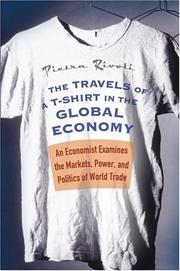
One T-shirt traced from a Texas cotton farm to a Chinese factory and beyond.
Where it sits in the reference 5
Topics