
Joseph E. Stiglitz
New Keynesian economist who won the Nobel Memorial Prize in 2001 and the John Bates Clark Medal in 1979; formerly chief economist of the World Bank and chairman of the Council of Economic Advisers.
 Columbia University
 World BankCouncil of Economic Advisers
Globalization and Its Discontents documents from inside the institutions how IMF conditionality worked during the Asian and Russian crises, and why capital-account liberalisation ran ahead of the safeguards that would have made it survivable. The information-economics argument beneath the later books explains why markets with unequal information do not clear at efficient prices.
5 books of their own · 20 articles
Start here
- Globalization and Its DiscontentsJoseph E. Stiglitz, 2002
- The EuroJoseph E. Stiglitz, 2016
- Creating a Learning Society: A New Approach to Growth, Development, and Social ProgressJoseph E. Stiglitz, 2014
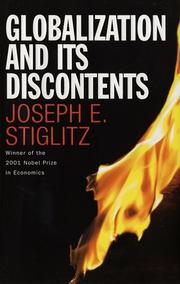
An attack on the IMF's one-size-fits-all policies in the crises of the 1990s.
Recommended by: Patrick Collison
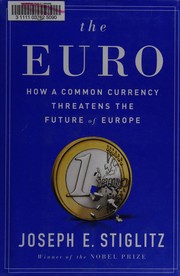
The euro rests on false assumptions; Europe must complete the union or end it.

Living standards rise through learning, and how policy can make economies learn.
“For a wonderful book that builds on Arrow's research, see Joseph E. Stiglitz and Bruce C. Greenwald, Creating A Learning Society” — Michael Mauboussin
Recommended by: Michael Mauboussin
Monetary policy works through credit and bank lending, not the quantity of money.
Norway is the counterexample the whole volume is arranged around.
 Globalization and Its Discontents | An attack on the IMF's one-size-fits-all policies in the crises of the 1990s. | 2002 | T2 | Patrick Collison |
 The Euro | The euro rests on false assumptions; Europe must complete the union or end it. | 2016 | T2 | – |
 Creating a Learning Society: A New Approach to Growth, Development, and Social Progress | Living standards rise through learning, and how policy can make economies learn. | 2014 | T2 | Michael Mauboussin |
| Towards a New Paradigm in Monetary Economics | Monetary policy works through credit and bank lending, not the quantity of money. | 2003 | T2 | – |
 Escaping the Resource Curse | Norway is the counterexample the whole volume is arranged around. | 2007 | T3 | – |
| Joseph Stiglitz and the Meaning of Freedom Paywall | The New Yorker | 2024 |
| The Nobel-Winning Economist Who Wants You to Read More Fiction Paywall | The New York Times | 2020 |