
Creating a Learning Society: A New Approach to Growth, Development, and Social Progress
Summary
Greenwald and Stiglitz argue that the main source of increases in living standards is learning, meaning improvements in productivity and technology, and that standard economics has almost nothing to say about how learning happens. They build a theory in which learning is endogenous, is generated largely by production itself, and spills over between firms and sectors in ways that markets do not price.
The policy conclusion follows directly and is the book's controversial part. If learning comes disproportionately from manufacturing and from certain industrial activities, and if the benefits spill over to the rest of the economy without compensation, then free trade based on static comparative advantage can lock a country into sectors with low learning potential and reduce its long-run growth. They argue for industrial policy, including trade protection, exchange rate management and direct support for learning-intensive sectors, and they present this as an efficiency argument rather than a distributional one.
The formal modelling is substantial and the book began as the Kenneth Arrow lectures at Columbia. They connect the argument to Arrow's learning-by-doing work, to Hirschman on linkages, and to the East Asian development record.
The objections are the standard ones and they are serious: identifying which sectors generate learning spillovers in advance is exactly what governments have historically failed at, the East Asian record is contested and involved conditions hard to replicate, and the model's predictions are sensitive to assumptions about spillover magnitude that are not measured. The book is demanding and is written for economists.
Key takeaways 7
- Increases in living standards come predominantly from learning and productivity growth rather than from capital accumulation or resource allocation.
- Learning is generated by production itself, which means what a country produces determines how fast it can learn.
- Learning spills over between firms and sectors without compensation, so markets systematically underinvest in learning-intensive activity.
- Free trade based on static comparative advantage can lock a country into low-learning sectors and reduce its long-run growth rate.
- Industrial policy supporting learning-intensive sectors is an efficiency argument rather than a protectionist one, because it addresses an uncompensated externality.
- Manufacturing generates larger learning spillovers than most service or resource activity, which is why deindustrialisation carries a cost beyond employment.
- Intellectual property protection can reduce aggregate learning by restricting the diffusion that generates most of the social return.
Who should read it
Investors and policy readers who want the economic case for industrial policy stated formally by economists who take the objections seriously.
About Bruce Greenwald
Robert Heilbrunn Professor Emeritus of Finance and Asset Management, Columbia Business School; former director of the Heilbrunn Center for Graham and Dodd Investing
Value Investing: From Graham to Buffett and Beyond is the canonical modern restatement of the Columbia value framework, and Competition Demystified is its standard companion on barriers to entry.
Columbia Business School, Heilbrunn Center for Graham and Dodd Investing
Who recommended it 1 · 1 direct
“For a wonderful book that builds on Arrow's research, see Joseph E. Stiglitz and Bruce C. Greenwald, Creating A Learning Society”
Similar books 6
Chosen by shared topics, the entries that hold them, and the people who recommended both.
Monetary policy works through credit and bank lending, not the quantity of money.
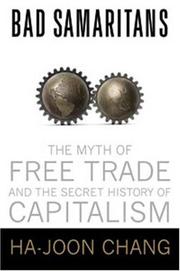
Rich countries urge poor ones to adopt the opposite of the policies they once used.

How $27 lent to 42 villagers grew into Grameen Bank and microcredit.
Recommended by: Mohnish Pabrai, The Barefoot Investor
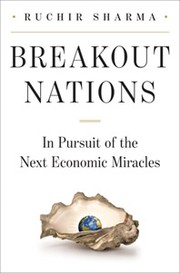
Why emerging economies will not all keep converging, and tests for which can grow.
Recommended by: Mohnish Pabrai

Polemical, but the case for bond-market financing over aid is argued in investor terms.
Sceptical audit of what microfinance evidence actually supports.
Where it sits in the reference 3
Topics