Updates

  1. Person pages list letters, writing, profiles and links as sortable tables with filters, and show each person's companies as links; Fund letters show each letter's description in its own column.
  2. Experts show a checked job title and a short description of each person; 30 more people have photographs.
  3. Every company, fund, university and publication the experts work for has a page listing the people there.
  4. Fund letters show each letter's thesis and filter by it; 225 person pages list the essays, columns and newsletter issues the person wrote.
  5. Person pages list every essay and newsletter issue a person wrote, and their own books as a table in List view.
  6. Recommends shows the five largest kinds of book and the rest under More; browse pictures load sooner.
  7. Podcasts and talks link the original episode, filter by Audio and video or Press, and list each publisher once.
  8. Pages are wider, Recommends has List and Grid, and a filter clicked again turns off.
  9. Book cards sit in a ruled grid with Open Library and Goodreads links and each book's one-line note.
  10. Funds is now Investors; each investor's styles are buttons that filter the table.
  11. Podcasts and talks on a person's page filter by year and publisher and show as a list or a grid of pictures.
  12. Quotes show only people's own words: 472 summaries written by list sites are gone.
  13. Country pages open from Browse again, and every link on the shelf lands on a page.
  14. Subject and person pages show their sections as tabs, and each book appears once on a person's page.
  15. Book cards show the quote, who said it and the source; grids show five cards to a row.
  16. On a phone, a menu holds the sections, search, Updates, Feedback and dark mode.
  17. Feedback takes a screenshot of the page with no browser prompt, opens a screenshot full size when you click it, and clears itself once sent.
  18. Book cards are centred, search names the topic each book sits in, and any text cut short shows whole on hover.
  19. Search groups its results by kind: people, companies, geographies, subjects, topics, books, funds, fund letters and papers.
  20. The Books table lists who recommended each book by name, and the browser tab names the section you are in.
  21. Feedback can take a screenshot of the page, or one you paste or choose, and opens in the corner beside Updates.
  22. Each rail button reopens its section where you left it, and Browse, Table and People show on every book and subject page.
  23. Filters grey out choices that hold nothing instead of hiding them, and Books › People filters by authors or recommenders.
  24. Feedback takes a subject line and up to three screenshots.
  25. Biographies are grouped by the person they are about: 41 new pages, from Abraham Lincoln to Lee Kuan Yew.
  26. Sport splits into 23 sports, and Religion into one topic per faith.
  27. Book lists show as cards: the cover, one recommendation quote and every recommender by name.
  28. Seventeen subjects that had two or three pages under different names now have one page each.
  29. Every page lists its Experts as authors and recommenders, with a link to them on the Experts tab.
  30. Economics, Financial history, Financial panics and Accounting are subjects of their own, with one page per financial crisis.
  31. Book, person and subject pages open inside the app, so the tabs stay in view.
  32. 996 more book covers, and photographs or logos for 227 more people and companies.
  33. Books › Browse shows every subject as cards, and the rail holds Fund letters, Papers, Experts, Books and Funds.
  34. Every topic over 150 books splits into narrower topics, each with a page of its own.

Send feedback

What is it?
Screenshots, up to 3 (optional)
or paste one with Ctrl+V

We use your email only to reply to you.

Dead Aid

Dead Aid

Dambisa Moyo
2009
T3 188 pages · about 3h 8m to read Open Librarygoodreads

Polemical, but the case for bond-market financing over aid is argued in investor terms.

Summary

Moyo, a Zambian economist who had worked at Goldman Sachs and the World Bank, argued that development aid to Africa has done more harm than good and should be phased out.

Her argument distinguishes systematic government-to-government and concessional multilateral aid, which she attacks, from humanitarian relief and from charitable giving to specific projects, which she does not.

The mechanisms she identifies are political and economic. Aid revenue funds governments without requiring them to tax citizens, which removes the accountability that taxation creates and makes governments answerable to donors rather than to their populations. Aid creates a large resource available for capture, which raises the returns to holding office and to corruption. Aid inflows can appreciate the currency, which damages exporting sectors, a mechanism analogous to resource curse effects. Aid supports governments that would otherwise fall, which entrenches poor governance. Aid displaces private enterprise where it supplies goods that domestic producers would otherwise sell, and she uses the mosquito net example, where donated nets destroy local manufacturers.

Her alternatives are market-based: sovereign bond issuance, which imposes market discipline and requires governments to satisfy investors who will not lend again if they default; foreign direct investment including Chinese investment, which she treats more favourably than Western commentators; trade access, particularly removal of agricultural protection in rich countries; remittances; and microfinance.

The book was widely read and heavily criticised. Development economists including Jeffrey Sachs disputed both the empirical claims and the proposed alternatives, arguing that aid effectiveness varies enormously by type and that health interventions in particular have measurable results Moyo does not address. Her bond market alternative was tested when several African countries issued sovereign debt in the following decade and subsequently faced distress. The political economy argument about accountability is the part most widely accepted.

Key takeaways 7

  1. Aid revenue funds governments without requiring them to tax citizens, which removes the accountability taxation creates.
  2. A large aid flow is a resource available for capture, which raises the returns to holding office.
  3. Aid inflows can appreciate the currency and damage exporting sectors through the same mechanism as a resource curse.
  4. Aid can support governments that would otherwise lose power, which entrenches the governance it is meant to improve.
  5. Donated goods displace domestic producers who would otherwise supply the same market.
  6. Sovereign bond issuance imposes market discipline that concessional lending does not, because investors will not lend again after a default.
  7. Trade access and removal of agricultural protection in rich countries would deliver more than aid transfers do.

Who should read it

Readers who want the strongest argument against government-to-government aid, read against the evidence on aid effectiveness that the book does not engage.

Similar books 6

Chosen by shared topics, the entries that hold them, and the people who recommended both.
Morten Jerven · 2013

Ghana's 2010 GDP rebasing is the central case; read before trusting any African macro series.

Recommended by: Bill Gates
Paul Collier · 2007

Why about sixty poor countries are stuck, caught in traps such as conflict.

David Roodman · 2011

Sceptical audit of what microfinance evidence actually supports.
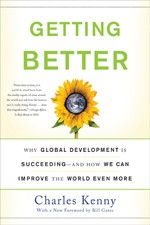
Charles Kenny · 2011

Recommended by: Bill Gates

Abhijit V. Banerjee, Esther Duflo · 2011

Recommended by: Bill Gates, Mohnish Pabrai
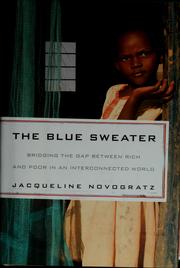
Jacqueline Novogratz · 2009

A memoir of moving from international banking to founding Acumen, an impact investor.

Recommended by: Mohnish Pabrai

Where it sits in the reference 2

Geographies
Economics

Topics

EconomicsPolitics and GovernmentSociology and CultureWealth, poverty and inequality