Updates

  1. Person pages list letters, writing, profiles and links as sortable tables with filters, and show each person's companies as links; Fund letters show each letter's description in its own column.
  2. Experts show a checked job title and a short description of each person; 30 more people have photographs.
  3. Every company, fund, university and publication the experts work for has a page listing the people there.
  4. Fund letters show each letter's thesis and filter by it; 225 person pages list the essays, columns and newsletter issues the person wrote.
  5. Person pages list every essay and newsletter issue a person wrote, and their own books as a table in List view.
  6. Recommends shows the five largest kinds of book and the rest under More; browse pictures load sooner.
  7. Podcasts and talks link the original episode, filter by Audio and video or Press, and list each publisher once.
  8. Pages are wider, Recommends has List and Grid, and a filter clicked again turns off.
  9. Book cards sit in a ruled grid with Open Library and Goodreads links and each book's one-line note.
  10. Funds is now Investors; each investor's styles are buttons that filter the table.
  11. Podcasts and talks on a person's page filter by year and publisher and show as a list or a grid of pictures.
  12. Quotes show only people's own words: 472 summaries written by list sites are gone.
  13. Country pages open from Browse again, and every link on the shelf lands on a page.
  14. Subject and person pages show their sections as tabs, and each book appears once on a person's page.
  15. Book cards show the quote, who said it and the source; grids show five cards to a row.
  16. On a phone, a menu holds the sections, search, Updates, Feedback and dark mode.
  17. Feedback takes a screenshot of the page with no browser prompt, opens a screenshot full size when you click it, and clears itself once sent.
  18. Book cards are centred, search names the topic each book sits in, and any text cut short shows whole on hover.
  19. Search groups its results by kind: people, companies, geographies, subjects, topics, books, funds, fund letters and papers.
  20. The Books table lists who recommended each book by name, and the browser tab names the section you are in.
  21. Feedback can take a screenshot of the page, or one you paste or choose, and opens in the corner beside Updates.
  22. Each rail button reopens its section where you left it, and Browse, Table and People show on every book and subject page.
  23. Filters grey out choices that hold nothing instead of hiding them, and Books › People filters by authors or recommenders.
  24. Feedback takes a subject line and up to three screenshots.
  25. Biographies are grouped by the person they are about: 41 new pages, from Abraham Lincoln to Lee Kuan Yew.
  26. Sport splits into 23 sports, and Religion into one topic per faith.
  27. Book lists show as cards: the cover, one recommendation quote and every recommender by name.
  28. Seventeen subjects that had two or three pages under different names now have one page each.
  29. Every page lists its Experts as authors and recommenders, with a link to them on the Experts tab.
  30. Economics, Financial history, Financial panics and Accounting are subjects of their own, with one page per financial crisis.
  31. Book, person and subject pages open inside the app, so the tabs stay in view.
  32. 996 more book covers, and photographs or logos for 227 more people and companies.
  33. Books › Browse shows every subject as cards, and the rail holds Fund letters, Papers, Experts, Books and Funds.
  34. Every topic over 150 books splits into narrower topics, each with a page of its own.

Send feedback

What is it?
Screenshots, up to 3 (optional)
or paste one with Ctrl+V

We use your email only to reply to you.

Due Diligence

Due Diligence

David Roodman
2011
T3 365 pages · about 6h 5m to read Open Librarygoodreads

Sceptical audit of what microfinance evidence actually supports.

Summary

Roodman, an economist then at the Center for Global Development, conducted a systematic review of the evidence on microfinance and wrote this account of what it shows.

His method was unusual: he wrote the book publicly on a blog as he worked, publishing drafts and responding to criticism from researchers and practitioners, which meant the analysis was tested as it developed.

His findings are careful and largely negative about the strongest claims. The randomised evaluations conducted in India, the Philippines, Morocco, Bosnia, Mongolia, Ethiopia and Mexico consistently find no measurable average effect of microcredit access on income, on consumption, on health, on education or on women's empowerment. Some borrowers invest productively and some businesses expand, but the average effect across borrowers is not detectable. The claims about poverty reduction and about transformation that drove the sector's growth are not supported.

He identifies what the evidence does support. Microfinance provides financial services to people who lacked them, and the ability to manage cash flow, to smooth consumption and to save has value even without income effects. He argues that savings and insurance products may deliver more than credit does. He also treats the industry's own institutional achievement, building organisations that reach very large numbers of poor customers sustainably, as real and distinct from the effect on borrowers.

He covers the harms, including the Andhra Pradesh crisis of 2010 in which aggressive lending and collection practices produced borrower distress and a political backlash.

Roodman's assessment is measured throughout and he is explicit about uncertainty. The book is the standard reference for anyone evaluating the sector's claims. The evidence base has grown since 2011 and has not overturned his conclusions.

Key takeaways 7

  1. Randomised evaluations across many countries find no measurable average effect of microcredit access on income, consumption, health or education.
  2. Some borrowers invest productively while the average effect across all borrowers is not detectable, which means the gains are concentrated.
  3. The poverty reduction and transformation claims that drove the sector's growth are not supported by the evidence.
  4. Financial services have value through cash flow management and consumption smoothing even without effects on income.
  5. Savings and insurance products may deliver more value to poor households than credit does.
  6. Building institutions that serve very large numbers of poor customers sustainably is a real achievement distinct from the effect on borrowers.
  7. Aggressive lending and collection practices produced borrower distress and political backlash in Andhra Pradesh in 2010.

Who should read it

Investors, funders and operators in financial inclusion who need the systematic evidence rather than the sector's own claims.

Similar books 6

Chosen by shared topics, the entries that hold them, and the people who recommended both.
Muhammad Yunus · 1998

How $27 lent to 42 villagers grew into Grameen Bank and microcredit.

Daryl Collins, Jonathan Morduch, Stuart Rutherford, Orlanda Ruthven · 2009

Year-long financial diaries of poor households show how they manage money.

Recommended by: Mark Zuckerberg

Beatriz Armendáriz, Jonathan Morduch · 2005

The theory behind microfinance methods such as group lending, and their effects.

Recommended by: Brian Armstrong
Dambisa Moyo · 2009

Polemical, but the case for bond-market financing over aid is argued in investor terms.
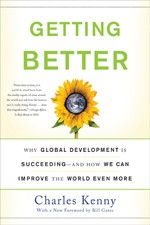
Charles Kenny · 2011

Recommended by: Bill Gates

Abhijit V. Banerjee, Esther Duflo · 2011

Recommended by: Bill Gates, Mohnish Pabrai

Where it sits in the reference 2

Geographies
Economics

Topics

EconomicsSociology and CultureWealth, poverty and inequality