Updates

  1. Person pages list letters, writing, profiles and links as sortable tables with filters, and show each person's companies as links; Fund letters show each letter's description in its own column.
  2. Experts show a checked job title and a short description of each person; 30 more people have photographs.
  3. Every company, fund, university and publication the experts work for has a page listing the people there.
  4. Fund letters show each letter's thesis and filter by it; 225 person pages list the essays, columns and newsletter issues the person wrote.
  5. Person pages list every essay and newsletter issue a person wrote, and their own books as a table in List view.
  6. Recommends shows the five largest kinds of book and the rest under More; browse pictures load sooner.
  7. Podcasts and talks link the original episode, filter by Audio and video or Press, and list each publisher once.
  8. Pages are wider, Recommends has List and Grid, and a filter clicked again turns off.
  9. Book cards sit in a ruled grid with Open Library and Goodreads links and each book's one-line note.
  10. Funds is now Investors; each investor's styles are buttons that filter the table.
  11. Podcasts and talks on a person's page filter by year and publisher and show as a list or a grid of pictures.
  12. Quotes show only people's own words: 472 summaries written by list sites are gone.
  13. Country pages open from Browse again, and every link on the shelf lands on a page.
  14. Subject and person pages show their sections as tabs, and each book appears once on a person's page.
  15. Book cards show the quote, who said it and the source; grids show five cards to a row.
  16. On a phone, a menu holds the sections, search, Updates, Feedback and dark mode.
  17. Feedback takes a screenshot of the page with no browser prompt, opens a screenshot full size when you click it, and clears itself once sent.
  18. Book cards are centred, search names the topic each book sits in, and any text cut short shows whole on hover.
  19. Search groups its results by kind: people, companies, geographies, subjects, topics, books, funds, fund letters and papers.
  20. The Books table lists who recommended each book by name, and the browser tab names the section you are in.
  21. Feedback can take a screenshot of the page, or one you paste or choose, and opens in the corner beside Updates.
  22. Each rail button reopens its section where you left it, and Browse, Table and People show on every book and subject page.
  23. Filters grey out choices that hold nothing instead of hiding them, and Books › People filters by authors or recommenders.
  24. Feedback takes a subject line and up to three screenshots.
  25. Biographies are grouped by the person they are about: 41 new pages, from Abraham Lincoln to Lee Kuan Yew.
  26. Sport splits into 23 sports, and Religion into one topic per faith.
  27. Book lists show as cards: the cover, one recommendation quote and every recommender by name.
  28. Seventeen subjects that had two or three pages under different names now have one page each.
  29. Every page lists its Experts as authors and recommenders, with a link to them on the Experts tab.
  30. Economics, Financial history, Financial panics and Accounting are subjects of their own, with one page per financial crisis.
  31. Book, person and subject pages open inside the app, so the tabs stay in view.
  32. 996 more book covers, and photographs or logos for 227 more people and companies.
  33. Books › Browse shows every subject as cards, and the rail holds Fund letters, Papers, Experts, Books and Funds.
  34. Every topic over 150 books splits into narrower topics, each with a page of its own.

Send feedback

What is it?
Screenshots, up to 3 (optional)
or paste one with Ctrl+V

We use your email only to reply to you.

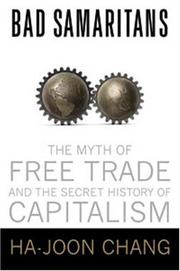
Bad Samaritans

Bad Samaritans

Ha-Joon Chang
2007
T2 288 pages · about 4h 48m to read Open Librarygoodreads

The case that rich countries prescribe policies they never followed.

Summary

Chang, a Cambridge development economist, argues that the policies rich countries recommend to developing countries are the opposite of the policies those countries used when they were developing.

The historical argument is the foundation and he developed it more fully in Kicking Away the Ladder. Britain protected its industries heavily until it had achieved technological leadership, then advocated free trade. The United States was the most protectionist country in the world through most of the nineteenth century, with tariffs at levels no developing country is now permitted. Japan, Korea and Taiwan used protection, subsidised credit, restrictions on foreign investment and deliberate acquisition of foreign technology. Chang argues that every country that has industrialised did so using policies the current international framework prohibits.

His positive case is for infant industry protection: a domestic industry cannot compete with established foreign producers while it is learning, but with temporary protection and a requirement to become competitive it can. He distinguishes this from permanent protection, which produces the inefficient industries the critics describe, and argues that the difference lies in whether the state imposes performance requirements and withdraws support from failures.

He also attacks specific orthodoxies: that foreign investment is unambiguously beneficial, that privatisation improves performance, that strong intellectual property protection helps development, that corruption and cultural factors explain underdevelopment, and that democracy and markets naturally reinforce each other.

Chang writes accessibly and polemically. The historical evidence on developed countries' own trajectories is strong and widely accepted. The inference that developing countries should therefore adopt those policies is contested, since the international environment differs and since the successful cases had state capacity that most developing countries lack. Critics also argue he selects successful interventions and does not weight the many failures.

Key takeaways 7

  1. Every country that industrialised used protection, subsidy and technology acquisition policies that current international rules prohibit.
  2. Britain and the United States advocated free trade only after achieving technological leadership behind high tariffs.
  3. Infant industry protection works when the state imposes performance requirements and withdraws support from failures, and fails when it does not.
  4. Foreign direct investment is not unambiguously beneficial, because it can displace domestic firms that would have developed capability.
  5. Strong intellectual property protection transfers rent to existing technology holders and raises the cost of catching up.
  6. Corruption and cultural explanations for underdevelopment fail because the same features were present in countries that later developed rapidly.
  7. The successful cases had state capacity to enforce performance requirements, which most developing countries lack.

Who should read it

Investors and operators in developing markets who want the historical case against the standard policy prescriptions, weighed against the state capacity objection.

Similar books 6

Chosen by shared topics, the entries that hold them, and the people who recommended both.
Ruchir Sharma · 2016

Ten rules for judging whether a country's economy will rise or fall.

Recommended by: Patrick Collison
Michael Pettis · 2001

Emerging-market crises come from the structure of national balance sheets.
Ruchir Sharma · 2012

Why emerging economies will not all keep converging, and tests for which can grow.

Recommended by: Mohnish Pabrai
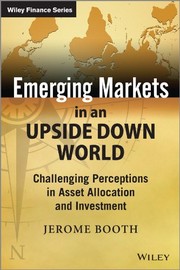
Jerome Booth · 2014

The argument that the risk is mispriced in the developed world, not the emerging one.
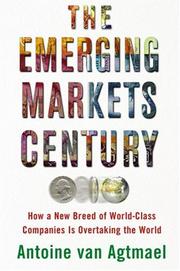
Antoine van Agtmael · 1999

By the man who coined the term 'emerging markets'; the case for world-class EM operating companies.
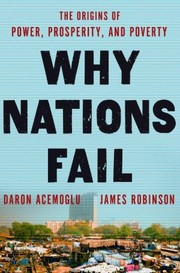
Daron Acemoglu, James A. Robinson · 2012

Nations prosper under inclusive institutions and stagnate under extractive ones.

Where it sits in the reference 2

Assets
Economics

Topics

EconomicsPolitics and GovernmentGlobalisation, development and offshore money