Updates

  1. Person pages list letters, writing, profiles and links as sortable tables with filters, and show each person's companies as links; Fund letters show each letter's description in its own column.
  2. Experts show a checked job title and a short description of each person; 30 more people have photographs.
  3. Every company, fund, university and publication the experts work for has a page listing the people there.
  4. Fund letters show each letter's thesis and filter by it; 225 person pages list the essays, columns and newsletter issues the person wrote.
  5. Person pages list every essay and newsletter issue a person wrote, and their own books as a table in List view.
  6. Recommends shows the five largest kinds of book and the rest under More; browse pictures load sooner.
  7. Podcasts and talks link the original episode, filter by Audio and video or Press, and list each publisher once.
  8. Pages are wider, Recommends has List and Grid, and a filter clicked again turns off.
  9. Book cards sit in a ruled grid with Open Library and Goodreads links and each book's one-line note.
  10. Funds is now Investors; each investor's styles are buttons that filter the table.
  11. Podcasts and talks on a person's page filter by year and publisher and show as a list or a grid of pictures.
  12. Quotes show only people's own words: 472 summaries written by list sites are gone.
  13. Country pages open from Browse again, and every link on the shelf lands on a page.
  14. Subject and person pages show their sections as tabs, and each book appears once on a person's page.
  15. Book cards show the quote, who said it and the source; grids show five cards to a row.
  16. On a phone, a menu holds the sections, search, Updates, Feedback and dark mode.
  17. Feedback takes a screenshot of the page with no browser prompt, opens a screenshot full size when you click it, and clears itself once sent.
  18. Book cards are centred, search names the topic each book sits in, and any text cut short shows whole on hover.
  19. Search groups its results by kind: people, companies, geographies, subjects, topics, books, funds, fund letters and papers.
  20. The Books table lists who recommended each book by name, and the browser tab names the section you are in.
  21. Feedback can take a screenshot of the page, or one you paste or choose, and opens in the corner beside Updates.
  22. Each rail button reopens its section where you left it, and Browse, Table and People show on every book and subject page.
  23. Filters grey out choices that hold nothing instead of hiding them, and Books › People filters by authors or recommenders.
  24. Feedback takes a subject line and up to three screenshots.
  25. Biographies are grouped by the person they are about: 41 new pages, from Abraham Lincoln to Lee Kuan Yew.
  26. Sport splits into 23 sports, and Religion into one topic per faith.
  27. Book lists show as cards: the cover, one recommendation quote and every recommender by name.
  28. Seventeen subjects that had two or three pages under different names now have one page each.
  29. Every page lists its Experts as authors and recommenders, with a link to them on the Experts tab.
  30. Economics, Financial history, Financial panics and Accounting are subjects of their own, with one page per financial crisis.
  31. Book, person and subject pages open inside the app, so the tabs stay in view.
  32. 996 more book covers, and photographs or logos for 227 more people and companies.
  33. Books › Browse shows every subject as cards, and the rail holds Fund letters, Papers, Experts, Books and Funds.
  34. Every topic over 150 books splits into narrower topics, each with a page of its own.

Send feedback

What is it?
Screenshots, up to 3 (optional)
or paste one with Ctrl+V

We use your email only to reply to you.

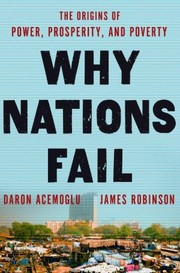
Why Nations Fail

Why Nations Fail

Daron Acemoglu, James A. Robinson
2012
T1 529 pages · about 8h 49m to read Open Librarygoodreads

Extractive versus inclusive institutions as the driver of divergence.

Summary

Acemoglu and Robinson argue that differences in national prosperity are explained by political and economic institutions rather than by geography, culture or the ignorance of leaders. They divide institutions into inclusive, which secure property rights, enforce contracts, permit entry and distribute political power broadly, and extractive, which concentrate power and extract resources from the population for the benefit of a narrow group.

Their mechanism is that inclusive economic institutions require inclusive political institutions to sustain them, because a narrow elite will always eventually change the economic rules in its favour. They also argue that extractive institutions can produce growth for a period, using the Soviet Union and contemporary China as examples, but cannot sustain it because sustained growth requires creative destruction, and creative destruction threatens the incumbent elite's position.

The evidence is comparative and historical, drawing on the divergence between North and South Korea, between Nogales in Arizona and Nogales in Sonora, on the different colonial institutions established in North and South America, on the Glorious Revolution in England, and on many African and Latin American cases. Their concept of critical junctures, in which existing institutional differences produce divergent responses to a common shock, explains why small initial differences compound.

The book argues directly against Diamond's geographic thesis and against cultural explanations. Critics argue that the inclusive and extractive categories are too broad to be useful, that the framework cannot explain China's sustained growth, that causation between institutions and prosperity runs in both directions, and that the historical cases are selected. Acemoglu received the Nobel Prize in economics in 2024 partly for this work. The creative destruction argument is the sharpest part of the thesis.

Key takeaways 8

  1. National prosperity is determined by political and economic institutions rather than by geography, culture or the knowledge available to leaders.
  2. Inclusive institutions secure property rights, enforce contracts and permit entry, which allows people to invest in outcomes they will capture.
  3. Extractive institutions concentrate power and transfer resources to a narrow elite, which removes the incentive to invest and innovate.
  4. Inclusive economic institutions cannot survive without inclusive political institutions, because a narrow elite will eventually rewrite the economic rules.
  5. Extractive institutions can generate growth for a period by directing resources into productive uses, but cannot sustain it.
  6. Sustained growth requires creative destruction, which threatens the position of incumbent elites and is therefore blocked under extractive arrangements.
  7. Small institutional differences at critical junctures produce divergent responses to common shocks, which compound over centuries.
  8. Foreign aid and policy advice fail where the institutions are extractive, because the resources are captured by the same arrangements that caused the poverty.

Who should read it

Investors assessing country risk and readers wanting the institutional counterargument to geographic and cultural explanations of development.

Who recommended it 6 · 2 direct

Ray Dalioreported
Trevor Ncubereported
Tyler Cowenreported

Similar books 6

Chosen by shared topics, the entries that hold them, and the people who recommended both.
Ruchir Sharma · 2012

Why emerging economies will not all keep converging, and tests for which can grow.

Recommended by: Mohnish Pabrai
Ha-Joon Chang · 2007

Rich countries urge poor ones to adopt the opposite of the policies they once used.

Jerome Booth · 2014

The argument that the risk is mispriced in the developed world, not the emerging one.
Antoine van Agtmael · 1999

By the man who coined the term 'emerging markets'; the case for world-class EM operating companies.
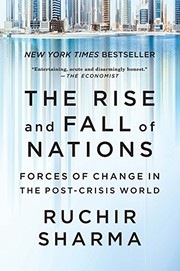
Ruchir Sharma · 2016

Ten rules for judging whether a country's economy will rise or fall.

Recommended by: Patrick Collison
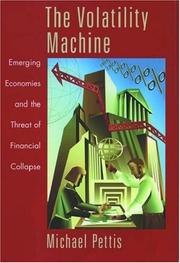
Michael Pettis · 2001

Emerging-market crises come from the structure of national balance sheets.

Where it sits in the reference 2

Assets
Economics

Topics

Economics