Updates

  1. Person pages list letters, writing, profiles and links as sortable tables with filters, and show each person's companies as links; Fund letters show each letter's description in its own column.
  2. Experts show a checked job title and a short description of each person; 30 more people have photographs.
  3. Every company, fund, university and publication the experts work for has a page listing the people there.
  4. Fund letters show each letter's thesis and filter by it; 225 person pages list the essays, columns and newsletter issues the person wrote.
  5. Person pages list every essay and newsletter issue a person wrote, and their own books as a table in List view.
  6. Recommends shows the five largest kinds of book and the rest under More; browse pictures load sooner.
  7. Podcasts and talks link the original episode, filter by Audio and video or Press, and list each publisher once.
  8. Pages are wider, Recommends has List and Grid, and a filter clicked again turns off.
  9. Book cards sit in a ruled grid with Open Library and Goodreads links and each book's one-line note.
  10. Funds is now Investors; each investor's styles are buttons that filter the table.
  11. Podcasts and talks on a person's page filter by year and publisher and show as a list or a grid of pictures.
  12. Quotes show only people's own words: 472 summaries written by list sites are gone.
  13. Country pages open from Browse again, and every link on the shelf lands on a page.
  14. Subject and person pages show their sections as tabs, and each book appears once on a person's page.
  15. Book cards show the quote, who said it and the source; grids show five cards to a row.
  16. On a phone, a menu holds the sections, search, Updates, Feedback and dark mode.
  17. Feedback takes a screenshot of the page with no browser prompt, opens a screenshot full size when you click it, and clears itself once sent.
  18. Book cards are centred, search names the topic each book sits in, and any text cut short shows whole on hover.
  19. Search groups its results by kind: people, companies, geographies, subjects, topics, books, funds, fund letters and papers.
  20. The Books table lists who recommended each book by name, and the browser tab names the section you are in.
  21. Feedback can take a screenshot of the page, or one you paste or choose, and opens in the corner beside Updates.
  22. Each rail button reopens its section where you left it, and Browse, Table and People show on every book and subject page.
  23. Filters grey out choices that hold nothing instead of hiding them, and Books › People filters by authors or recommenders.
  24. Feedback takes a subject line and up to three screenshots.
  25. Biographies are grouped by the person they are about: 41 new pages, from Abraham Lincoln to Lee Kuan Yew.
  26. Sport splits into 23 sports, and Religion into one topic per faith.
  27. Book lists show as cards: the cover, one recommendation quote and every recommender by name.
  28. Seventeen subjects that had two or three pages under different names now have one page each.
  29. Every page lists its Experts as authors and recommenders, with a link to them on the Experts tab.
  30. Economics, Financial history, Financial panics and Accounting are subjects of their own, with one page per financial crisis.
  31. Book, person and subject pages open inside the app, so the tabs stay in view.
  32. 996 more book covers, and photographs or logos for 227 more people and companies.
  33. Books › Browse shows every subject as cards, and the rail holds Fund letters, Papers, Experts, Books and Funds.
  34. Every topic over 150 books splits into narrower topics, each with a page of its own.

Send feedback

What is it?
Screenshots, up to 3 (optional)
or paste one with Ctrl+V

We use your email only to reply to you.

Towards a New Paradigm in Monetary Economics

Towards a New Paradigm in Monetary Economics

Cambridge published it in 2003.

Summary

Greenwald and Stiglitz argue that standard monetary economics, which analyses policy through the quantity of money and the transactions demand for it, describes the wrong mechanism, and that monetary policy operates through the supply of credit and the condition of bank balance sheets.

Their argument rests on information asymmetry in lending. Because lenders cannot observe borrower quality or effort, credit is rationed rather than cleared by price: raising the interest rate worsens the pool of borrowers through adverse selection and changes their behaviour through moral hazard, so lenders hold rates below the market-clearing level and ration instead. From this it follows that the relevant transmission channel is the willingness and capacity of banks to lend, which depends on their net worth, their risk perception and their regulatory position, rather than on the money supply.

The implications they draw are substantial. Monetary policy works by changing bank net worth and lending capacity, not by changing the quantity of transaction balances. Contractionary policy operates asymmetrically, since restricting credit works faster and more powerfully than expanding it. Banking crises are severe because the destruction of bank net worth removes the information capital embodied in lending relationships, which cannot be replaced quickly. And a monetary expansion may fail entirely if banks are unwilling to lend, which anticipates the post-2008 experience.

The book is technical and written for economists. Its framework has been substantially vindicated by subsequent events, though it has not displaced the standard treatment in policy or teaching.

Key takeaways 7

  1. Credit is rationed rather than cleared by price, because raising interest rates worsens the borrower pool through adverse selection and moral hazard.
  2. Monetary policy operates through bank lending capacity and net worth rather than through the quantity of money or transaction balances.
  3. Contractionary monetary policy works faster and more powerfully than expansionary policy, because restricting credit is easier than compelling lending.
  4. A monetary expansion can fail entirely if banks are unwilling to lend, which makes the money supply an unreliable policy instrument.
  5. Banking crises are severe because they destroy the information capital embodied in lending relationships, which cannot be rebuilt quickly.
  6. Bank net worth determines lending capacity, which means capital regulation and asset prices affect the real economy through a channel standard models omit.
  7. Firms rely on bank credit because equity issuance is costly under asymmetric information, which is why credit conditions rather than interest rates determine investment.

Who should read it

Economists and macro investors who want the credit-channel account of monetary transmission that post-2008 experience largely confirmed.

About Bruce Greenwald

Robert Heilbrunn Professor Emeritus of Finance and Asset Management, Columbia Business School; former director of the Heilbrunn Center for Graham and Dodd Investing

Value Investing: From Graham to Buffett and Beyond is the canonical modern restatement of the Columbia value framework, and Competition Demystified is its standard companion on barriers to entry.

Columbia Business School, Heilbrunn Center for Graham and Dodd Investing

Similar books 6

Chosen by shared topics, the entries that hold them, and the people who recommended both.
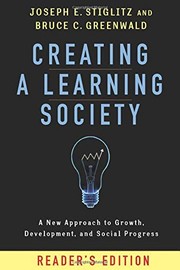
Bruce Greenwald, Joseph E. Stiglitz · 2014

Living standards rise through learning, and how policy can make economies learn.

“For a wonderful book that builds on Arrow's research, see Joseph E. Stiglitz and Bruce C. Greenwald, Creating A Learning Society” — Michael Mauboussin

Source: Increasing Returns: Identifying Forms of Increasing Returns and What Drives Them (Consilient Observer)

Recommended by: Michael Mauboussin

Joseph J. Wang · 2021

A former Fed trader on repo, bills and reserve plumbing.
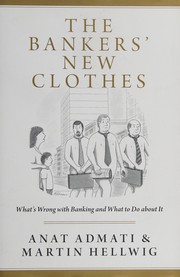
Anat Admati, Martin Hellwig · 2013

Why banks should fund themselves with far more equity, and why their objections fail.
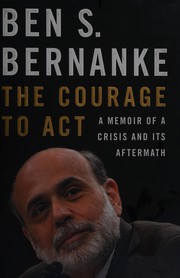
Ben S. Bernanke · 2015

The Fed chair's account of the financial crisis and what the Fed did and why.
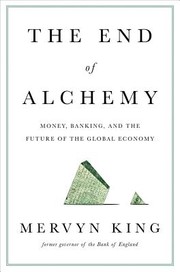
Mervyn King · 2016

Banks turn short-term deposits into long-term loans; why that keeps causing crises.

Where it sits in the reference 3

Academics
Academics
Financial history

Topics

EconomicsFinance and Markets