Updates

  1. Person pages list letters, writing, profiles and links as sortable tables with filters, and show each person's companies as links; Fund letters show each letter's description in its own column.
  2. Experts show a checked job title and a short description of each person; 30 more people have photographs.
  3. Every company, fund, university and publication the experts work for has a page listing the people there.
  4. Fund letters show each letter's thesis and filter by it; 225 person pages list the essays, columns and newsletter issues the person wrote.
  5. Person pages list every essay and newsletter issue a person wrote, and their own books as a table in List view.
  6. Recommends shows the five largest kinds of book and the rest under More; browse pictures load sooner.
  7. Podcasts and talks link the original episode, filter by Audio and video or Press, and list each publisher once.
  8. Pages are wider, Recommends has List and Grid, and a filter clicked again turns off.
  9. Book cards sit in a ruled grid with Open Library and Goodreads links and each book's one-line note.
  10. Funds is now Investors; each investor's styles are buttons that filter the table.
  11. Podcasts and talks on a person's page filter by year and publisher and show as a list or a grid of pictures.
  12. Quotes show only people's own words: 472 summaries written by list sites are gone.
  13. Country pages open from Browse again, and every link on the shelf lands on a page.
  14. Subject and person pages show their sections as tabs, and each book appears once on a person's page.
  15. Book cards show the quote, who said it and the source; grids show five cards to a row.
  16. On a phone, a menu holds the sections, search, Updates, Feedback and dark mode.
  17. Feedback takes a screenshot of the page with no browser prompt, opens a screenshot full size when you click it, and clears itself once sent.
  18. Book cards are centred, search names the topic each book sits in, and any text cut short shows whole on hover.
  19. Search groups its results by kind: people, companies, geographies, subjects, topics, books, funds, fund letters and papers.
  20. The Books table lists who recommended each book by name, and the browser tab names the section you are in.
  21. Feedback can take a screenshot of the page, or one you paste or choose, and opens in the corner beside Updates.
  22. Each rail button reopens its section where you left it, and Browse, Table and People show on every book and subject page.
  23. Filters grey out choices that hold nothing instead of hiding them, and Books › People filters by authors or recommenders.
  24. Feedback takes a subject line and up to three screenshots.
  25. Biographies are grouped by the person they are about: 41 new pages, from Abraham Lincoln to Lee Kuan Yew.
  26. Sport splits into 23 sports, and Religion into one topic per faith.
  27. Book lists show as cards: the cover, one recommendation quote and every recommender by name.
  28. Seventeen subjects that had two or three pages under different names now have one page each.
  29. Every page lists its Experts as authors and recommenders, with a link to them on the Experts tab.
  30. Economics, Financial history, Financial panics and Accounting are subjects of their own, with one page per financial crisis.
  31. Book, person and subject pages open inside the app, so the tabs stay in view.
  32. 996 more book covers, and photographs or logos for 227 more people and companies.
  33. Books › Browse shows every subject as cards, and the rail holds Fund letters, Papers, Experts, Books and Funds.
  34. Every topic over 150 books splits into narrower topics, each with a page of its own.

Send feedback

What is it?
Screenshots, up to 3 (optional)
or paste one with Ctrl+V

We use your email only to reply to you.

The Bankers' New Clothes

The Bankers' New Clothes

Anat Admati, Martin Hellwig
2013
T2 398 pages · about 6h 38m to read Open Librarygoodreads

The case for far higher bank equity capital.

Summary

Admati and Hellwig argue that banks should be required to fund themselves with far more equity, and that every argument the banking industry makes against this is either wrong or self-serving. Their proposed level is twenty to thirty percent of total assets, which is several times what regulation requires.

Their central analytical point is that equity is not something a bank holds in reserve, it is a way of funding assets, and the phrase capital requirements misleads people into thinking money is being set aside idle. From this they attack the industry's arguments in sequence. The claim that equity is expensive confuses the observed cost of equity with its cost at a different leverage level, since Modigliani and Miller establish that reducing leverage reduces the required return on equity. The claim that higher equity requirements reduce lending confuses funding mix with balance sheet size. The claim that banks are special because deposits are their product does not follow, since the argument concerns how the rest of the balance sheet is funded.

They argue the real reason banks resist is that debt funding is subsidised through explicit and implicit guarantees and through interest deductibility, so leverage transfers value from taxpayers to bank shareholders and managers.

The book is written for a general audience and is unusually clear. Its argument has been influential and remains contested by banks and by some economists, principally on whether the Modigliani-Miller adjustment is complete in practice and on whether activity would migrate to less regulated intermediaries.

Key takeaways 7

  1. Bank equity is a way of funding assets rather than money set aside, and the term capital requirements misleads almost everyone who uses it.
  2. The claim that equity funding is expensive confuses the observed cost of equity at high leverage with its cost at low leverage, which would be substantially lower.
  3. Higher equity requirements do not reduce lending, because the requirement concerns the funding mix rather than the size of the balance sheet.
  4. Banks prefer debt because it is subsidised through deposit insurance, implicit guarantees and interest deductibility, which transfers value from taxpayers.
  5. Risk-weighted capital measures are manipulable through model choice, which is why a simple leverage ratio against total assets is the more reliable constraint.
  6. Bank equity of twenty to thirty percent of assets would make failures far less likely and would not impose meaningful social cost.
  7. Bank executives' compensation is tied to return on equity, which gives them a direct personal incentive to maximise leverage regardless of the risk created.

Who should read it

Investors, policy readers and bank directors who want the clearest statement of the case for much higher bank equity funding.

Similar books 6

Chosen by shared topics, the entries that hold them, and the people who recommended both.

Neil Irwin · 2013

The 2007 to 2012 crises through three central bankers: Bernanke, King and Trichet.

Raghuram G. Rajan · 2010

The 2008 crisis grew from political and economic imbalances, not just banker greed.

Walter Bagehot · 1873

How the London money market worked, and why a central bank lends freely in a panic.
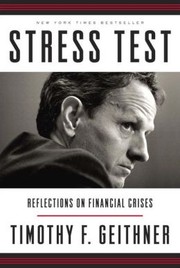
Timothy F. Geithner · 2014

The 2008 crisis and its aftermath, from inside the New York Fed and the Treasury.

Perry Mehrling · 2010

The central bank as dealer of last resort in a market-based system.
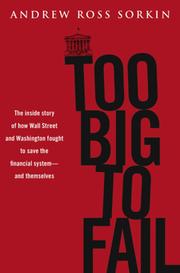
Andrew Ross Sorkin · 2009

Inside the meetings of bankers and regulators during the 2008 financial crisis.

Where it sits in the reference 3

Industries
Financial panics
Financial history

Topics

Finance and MarketsPolitics and GovernmentEconomicsRegulation, central banks and public policy