Updates

  1. Person pages list letters, writing, profiles and links as sortable tables with filters, and show each person's companies as links; Fund letters show each letter's description in its own column.
  2. Experts show a checked job title and a short description of each person; 30 more people have photographs.
  3. Every company, fund, university and publication the experts work for has a page listing the people there.
  4. Fund letters show each letter's thesis and filter by it; 225 person pages list the essays, columns and newsletter issues the person wrote.
  5. Person pages list every essay and newsletter issue a person wrote, and their own books as a table in List view.
  6. Recommends shows the five largest kinds of book and the rest under More; browse pictures load sooner.
  7. Podcasts and talks link the original episode, filter by Audio and video or Press, and list each publisher once.
  8. Pages are wider, Recommends has List and Grid, and a filter clicked again turns off.
  9. Book cards sit in a ruled grid with Open Library and Goodreads links and each book's one-line note.
  10. Funds is now Investors; each investor's styles are buttons that filter the table.
  11. Podcasts and talks on a person's page filter by year and publisher and show as a list or a grid of pictures.
  12. Quotes show only people's own words: 472 summaries written by list sites are gone.
  13. Country pages open from Browse again, and every link on the shelf lands on a page.
  14. Subject and person pages show their sections as tabs, and each book appears once on a person's page.
  15. Book cards show the quote, who said it and the source; grids show five cards to a row.
  16. On a phone, a menu holds the sections, search, Updates, Feedback and dark mode.
  17. Feedback takes a screenshot of the page with no browser prompt, opens a screenshot full size when you click it, and clears itself once sent.
  18. Book cards are centred, search names the topic each book sits in, and any text cut short shows whole on hover.
  19. Search groups its results by kind: people, companies, geographies, subjects, topics, books, funds, fund letters and papers.
  20. The Books table lists who recommended each book by name, and the browser tab names the section you are in.
  21. Feedback can take a screenshot of the page, or one you paste or choose, and opens in the corner beside Updates.
  22. Each rail button reopens its section where you left it, and Browse, Table and People show on every book and subject page.
  23. Filters grey out choices that hold nothing instead of hiding them, and Books › People filters by authors or recommenders.
  24. Feedback takes a subject line and up to three screenshots.
  25. Biographies are grouped by the person they are about: 41 new pages, from Abraham Lincoln to Lee Kuan Yew.
  26. Sport splits into 23 sports, and Religion into one topic per faith.
  27. Book lists show as cards: the cover, one recommendation quote and every recommender by name.
  28. Seventeen subjects that had two or three pages under different names now have one page each.
  29. Every page lists its Experts as authors and recommenders, with a link to them on the Experts tab.
  30. Economics, Financial history, Financial panics and Accounting are subjects of their own, with one page per financial crisis.
  31. Book, person and subject pages open inside the app, so the tabs stay in view.
  32. 996 more book covers, and photographs or logos for 227 more people and companies.
  33. Books › Browse shows every subject as cards, and the rail holds Fund letters, Papers, Experts, Books and Funds.
  34. Every topic over 150 books splits into narrower topics, each with a page of its own.

Send feedback

What is it?
Screenshots, up to 3 (optional)
or paste one with Ctrl+V

We use your email only to reply to you.

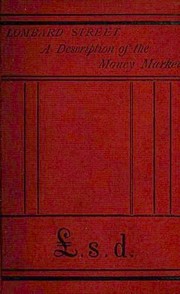
Lombard Street

Lombard Street

Walter Bagehot
1873
T1 359 pages · about 5h 59m to read Open Librarygoodreads

The founding description of a money market and the lender of last resort.

Summary

Bagehot, editor of The Economist, described how the London money market actually worked in the 1870s and what the Bank of England's responsibilities were during a panic. It is the founding statement of central banking practice.

His description of the system's structure is the analytical foundation. Bagehot showed that the English system had concentrated its cash reserve in a single institution, the Bank of England, so that the entire banking system's liquidity depended on one balance sheet, and that this was a historical accident rather than a design, but that it had to be managed as the reality it was. He argued the Bank had never acknowledged the responsibility this created.

The rule he set out is the book's legacy: in a panic the central bank should lend early, freely, at a high rate of interest, against good collateral valued at pre-panic prices. Each element carries weight. Lending freely stops the panic, since the knowledge that money is available removes the reason to demand it. The high rate ensures the facility is used only by those who need it and protects the reserve. Good collateral ensures the central bank lends to the solvent but illiquid rather than to the insolvent. Announcing the willingness in advance is what makes the mechanism work.

The book also covers the bill market, the discount houses and the structure of English banking. Its institutions are Victorian and the specifics are historical. The rule has been the reference point for every central bank crisis response since, including 2008, and the difficulty of distinguishing illiquid from insolvent in real time remains exactly as Bagehot left it.

Key takeaways 7

  1. In a panic a central bank should lend early and freely, at a high rate, against collateral that would be good in ordinary times.
  2. Lending freely stops a panic because the knowledge that money is available removes the reason to demand it.
  3. A high rate of interest ensures the facility is used only by those who need it and protects the reserve from being drained by opportunists.
  4. Lending only against good collateral is what distinguishes supporting an illiquid institution from rescuing an insolvent one.
  5. The willingness to lend must be announced in advance, since an unstated policy provides no reassurance and therefore does not prevent the panic.
  6. The English system concentrated the whole banking system's cash reserve in one institution, which created a responsibility the Bank of England had never acknowledged.
  7. Money will not manage itself, and a system that depends on a single reserve requires someone to accept explicit responsibility for managing it.

Who should read it

Investors, bankers and policy readers who want the original statement of lender of last resort doctrine that every crisis response since has referenced.

Similar books 6

Chosen by shared topics, the entries that hold them, and the people who recommended both.
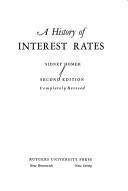
Sidney Homer, Richard Sylla · 1963

Interest rates from Babylonian lending through Rome and Europe to modern bonds.

Recommended by: Mohnish Pabrai
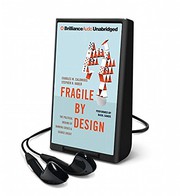
Charles W. Calomiris, Stephen H. Haber · 2014

Whether a nation's banks are stable or crisis-prone is decided by its politics.
Adam Smith · 1981

The 1970s disorder: the end of Bretton Woods, oil shocks and petrodollar loans.

Recommended by: Mohnish Pabrai
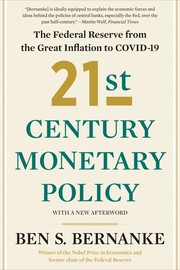
Ben S. Bernanke · 2022

Insider account of the Fed from Burns through the QE era.
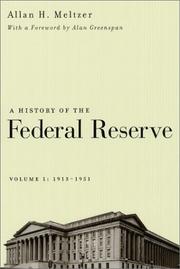
Allan H. Meltzer · 2003

The Fed from 1913 to 1951, told from its own minutes and internal memos.
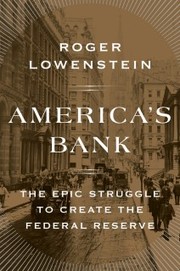
Roger Lowenstein · 2015

How the Federal Reserve was argued into existence, from the 1907 panic to 1913.

Recommended by: Seth Klarman

Where it sits in the reference 4

Assets
Industries
Financial history
Financial history

Topics

Finance and MarketsFinancial History