Updates

  1. Person pages list letters, writing, profiles and links as sortable tables with filters, and show each person's companies as links; Fund letters show each letter's description in its own column.
  2. Experts show a checked job title and a short description of each person; 30 more people have photographs.
  3. Every company, fund, university and publication the experts work for has a page listing the people there.
  4. Fund letters show each letter's thesis and filter by it; 225 person pages list the essays, columns and newsletter issues the person wrote.
  5. Person pages list every essay and newsletter issue a person wrote, and their own books as a table in List view.
  6. Recommends shows the five largest kinds of book and the rest under More; browse pictures load sooner.
  7. Podcasts and talks link the original episode, filter by Audio and video or Press, and list each publisher once.
  8. Pages are wider, Recommends has List and Grid, and a filter clicked again turns off.
  9. Book cards sit in a ruled grid with Open Library and Goodreads links and each book's one-line note.
  10. Funds is now Investors; each investor's styles are buttons that filter the table.
  11. Podcasts and talks on a person's page filter by year and publisher and show as a list or a grid of pictures.
  12. Quotes show only people's own words: 472 summaries written by list sites are gone.
  13. Country pages open from Browse again, and every link on the shelf lands on a page.
  14. Subject and person pages show their sections as tabs, and each book appears once on a person's page.
  15. Book cards show the quote, who said it and the source; grids show five cards to a row.
  16. On a phone, a menu holds the sections, search, Updates, Feedback and dark mode.
  17. Feedback takes a screenshot of the page with no browser prompt, opens a screenshot full size when you click it, and clears itself once sent.
  18. Book cards are centred, search names the topic each book sits in, and any text cut short shows whole on hover.
  19. Search groups its results by kind: people, companies, geographies, subjects, topics, books, funds, fund letters and papers.
  20. The Books table lists who recommended each book by name, and the browser tab names the section you are in.
  21. Feedback can take a screenshot of the page, or one you paste or choose, and opens in the corner beside Updates.
  22. Each rail button reopens its section where you left it, and Browse, Table and People show on every book and subject page.
  23. Filters grey out choices that hold nothing instead of hiding them, and Books › People filters by authors or recommenders.
  24. Feedback takes a subject line and up to three screenshots.
  25. Biographies are grouped by the person they are about: 41 new pages, from Abraham Lincoln to Lee Kuan Yew.
  26. Sport splits into 23 sports, and Religion into one topic per faith.
  27. Book lists show as cards: the cover, one recommendation quote and every recommender by name.
  28. Seventeen subjects that had two or three pages under different names now have one page each.
  29. Every page lists its Experts as authors and recommenders, with a link to them on the Experts tab.
  30. Economics, Financial history, Financial panics and Accounting are subjects of their own, with one page per financial crisis.
  31. Book, person and subject pages open inside the app, so the tabs stay in view.
  32. 996 more book covers, and photographs or logos for 227 more people and companies.
  33. Books › Browse shows every subject as cards, and the rail holds Fund letters, Papers, Experts, Books and Funds.
  34. Every topic over 150 books splits into narrower topics, each with a page of its own.

Send feedback

What is it?
Screenshots, up to 3 (optional)
or paste one with Ctrl+V

We use your email only to reply to you.

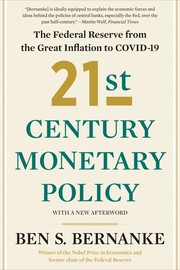
21st Century Monetary Policy

21st Century Monetary Policy

Ben S. Bernanke
2022
T3 Open Librarygoodreads

Insider account of the Fed from Burns through the QE era.

Summary

Bernanke wrote this after his Federal Reserve chairmanship as a history of American monetary policy from the 1950s to the present, combining institutional narrative with explanation of how thinking changed.

The historical sections cover the postwar consensus and its collapse, the Great Inflation of the 1960s and 1970s and the intellectual and political failures that produced it, Volcker's disinflation and its cost, the Great Moderation and the confidence it produced, and the crisis. Bernanke is direct about what the profession got wrong: the underestimation of expectations in inflation dynamics, the belief in an exploitable Phillips curve trade-off, and later the belief that price stability implied financial stability.

The crisis sections are the participant's account: the construction of emergency lending facilities, the decision on Lehman and the legal constraints he says applied, the move to quantitative easing when the policy rate reached zero, forward guidance, and the arguments within the committee.

The analytical sections are the most useful. Bernanke sets out the tools available at the zero lower bound, the evidence on their effectiveness, and the case for a revised framework. He supports the average inflation targeting approach the Federal Reserve adopted in 2020, argues that the neutral real interest rate has fallen for structural reasons which makes the zero bound a recurring rather than exceptional problem, and discusses the case for negative rates, yield curve control and a higher inflation target, with his assessment of each. He also addresses financial stability policy and whether monetary policy should respond to asset prices, concluding that regulatory tools should be the first line.

The book was completed as inflation was rising in 2021 and 2022, and Bernanke's treatment of that episode is brief and defensive of the framework he helped design. Critics argue the 2020 framework revision contributed to the delayed response. Readers should note he is defending decisions he made.

Key takeaways 7

  1. The Great Inflation resulted from underestimating the role of expectations and from believing in an exploitable trade-off between inflation and unemployment.
  2. Price stability does not imply financial stability, which the profession assumed until 2008.
  3. The neutral real interest rate has fallen for structural reasons, which makes the zero lower bound a recurring constraint rather than an exception.
  4. Quantitative easing works primarily through portfolio balance and signalling effects rather than through bank lending.
  5. Forward guidance is effective only to the extent that the commitment is credible, which requires the central bank to accept costs later.
  6. Financial stability risks should be addressed with regulatory tools first, because interest rates affect the whole economy to address a sectoral problem.
  7. Average inflation targeting commits the central bank to allowing overshoots after periods of undershooting, which changes expectations at the zero bound.

Who should read it

Investors and operators who need a central banker's account of how policy thinking developed and what tools remain available at the zero bound.

Similar books 6

Chosen by shared topics, the entries that hold them, and the people who recommended both.
Allan H. Meltzer · 2003

The Fed from 1913 to 1951, told from its own minutes and internal memos.
William Greider · 1987

The Volcker Fed from the inside; still the fullest political account.

Recommended by: Mohnish Pabrai
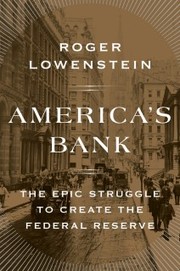
Roger Lowenstein · 2015

How the Federal Reserve was argued into existence, from the 1907 panic to 1913.

Recommended by: Seth Klarman
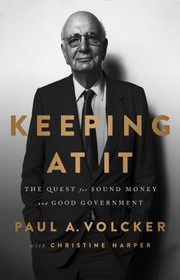
Paul A Volcker · 2018

The Fed chair's memoir of his career at Treasury and the Fed, and beating inflation.

Barry Eichengreen, Asmaa El-Ganainy, Rui Esteves, Kris James Mitchener · 2021

Sovereign borrowing from Italian city-states to the pandemic, and what it paid for.

Where it sits in the reference 2

Financial history
Financial history

Topics

EconomicsPolitics and GovernmentFinancial HistoryRegulation, central banks and public policy